In the realm of industrial automation, reliable object detection is a cornerstone of efficient and safe operations. Among the diverse array of sensing technologies available, inductive proximity sensors hold a prominent position for their robustness and non-contact detection of metallic objects. The TL-Q(-Z) series of square standard-type proximity sensors represents a mature and highly versatile solution within this category, engineered to meet the rigorous demands of modern manufacturing environments. This article delves into the technical specifications, operational principles, key features, and typical applications of these sensors, providing a detailed guide for engineers and system integrators.
The fundamental operating principle of the TL-Q(-Z) series is based on electromagnetic induction. The sensor generates a high-frequency oscillating electromagnetic field from its active face. When a metallic target enters this detection field, eddy currents are induced within the target. This causes a change in the oscillation amplitude within the sensor's internal LC tank circuit. This change is detected by the sensor's circuitry, which subsequently triggers a switching action in the solid-state output (typically NPN or PNP configurations). This entire process occurs without any physical contact, eliminating mechanical wear and ensuring long operational life.
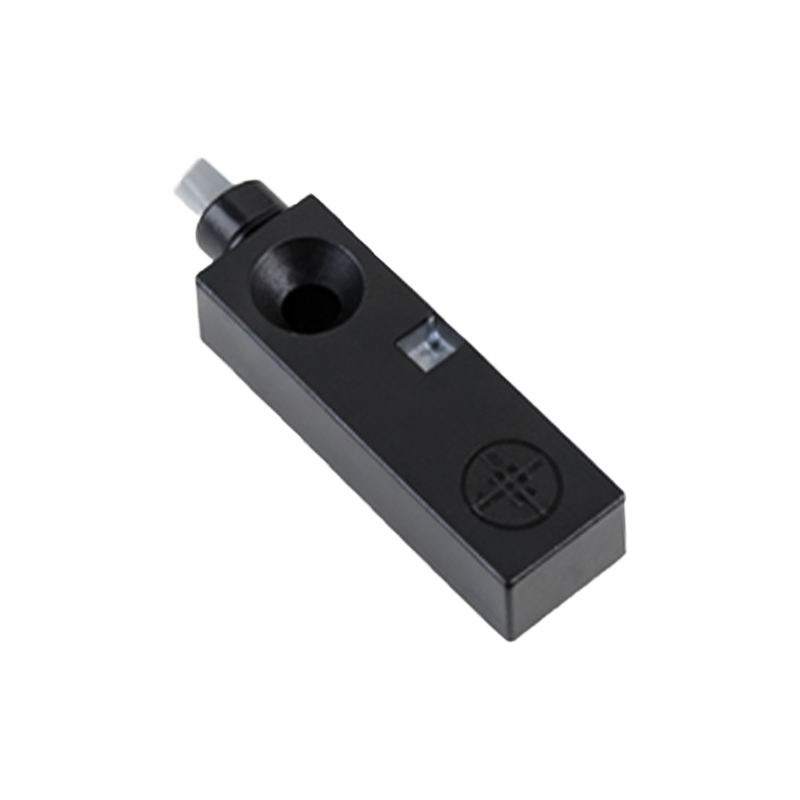
A defining characteristic of the TL-Q(-Z) series is its square housing design. This form factor offers distinct advantages in installation and mounting stability. The flat surfaces allow for secure and flush mounting against machine frames or brackets, often facilitated by integrated mounting holes or slots. The standardized square shape, often conforming to common industry dimensions, ensures compatibility with a wide range of sensor brackets and mounting accessories, simplifying integration into existing systems. The "Z" variant typically denotes a factor such as a extended sensing range or a specialized output type, providing flexibility for specific application needs.
These sensors are celebrated for their exceptional environmental resilience. Housed in robust materials like nickel-plated brass or stainless steel, they are designed to withstand harsh industrial conditions. Key ratings often include IP67 (IEC standard) or NEMA 4X equivalents, indicating high resistance to dust ingress and protection against temporary immersion in water. This makes them suitable for use in washdown areas, outdoor applications, and environments with coolants or oil mist. Furthermore, they are inherently resistant to vibration and shock, maintaining reliable performance in dynamic machinery.
The electrical performance of the TL-Q(-Z) series is tailored for direct integration into programmable logic controller (PLC) systems and other standard control circuitry. Operating voltages commonly span from 10-30V DC, covering the standard 24V DC industrial control voltage. The output is typically a 3-wire DC configuration with short-circuit and reverse polarity protection, safeguarding both the sensor and the connected equipment. Sensing ranges are precisely defined for different sensor sizes (e.g., 12mm, 18mm, 30mm square models), with factors like the "Z" version potentially offering a 1.5x or 2x standard range. It is crucial to consult the specific datasheet for the exact nominal sensing distance (Sn), as this is calibrated for a standard mild steel target.
A critical parameter for any inductive sensor is its repeat accuracy and the influence of target material. The TL-Q(-Z) series provides consistent switching points. However, the effective sensing distance is reduced for non-ferrous metals like aluminum, brass, or copper compared to steel. Correction factors are provided in technical documentation to calculate the actual sensing range for these materials. Additionally, these sensors feature a built-in hysteresis, which prevents output chatter when a target is at the exact detection limit, ensuring clean and stable signal transitions.
Application areas for the TL-Q(-Z) square proximity sensor are vast across factory automation. Common uses include: position detection of machine parts (e.g., cylinder end positions, presence of a fixture), counting of metallic objects on conveyors, monitoring of rotational speed via detection of gear teeth or bolts, and as a safety interlock to confirm the position of guards or doors. Their ruggedness makes them ideal for heavy industries such as automotive manufacturing, metalworking, material handling, and packaging machinery.
When selecting and installing a TL-Q(-Z) sensor, several best practices should be observed. Ensure the target material and size meet the sensor's specifications. Maintain the recommended mounting distance between adjacent sensors to prevent mutual interference. For flush-mounted models, ensure the sensing face is aligned properly, as non-flush mountable types allow for side detection. Always refer to the manufacturer's installation manual for wiring diagrams, temperature specifications, and detailed performance curves.
In conclusion, the TL-Q(-Z) series square standard proximity sensor stands as a proven, reliable, and adaptable component in the industrial sensor landscape. Its combination of a sturdy square housing, high environmental protection ratings, stable electrical performance, and precise detection capabilities makes it a go-to choice for engineers seeking a durable solution for metallic object detection. By understanding its technical nuances and