Inductive proximity sensors are fundamental components in modern industrial automation, offering non-contact detection and distance measurement of metallic objects. Operating on the principle of electromagnetic induction, these sensors generate an oscillating electromagnetic field from a coil housed within their ferrite core. When a conductive metal target enters this active field, eddy currents are induced on the target's surface. This causes a measurable change in the oscillation amplitude or frequency within the sensor's internal circuit. This change is processed by the sensor's electronics to trigger a switching output or, in the case of analog sensors, to provide a continuous signal proportional to the distance to the target.
The core advantage of using inductive sensors for distance measurement lies in their robustness and reliability. They are inherently immune to environmental factors such as dust, oil, moisture, and ambient light, making them ideal for harsh industrial environments like machining centers, assembly lines, and material handling systems. Unlike optical or capacitive sensors, their operation is unaffected by non-metallic materials, ensuring high selectivity and preventing false triggers from plastics, wood, or liquids.
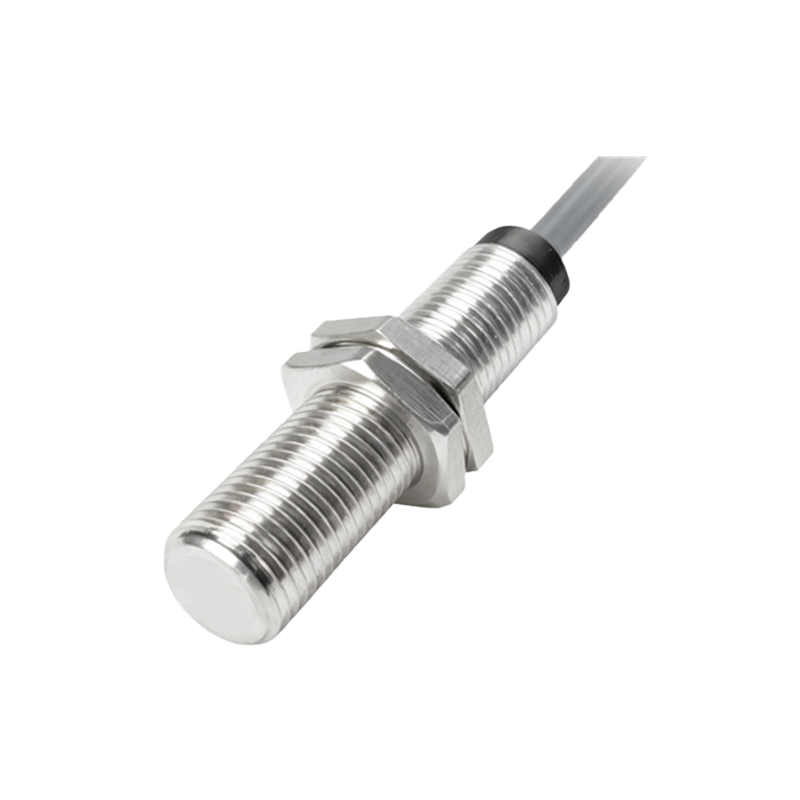
For precise distance measurement, analog output inductive sensors are employed. These are typically available with current (4-20 mA) or voltage (0-10 V) outputs. The output signal varies linearly or non-linearly with the distance between the sensor's active face and the target. The key performance parameters include:
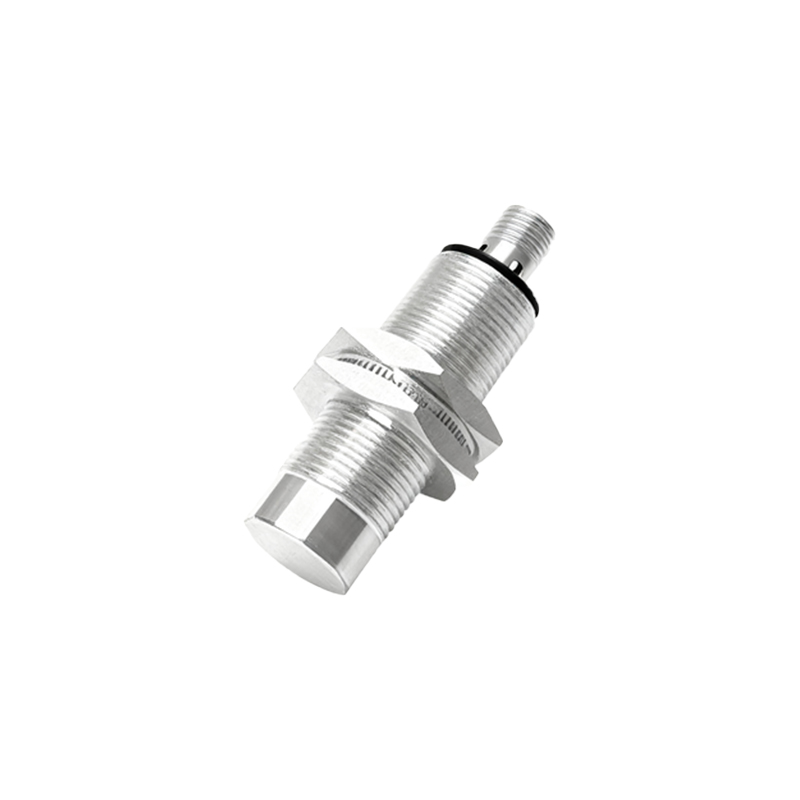
Measuring Range: Defined as the distance within which the sensor can reliably measure. Standard ranges vary from a few millimeters to about 60 mm, with specialized models offering extended ranges.
Linearity: The deviation of the output signal from a perfect straight line over the measuring range. High linearity is critical for accurate position feedback.
Repeatability: The sensor's ability to consistently return the same output value for the same target position under identical conditions.
Hysteresis: A small difference in the output signal when the target is approaching versus when it is receding, which helps prevent signal oscillation at the switching point.
The target's material, size, and shape significantly influence measurement performance. Ferrous metals (like steel and iron) produce the strongest eddy currents and thus offer the longest sensing ranges. Non-ferrous metals (like aluminum, copper, or brass) have shorter effective ranges, often requiring a correction factor (typically 0.3 to 0.5 of the rated range for steel). For optimal accuracy, the target should be at least as large as the sensor's active face and should approach it axially.
Typical applications for inductive distance measurement include:
Position Control: Monitoring the position of machine tool slides, cylinders, or robotic arms.
Thickness Gauging: Measuring the thickness of metal sheets or coatings by using two opposing sensors.
Vibration Monitoring: Detecting minute changes in the position of rotating shafts or components to predict maintenance needs.
End-of-Travel Detection: Providing precise analog feedback at the limits of actuator movement.
When integrating an inductive proximity sensor for measurement, careful installation is paramount. The sensor must be mounted securely to avoid vibration-induced errors. It is also crucial to ensure that no other metallic objects are within the lateral sensing area, as this can cause electromagnetic interference and distort the measurement. Shielding (embedding the sensor in metal) reduces the nominal sensing range but provides protection from lateral metal interference.
In conclusion, inductive proximity sensors provide a highly durable and precise solution for non-contact distance measurement of metallic objects in demanding industrial settings. Their analog variants deliver continuous, real-time positional data essential for closed-loop control systems, quality assurance, and predictive maintenance. Selecting the correct sensor type—considering factors like target material, required range, linearity, and environmental rating—is critical to achieving reliable and accurate measurement performance, thereby enhancing overall system automation and efficiency.