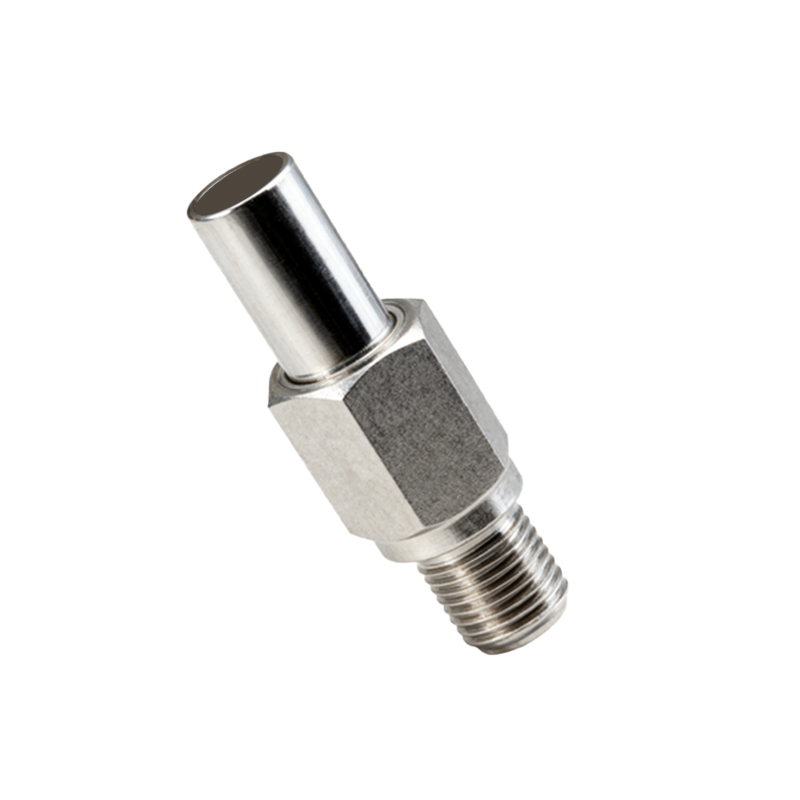
Proximity sensors are indispensable components in modern industrial automation, particularly for detecting ferrous metals like iron. These non-contact devices operate by generating an electromagnetic field and measuring changes caused by metallic objects within their sensing range. For iron detection, inductive proximity sensors are most commonly employed due to their high sensitivity to ferromagnetic materials. The working principle relies on Eddy current losses: when iron enters the sensor's field, it alters the oscillation amplitude in the sensor's coil, triggering a switching signal.
The detection distance for iron depends on several factors, including sensor size, material composition, and environmental conditions. Standard inductive sensors typically offer sensing ranges from 1 to 60 mm, with larger sensors providing longer ranges. However, the nominal sensing distance (Sn) is calibrated for mild steel; for pure iron, detection distances can increase by 10-15% due to higher permeability. It's crucial to note that sensor performance is affected by factors like temperature fluctuations, shielding requirements, and installation alignment. For instance, axial misalignment can reduce effective sensing distance by up to 30%.
Industrial applications for iron distance detection span across manufacturing lines, robotics, and safety systems. In automotive assembly, proximity sensors monitor robotic arm positions during welding operations. In material handling, they detect iron pallet positions on conveyor systems. Advanced sensors now incorporate temperature compensation and EMI shielding to maintain accuracy in harsh environments. When selecting sensors for iron detection, engineers must consider not only range but also response time (often as fast as 0.1 ms), switching frequency, and housing materials (e.g., stainless steel for corrosive environments).
Calibration and maintenance are critical for sustained accuracy. Regular checks should include verifying switching points using precision gauges and monitoring for signal drift. New smart sensors with IO-Link capabilities enable real-time distance monitoring and predictive maintenance alerts. As Industry 4.0 evolves, proximity sensors are increasingly integrated with PLC systems for adaptive control, where detection distances can be dynamically adjusted based on production needs.
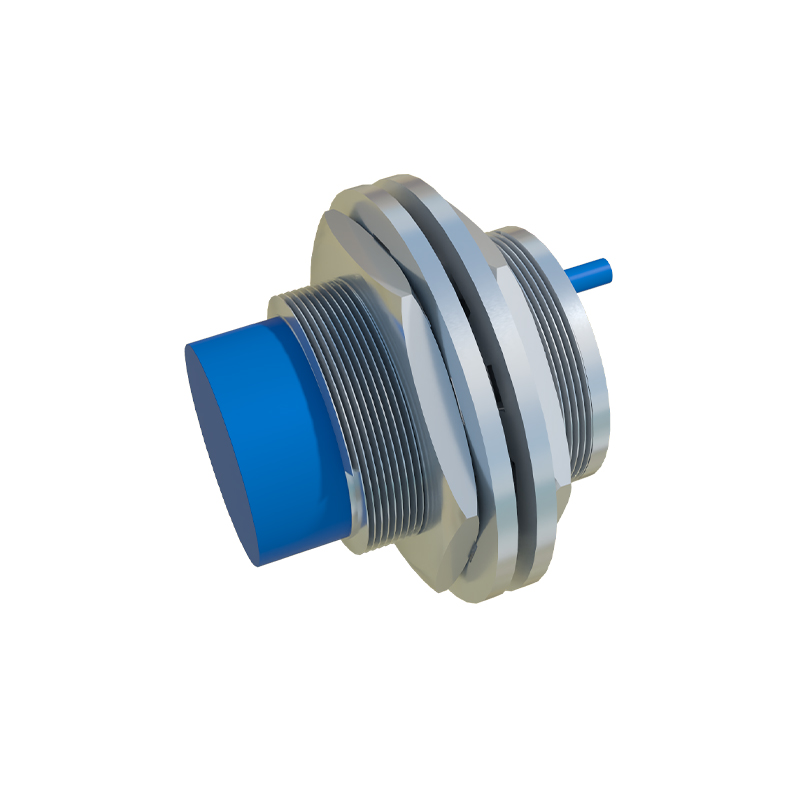
Future developments focus on multi-material discrimination and extended range capabilities. Researchers are exploring combined inductive-capacitive sensors that can distinguish between iron, aluminum, and non-metallic objects while maintaining millimeter-level accuracy. These advancements will further enhance automation efficiency in metalworking, packaging, and automotive industries where precise iron detection is paramount.