Wide-angle laser sensors represent a critical advancement in industrial automation and precision measurement technology. Unlike traditional point or line laser sensors that focus on a narrow field of view, wide-angle variants utilize specialized optical systems to project and detect laser light across a broad area, typically ranging from 60 to 120 degrees or more. The core principle hinges on the time-of-flight (ToF) or phase-shift measurement method, adapted for a divergent beam pattern.
At the heart of the sensor is a laser diode, usually in the near-infrared spectrum (e.g., 850nm or 905nm), chosen for its coherence and eye-safety considerations in industrial settings. This diode emits pulsed or modulated continuous-wave laser light. The key differentiator is the beam-shaping optics immediately following the emitter. Instead of a collimating lens that creates a tight beam, a wide-angle sensor employs a negative or diffractive optical element. This component actively diverges the laser beam, spreading it into a wide, fan-shaped or conical pattern to illuminate a large section of the target area.
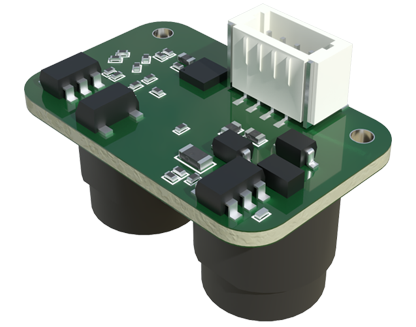
The emitted light travels to objects within this wide field. Each point on an object reflects a fraction of the laser energy back toward the sensor. A high-sensitivity photodetector array, such as an avalanche photodiode (APD) or a specialized CMOS/CCD array, captures this returning light. The optical path for reception often includes a wide-angle lens system to gather light from the entire illuminated scene and focus it onto the detector. The real challenge lies in correlating each returning light pulse with its specific emission angle and time.
This is managed through sophisticated signal processing. For ToF-based wide-angle sensors, a precise timer measures the interval between the emission of a laser pulse and the detection of its reflection. Since the beam is divergent, the system must also track the angular position from which the reflection was received, often achieved by segmenting the detector array or using a position-sensitive device (PSD). The distance (d) to a specific point in the field is calculated using the formula d = (c * Δt) / 2, where c is the speed of light and Δt is the measured time delay. By performing this calculation for multiple angles simultaneously, the sensor builds a two-dimensional profile or a sparse 3D point cloud of the entire scene.
Phase-shift measurement is another common principle, particularly for shorter ranges and higher precision. Here, the laser intensity is modulated at a high frequency (e.g., tens of MHz). The reflected wave exhibits a phase shift relative to the emitted wave. This phase difference (Δφ) is directly proportional to the distance: d = (c * Δφ) / (4π * f_mod), where f_mod is the modulation frequency. A wide-angle system using this method must demodulate the signal across its entire field, requiring complex circuitry to handle multiple phase measurements in parallel.
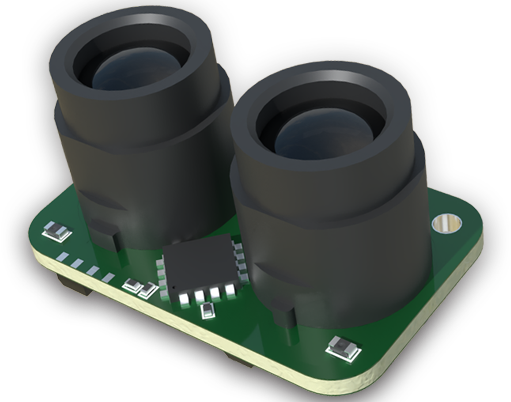
Several factors influence performance and design. Optical cross-talk, where reflections from multiple angles interfere, is a primary concern mitigated by encoding laser pulses or modulation patterns. Ambient light rejection is achieved through optical filtering (narrow-bandpass filters matching the laser wavelength) and temporal gating. The choice between ToF and phase-shift involves trade-offs: ToF is better for long ranges (up to several meters) and high-speed dynamic scenes, while phase-shift offers superior resolution at shorter distances.
Applications are diverse. In robotics, wide-angle laser sensors provide robust environment perception for navigation and obstacle avoidance in unstructured warehouses. In logistics, they enable volumetric dimensioning of parcels on conveyor belts regardless of position. For vehicle access monitoring or people counting, they offer reliable presence detection over wide gates without blind spots. In industrial safety, they can create large, customizable warning zones around hazardous machinery.
Future trends point towards increased integration. Combining wide-angle laser sensing with other modalities like RGB cameras (sensor fusion) enhances contextual understanding. Advances in solid-state LiDAR and MEMS-based scanning mirrors are making wide-angle systems more compact, reliable, and cost-effective, paving the way for their ubiquitous adoption in smart factories, autonomous mobile robots, and advanced driver-assistance systems (ADAS). The fundamental principle remains elegantly simple—measuring the flight time or phase of light—but its implementation across a wide field demands a harmonious integration of optics, electronics, and algorithms to deliver robust spatial awareness for modern industry.