In the realm of precision measurement and industrial automation, laser displacement sensors stand as critical tools for non-contact, high-accuracy distance and position detection. A fundamental yet often nuanced concept within their operation is the "home position" or "reference origin." This article delves into the technical significance, establishment methods, and practical implications of the home position in laser displacement sensors, tailored for engineers and technical professionals.
The home position, in essence, is the defined reference point from which all displacement measurements are calculated. It is not a physical component like the laser emitter or receiver, but a logical datum established within the sensor's processing system. When a sensor is initialized or after a homing procedure, this point is set, and all subsequent measurements represent the target object's displacement relative to this origin. The accuracy and repeatability of the entire measurement system are inherently tied to the stability and correct definition of this reference.
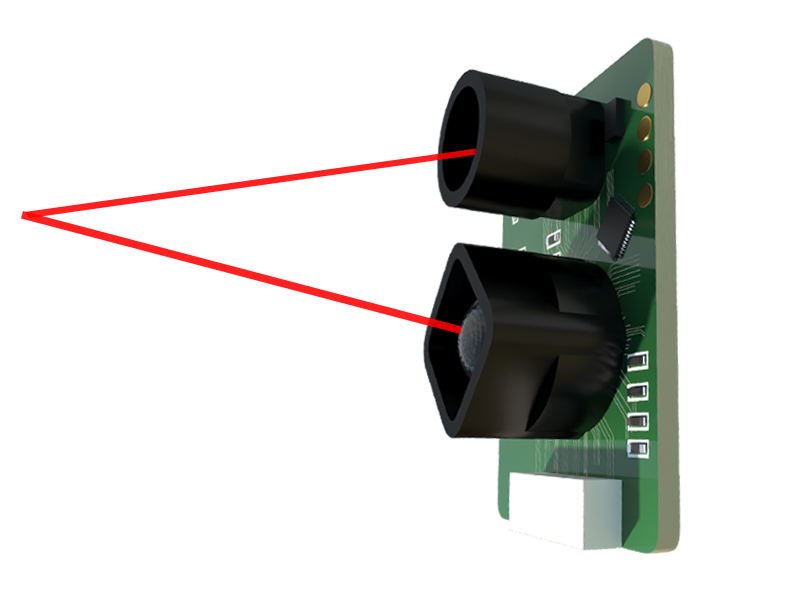
Establishing the home position typically involves one of several methods, chosen based on the application requirements. A common approach is manual teaching. Here, the target object is placed at the desired reference location, and a command (often via software or a teach button) is sent to the sensor to set the current measured value as the zero point or home. This method is straightforward and flexible for custom setups. Another method is automatic homing upon power-up, where the sensor might use a built-in reference surface or a specific signal to find a repeatable start point. In more sophisticated systems, especially those integrated into multi-axis machinery, the home position is often synchronized with the machine's coordinate system origin through a homing sequence that involves moving the sensor or target to a limit switch or an encoder index pulse.
The choice of where to set this origin has direct engineering consequences. For instance, in thickness measurement of a moving sheet, the home might be set on a reference roller surface. All measurements then indicate the sheet's deviation from that roller's position. In vibration analysis, the home position could be set at the resting point of a component, with measurements showing dynamic displacement. An incorrectly defined home—such as one set on a vibrating surface or a temporary object—will introduce a constant systematic error into all readings, compromising data integrity.
Furthermore, environmental factors and sensor design influence home position stability. Thermal drift, a critical consideration, can cause the sensor's internal electronics and optical path to expand or contract minutely, effectively shifting the perceived reference point over time or with temperature changes. High-quality sensors incorporate thermal compensation algorithms to mitigate this. Mechanical shock or vibration can also affect the alignment, though the home position itself, being a software reference, is immune to purely physical shifts unless the sensor's fixed mounting is disturbed.
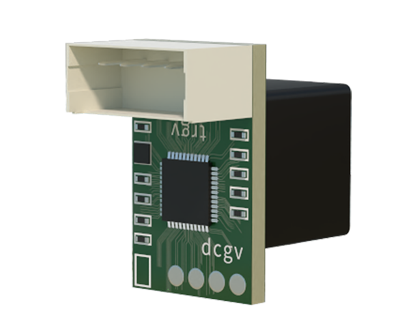
From a system integration perspective, communication about the home status is vital. Sensors with digital interfaces (e.g., EtherCAT, PROFINET, or simple RS-485) often provide status bits indicating "Homed" or "Reference Established." This allows the host controller (PLC or PC) to logically sequence operations, ensuring measurement only commences after a successful homing cycle. The resolution and linearity of the sensor are specified relative to this established origin; the famed ±0.05% of F.S. accuracy is meaningless if the home is ambiguously defined.
In practical application scenarios, consider a robotic pick-and-place cell using a laser sensor to locate component height. A robust homing routine executed at the start of each shift ensures that all picks are referenced consistently, preventing misalignments due to cumulative errors. In semiconductor wafer inspection, the home position for a sensor measuring wafer bow must be meticulously calibrated against a master flat surface to distinguish actual wafer curvature from setup artifacts.
Maintenance and troubleshooting procedures must also account for the home position. If measurements appear consistently offset, recalibrating or re-teaching the home point is a primary diagnostic step before investigating sensor hardware. Documentation should clearly record the method and physical reference used to establish the origin for future reproducibility.
In conclusion, the home position is the silent cornerstone of reliable metrology with laser displacement sensors. Its proper establishment and management are not mere initial setup steps but ongoing disciplines that underpin measurement validity. Engineers must select the appropriate homing method for the application, understand the environmental factors that can corrupt the reference, and implement system-level checks to guarantee its persistence. By mastering this foundational concept, one ensures that the high precision promised by laser displacement technology is fully realized in practice, from factory floor automation to cutting-edge laboratory research.