Laser distance sensors have revolutionized precision measurement across numerous industrial sectors, and Pingdu laser distance sensors stand at the forefront of this technological evolution. These sensors utilize the time-of-flight or phase-shift principle, where a laser diode emits a pulsed or modulated light beam towards a target. The sensor's receiver then detects the reflected light, and an internal processor calculates the distance based on the time delay or phase difference. This non-contact measurement method offers unparalleled accuracy, often within sub-millimeter ranges, even over considerable distances.
The core advantages of Pingdu laser distance sensors lie in their robust design and advanced functionality. Engineered for harsh industrial environments, they typically feature high IP ratings for dust and water resistance, wide operating temperature ranges, and durable housings resistant to vibration and shock. Modern iterations incorporate intelligent features such as programmable measurement windows, analog and digital outputs (including IO-Link for Industry 4.0 integration), and real-time data processing. This allows for seamless integration into automated production lines, robotics, and quality control systems. For instance, in automated warehousing, these sensors precisely measure parcel dimensions and pallet heights, optimizing storage space and guiding robotic arms. In the automotive industry, they ensure precise gap and flush measurements during assembly, guaranteeing product quality and consistency.
A significant application domain is in construction and civil engineering. Here, Pingdu laser sensors facilitate tasks like leveling, alignment, and volume calculation. They are integral to automated excavators and graders, enabling precise earthmoving and grading according to digital blueprints. Furthermore, their use in monitoring structural deformations, such as bridge deflection or settlement of foundations, provides critical data for safety and maintenance, showcasing their role beyond mere manufacturing.
The integration of these sensors with IoT platforms and cloud analytics is a key trend. By transmitting precise distance data to central systems, they enable predictive maintenance, process optimization, and big data analytics. A sensor monitoring the fill level in a silo can trigger automated reordering, while continuous monitoring of machine part positions can predict wear before a failure occurs. This connectivity transforms raw distance data into actionable intelligence, driving efficiency and reducing downtime.
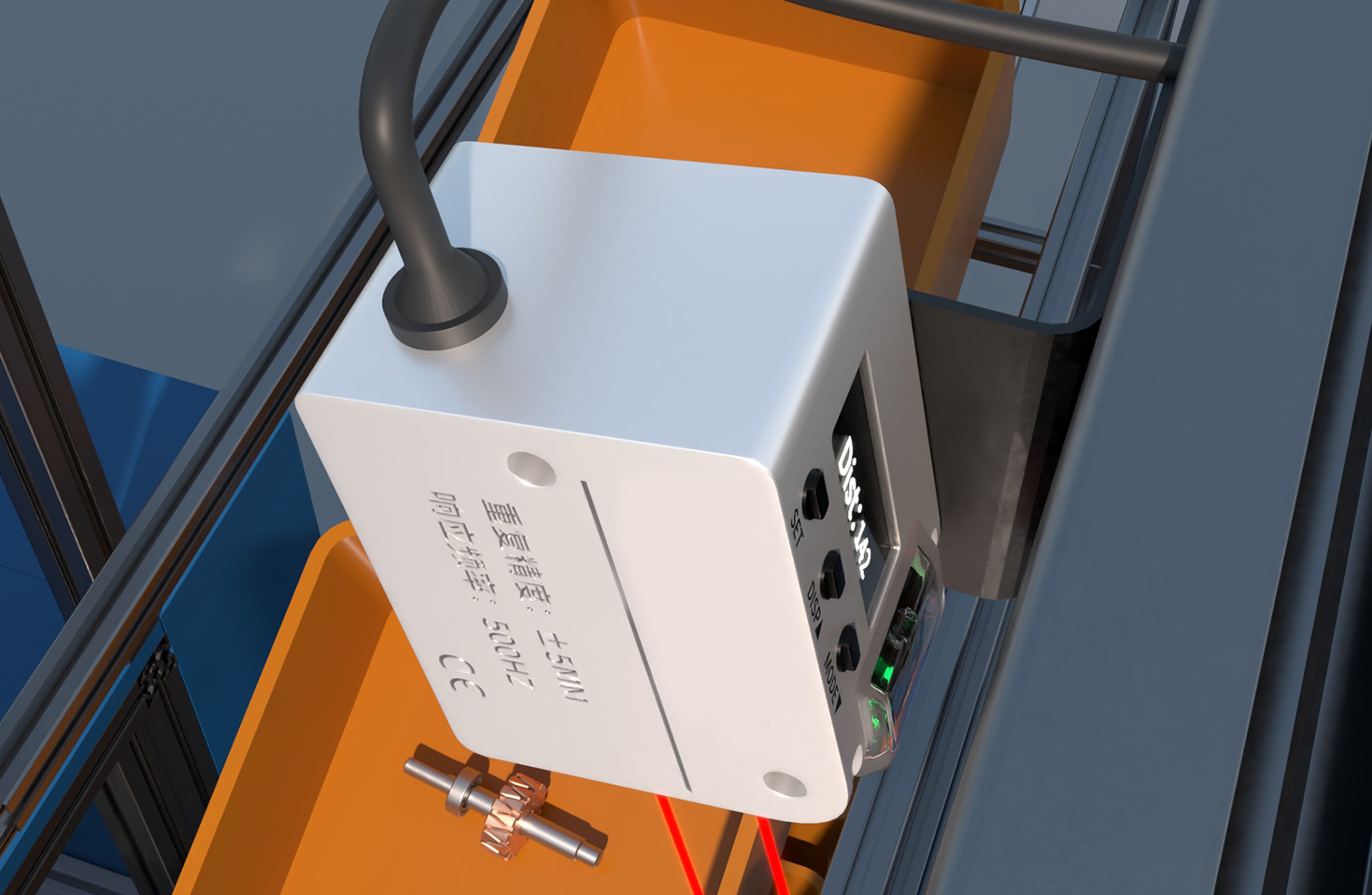
Selecting the appropriate Pingdu laser sensor requires careful consideration of several parameters. The required measuring range, from a few centimeters to several hundred meters, is primary. Accuracy and repeatability specifications must match the application's tolerance needs. The response time, or measurement frequency, is crucial for high-speed applications like sorting on conveyor belts. Environmental factors like the target material's reflectivity, ambient light conditions, and the presence of dust or steam must also be accounted for, as they can influence performance. Many Pingdu models offer adjustable laser power or advanced filtering algorithms to mitigate these challenges.
In conclusion, Pingdu laser distance sensors represent a mature yet continuously evolving technology. Their precision, reliability, and adaptability make them indispensable tools in the modern industrial landscape. From enhancing robotic autonomy to ensuring structural integrity and enabling smart factory initiatives, their applications are vast and growing. As industries push for greater automation, precision, and data-driven decision-making, the role of sophisticated measurement tools like Pingdu laser sensors will only become more central, solidifying their status as a cornerstone of industrial innovation and operational excellence.