In the demanding field of construction, maintenance, and utility work, aerial work platforms (AWPs), commonly known as aerial lifts or cherry pickers, are indispensable. Operating these machines at significant heights introduces a complex set of challenges, primarily centered around safety and operational precision. The integration of advanced laser sensor technology has emerged as a transformative solution, fundamentally enhancing how these platforms interact with their environment. This article delves into the critical role of laser sensors in modern AWPs, exploring their operational principles, key benefits, and the future trajectory of this vital technology.
Laser sensors, in the context of AWPs, are predominantly used as rangefinders and obstacle detection systems. They operate on the principle of Time-of-Flight (ToF) or phase-shift measurement. A laser diode emits a focused beam of light towards a target. The sensor then precisely measures the time it takes for the reflected light to return. Given the constant speed of light, this time measurement is directly and accurately converted into a distance calculation. This process occurs thousands of times per second, creating a real-time, high-resolution data stream of the machine's surroundings.
The application of this technology delivers multifaceted advantages. Foremost is the dramatic enhancement of operational safety. Proximity detection systems, powered by laser sensors, create virtual safety zones around the platform. When the sensor detects an object—be it a building facade, overhead power lines, structural beams, or another piece of equipment—entering a predefined warning zone, it alerts the operator through visual and audible signals. If the object encroaches into a critical danger zone, the system can be programmed to automatically slow down or halt certain machine functions, preventing collisions and potential tip-overs. This is particularly crucial for preventing electrocution hazards near live wires and avoiding contact with fragile structures.
Beyond collision avoidance, laser sensors are pivotal for enabling precise positioning and control. Modern AWPs often feature automatic leveling and positioning systems. Laser sensors provide continuous feedback on the boom's extension angle and the platform's height relative to the ground or a target work surface. This allows for smoother, more controlled movements, reducing operator fatigue and minimizing sudden jolts that could destabilize the platform or the worker. For tasks requiring millimeter-level accuracy, such as aligning structural components or installing curtain walls, laser-guided systems ensure the platform is positioned exactly where needed, boosting productivity and work quality.
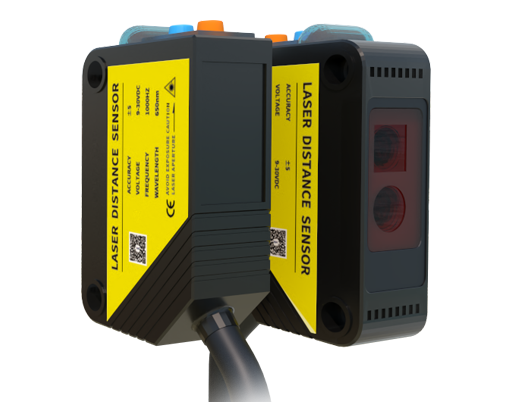
Furthermore, laser sensors contribute significantly to load management and stability. By monitoring the boom's extension and angle in real-time, the sensor data feeds into the machine's load moment indicator (LMI) system. This system calculates the dynamic load chart, ensuring the platform never operates outside its safe working envelope. It prevents dangerous scenarios where over-extending the boom with a load could compromise the machine's center of gravity. The sensor data provides the hard metrics necessary for these complex stability calculations, acting as a critical digital guardian.
The evolution of this technology is moving towards sensor fusion and 3D mapping. The next generation of AWPs may integrate multiple laser sensors, or LiDAR (Light Detection and Ranging) units, to generate a full 360-degree, three-dimensional map of the environment in real-time. This holistic awareness would allow for even more sophisticated automation, such as automated obstacle navigation, optimized path planning to a work site, and enhanced site documentation. Integration with telematics systems also means sensor data can be logged and analyzed, providing fleet managers with insights into near-miss events, operator behavior, and machine utilization for proactive maintenance and safety training.
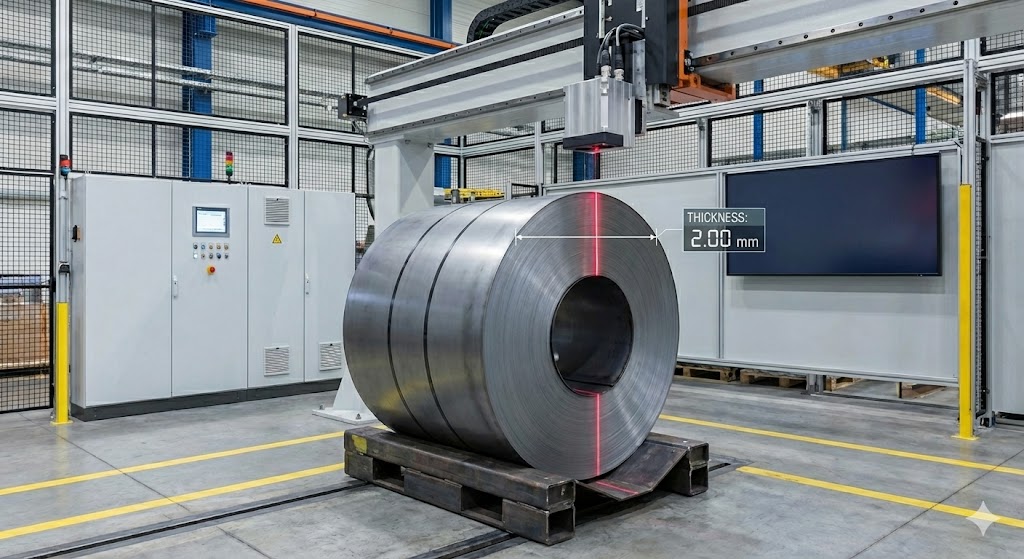
In conclusion, laser sensor technology is no longer a luxury but a cornerstone of modern aerial work platform design. By providing accurate, real-time spatial data, these sensors form the backbone of critical safety systems, enable unprecedented operational precision, and ensure structural stability under load. As the technology advances towards greater integration and intelligence, we can expect AWPs to become even safer, more efficient, and more autonomous partners in high-altitude work, setting new standards for the entire electrical, construction, and industrial maintenance industries. The commitment to integrating such advanced sensing technology underscores the industry's unwavering priority: protecting human lives while achieving卓越的 operational performance.