In the realm of industrial automation and control systems, proximity sensors stand as fundamental components, enabling machines to "sense" the presence or absence of objects without physical contact. These non-contact switches are pivotal for enhancing efficiency, safety, and reliability in countless applications. This article delves into the core principles, various types, key applications, and critical factors for selecting the right proximity switch for your needs.
At its heart, a proximity sensor detects the presence of a nearby object, typically a metallic target, and converts this information into an electrical signal. The primary advantage over mechanical limit switches is the absence of physical contact, leading to virtually infinite operational life, higher switching speeds, and resilience in harsh environments contaminated with oil, dust, or coolant.
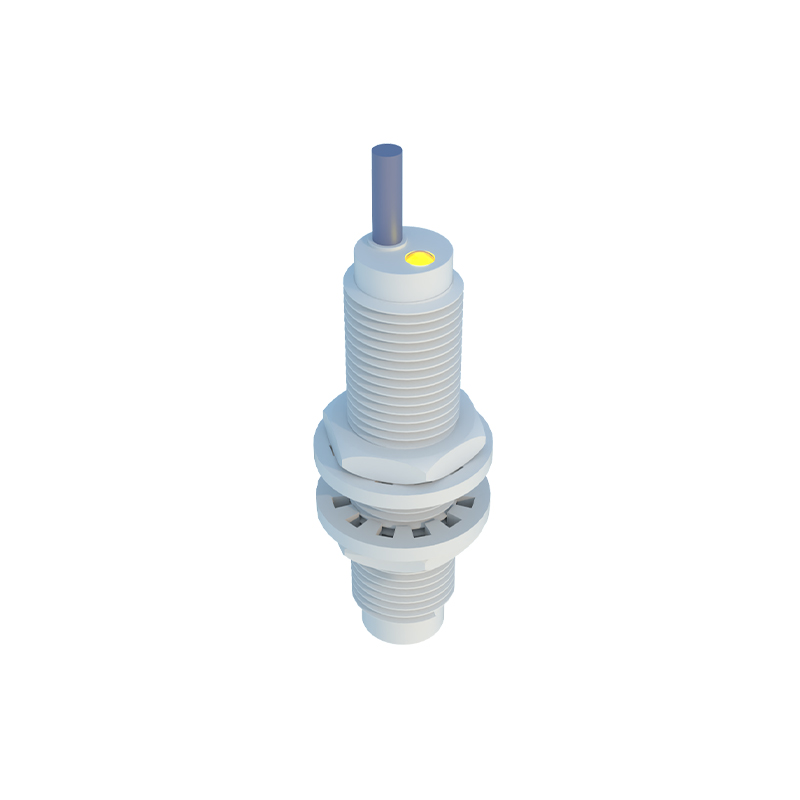
Several technologies underpin proximity sensors, each with distinct characteristics. Inductive proximity sensors are the most common type. They generate an electromagnetic field and detect the eddy current losses caused when a metallic object enters this field. They are exclusively used for detecting metals, with factors like target material (ferrous vs. non-ferrous), size, and shape influencing the sensing distance, or "switching distance." Their robustness makes them ideal for machine tools, assembly lines, and robotic systems.
Capacitive proximity sensors, on the other hand, can detect both metallic and non-metallic materials, including liquids, plastics, wood, and granules. They function by measuring changes in capacitance between the sensor's active surface and the target object. This versatility makes them suitable for level detection in tanks, material handling of non-metals, and presence detection of packaged goods.
For applications requiring longer sensing ranges or detection of all material types, photoelectric sensors are often employed. These use a light beam (visible, infrared, or laser) and detect interruptions or reflections. While not always classified strictly as "proximity" switches in the same family, their non-contact nature serves similar purposes in packaging, material handling, and security systems.
Ultrasonic sensors represent another key technology, measuring the time-of-flight of sound waves to determine distance. They excel in detecting objects regardless of color, transparency, or material, and are commonly used for distance measurement, level sensing of liquids and bulk solids, and obstacle detection.
When integrating a proximity switch into a system, several technical parameters demand careful consideration. The nominal sensing distance (Sn) is specified for a standard target under ideal conditions. In practice, a reduction factor is applied for different metals or conditions. The hysteresis (H) is the difference between the switch-on and switch-off points, preventing chatter when a target is at the sensing limit. The switching frequency defines how many operations per second the sensor can perform, crucial for high-speed applications. Environmental factors like temperature range, ingress protection (IP rating), and resistance to chemicals or welding spatter are paramount for reliable operation in industrial settings. Furthermore, the output configuration—whether NPN (sinking) or PNP (sourcing) transistor, NO (normally open) or NC (normally closed)—must be compatible with the controller's input module (e.g., PLC).
Applications for proximity sensors are vast and varied. In automotive manufacturing, they count parts, verify robot positions, and control welding operations. In food and beverage, capacitive sensors monitor fill levels, while inductive sensors detect metal contaminants. On packaging lines, they ensure precise positioning of products for labeling and boxing. They are integral to CNC machines for tool positioning and part clamping verification, and in material handling systems for pallet detection and conveyor control.
Selecting the optimal sensor requires a clear understanding of the application: What is the target material? What is the required sensing distance? What are the environmental conditions (temperature, contaminants, washdown)? What is the required switching speed and output type? Answering these questions will guide you to the correct sensor technology and housing style (cylindrical, rectangular, slot-type).
In conclusion, proximity sensors are indispensable eyes of modern industrial automation. Their ability to provide reliable, non-contact detection drives productivity, ensures safety, and enables sophisticated control sequences. By comprehending the different technologies and their respective strengths, engineers and technicians can make informed decisions, ensuring optimal performance and longevity in their automated systems. As Industry 4.0 and smart manufacturing evolve, the role of these precise and durable sensing components will only become more critical.