Laser temperature distance sensors represent a significant advancement in industrial measurement technology, combining non-contact temperature sensing with precise distance measurement capabilities. These devices operate on the principle of laser triangulation or time-of-flight for distance, while utilizing infrared thermometry for temperature readings. By emitting a laser beam toward a target, the sensor calculates the distance based on the reflection time or angle, simultaneously capturing infrared radiation to determine surface temperature without physical contact. This dual functionality is particularly valuable in environments where traditional sensors face limitations due to high temperatures, moving objects, or hazardous conditions.
In industrial settings, laser temperature distance sensors are widely adopted for monitoring and control processes. For instance, in metal processing industries, they ensure optimal heating temperatures in furnaces while maintaining safe distances from molten materials. The automotive sector employs these sensors to inspect engine components during manufacturing, verifying both dimensional accuracy and thermal performance. Additionally, in logistics and warehousing, they facilitate automated inventory management by measuring package dimensions and detecting overheating in stored goods. The integration of these sensors with IoT platforms enables real-time data analytics, predictive maintenance, and enhanced operational efficiency.
Key technical specifications include measurement range, accuracy, response time, and environmental durability. Typical distance measurement ranges vary from a few millimeters to several meters, with accuracies up to ±0.1% of the measured value. Temperature sensing capabilities often span from -50°C to over 2000°C, depending on the sensor model and calibration. Advanced models feature adjustable emissivity settings to account for different material surfaces, ensuring reliable temperature readings across diverse applications. The sensors are designed to withstand harsh industrial conditions, including dust, vibration, and extreme temperatures, often achieving IP67 or higher ingress protection ratings.
The advantages of laser temperature distance sensors over conventional methods are substantial. Non-contact operation eliminates wear and tear, reducing maintenance costs and downtime. High-speed measurements allow for continuous monitoring of fast-moving production lines, while the absence of physical contact prevents contamination or damage to sensitive surfaces. However, challenges such as interference from ambient light, reflective surfaces, or atmospheric conditions must be addressed through proper installation and calibration. Innovations in multi-point sensing and AI-driven data processing are further enhancing their capabilities, enabling applications in quality assurance, energy management, and safety systems.
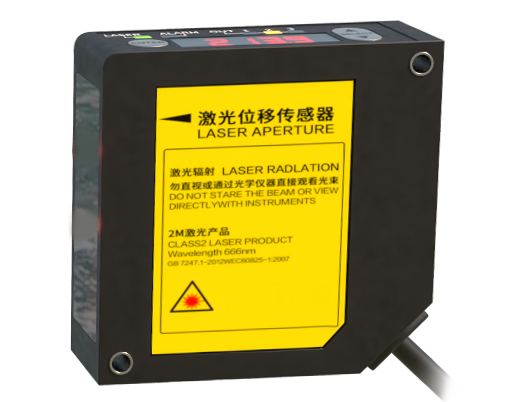
Looking ahead, the evolution of laser temperature distance sensors is driven by trends toward Industry 4.0 and smart manufacturing. Miniaturization and cost reduction are making these sensors accessible to smaller enterprises, while wireless connectivity supports decentralized monitoring networks. As industries prioritize automation and precision, these sensors will play a pivotal role in optimizing processes, ensuring product quality, and enhancing workplace safety. By leveraging their dual measurement functions, businesses can achieve greater control over operational parameters, ultimately contributing to sustainable and efficient industrial practices.