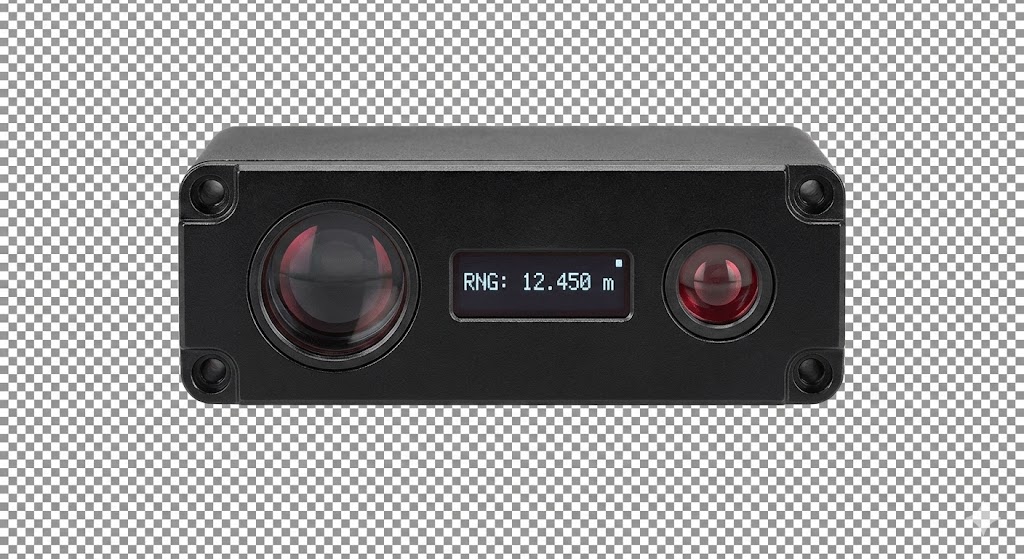
In the rapidly evolving landscape of industrial automation, precision, reliability, and efficiency are paramount. Among the myriad of sensing technologies available, optical screen laser sensors have emerged as a critical component for non-contact measurement, detection, and quality control. This article delves into the operational principles, key applications, and essential considerations for selecting and implementing these advanced sensors in modern industrial settings.
At its core, an optical screen laser sensor operates by projecting a laser line or a structured light pattern onto a target surface. This creates a visible "screen" or plane of light. A high-resolution CMOS or CCD camera, precisely aligned within the sensor housing, captures the distortion, interruption, or profile of this light screen. Sophisticated onboard processors then analyze the captured image in real-time. By applying triangulation algorithms and comparing the observed light pattern to a known reference, the sensor can extract precise dimensional data, detect the presence or absence of objects, identify edge positions, and measure heights, widths, or gaps with exceptional accuracy. Unlike single-point laser sensors, the screen or line projection allows for the inspection of an entire profile simultaneously, making it ideal for contour analysis and volumetric measurement.
The advantages of optical screen laser sensors are numerous. They offer high-speed, non-contact inspection, eliminating mechanical wear and potential damage to delicate parts. Their resolution can reach micron levels, providing data granularity unattainable by many other sensor types. Furthermore, they are largely immune to variations in surface color, texture, or material, as they rely on geometric light distortion rather than reflectivity alone. Modern versions incorporate robust housings (often IP67 or higher) to withstand harsh industrial environments involving dust, moisture, and vibration.

The applications for these sensors span across diverse industries. In automotive manufacturing, they are indispensable for verifying the precise gap and flushness between body panels, such as doors, hoods, and trunks, ensuring perfect alignment and aesthetic quality. In electronics assembly, they measure component coplanarity, inspect solder paste volume on PCBs, and verify the presence and correct placement of tiny connectors. The packaging industry utilizes them to check fill levels in bottles and containers, inspect seal integrity, and count stacked items on pallets. In logistics and warehousing, they facilitate dimensioning systems that measure parcel sizes for automated sorting and optimal space utilization. Additionally, they play a vital role in robotic guidance, providing 3D vision for bin picking, precise part placement, and assembly verification.
Selecting the right optical screen laser sensor requires careful analysis of several technical parameters. First, the measurement range and field of view (FOV) must be compatible with the target object's size and the required stand-off distance. The resolution and repeatability specifications determine the smallest detectable feature and the measurement consistency, directly impacting inspection quality. Measurement speed, often expressed in Hertz (Hz), must align with the production line's cycle time to avoid bottlenecks. Environmental factors are crucial; the sensor's ingress protection (IP) rating, operating temperature range, and resistance to ambient light interference must be assessed. The type of output interface (e.g., digital I/O, Ethernet/IP, PROFINET, EtherCAT) should seamlessly integrate with the existing PLC or control system. Finally, the software provided for configuration, calibration, and data analysis should be user-friendly yet powerful, allowing for easy setup of measurement windows, tolerances, and logic functions.
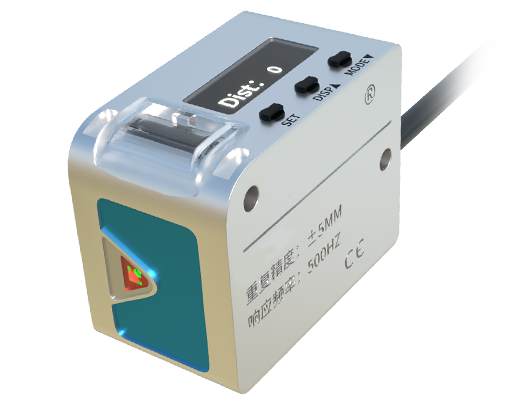
Integration best practices involve meticulous mechanical mounting to ensure stability and correct alignment. Proper lighting conditions should be established, sometimes requiring supplemental lighting or enclosures to mitigate ambient light noise. Regular calibration against master parts is recommended to maintain long-term accuracy. Data from the sensor should be effectively channeled into a supervisory system for real-time monitoring, statistical process control (SPC), and traceability.
Looking ahead, the convergence of optical screen laser sensing with artificial intelligence and machine learning is set to unlock new frontiers. Smart sensors capable of adaptive learning, anomaly detection, and predictive maintenance will further enhance automated system intelligence. Miniaturization and cost reduction will also make this technology accessible for a broader range of applications.
In conclusion, optical screen laser sensors represent a sophisticated and versatile tool in the industrial automation arsenal. By providing fast, accurate, and reliable profile and presence data, they are fundamental to achieving higher levels of quality, efficiency, and automation in modern manufacturing and logistics. A thorough understanding of their principles and a methodical approach to selection and integration are key to leveraging their full potential and driving operational excellence.