In industrial automation and control systems, proximity switches and sensors are fundamental components that often get mentioned interchangeably. However, they serve distinct functions and operate on different principles. Understanding the differences between proximity switches and sensors is crucial for engineers and technicians to design efficient, reliable systems.
A proximity switch, often referred to as a proximity sensor in casual conversation, is specifically a type of sensor designed to detect the presence or absence of an object without physical contact. It functions primarily as a binary switching device. When a target object enters its sensing range, the switch changes its output state—typically from open to closed (or vice-versa) in a digital signal. This action is akin to a traditional mechanical limit switch but achieved through non-contact means like electromagnetic, capacitive, or inductive technologies. Inductive proximity switches, for instance, are common for detecting metallic objects. They generate an electromagnetic field, and when a metal object disrupts this field, the switch triggers. Their output is usually a simple ON/OFF signal sent to a Programmable Logic Controller (PLC) or relay to control a circuit—like stopping a conveyor or counting items. The key characteristic is its role as a direct control element; it provides a discrete signal to initiate an immediate action.
On the other hand, the term "sensor" is a much broader category. A sensor is a device that measures a physical quantity and converts it into a signal, usually electrical, that can be read by an observer or an instrument. Sensors can provide either discrete (digital) or continuous (analog) output. For example, a temperature sensor like a thermocouple provides a varying voltage corresponding to temperature, a pressure transducer outputs a signal proportional to force, and a photoelectric sensor might give a distance measurement. While a proximity switch is a subset of sensors, not all sensors are switches. Sensors often feed data to a control system for monitoring, analysis, or complex feedback loops. Their output might be a 4-20mA current loop, a 0-10V voltage, or a digital communication signal (like IO-Link), representing a range of values rather than just two states.
The core difference lies in functionality and output. A proximity switch is primarily a detector with a binary output used for direct control tasks—position verification, object detection, or end-of-travel limits. Its operation is simple: object present = signal ON; object absent = signal OFF. It is designed for robustness and repeatability in harsh industrial environments.
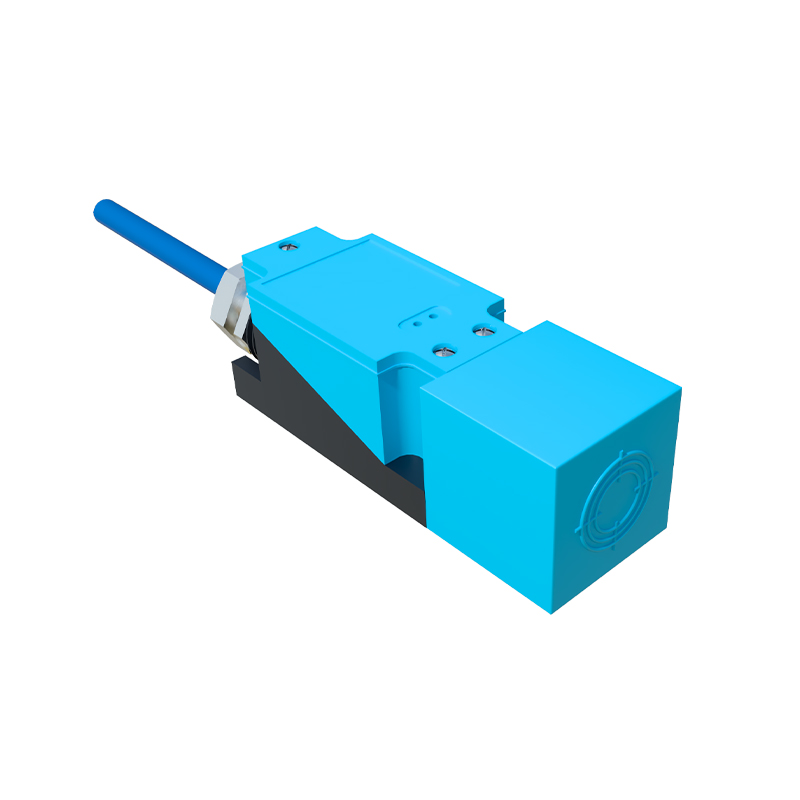
In contrast, a general sensor is a measuring device that can provide quantitative data. It informs the system about the magnitude of a parameter. For instance, an ultrasonic sensor can measure the exact distance to an object, not just its presence. This data can be used for process control, such as maintaining a liquid level or adjusting machine alignment. Sensors enable precision and adaptability in automation.
Another distinction is in application context. Proximity switches are typically used where a simple yes/no decision is needed. They are ideal for high-speed counting, limit switching in machinery, or safety interlocks. Sensors, with their analog or complex digital outputs, are employed in scenarios requiring monitoring and precise control—like regulating temperature in an oven, measuring flow rate in a pipe, or monitoring vibration in a motor.
Wiring and integration also differ. Many standard proximity switches have three wires (power, ground, and output) and interface easily with PLC digital input modules. Sensors, especially analog ones, may require specialized input cards to interpret the signal and often need calibration. Modern "smart sensors" blur this line by incorporating both sensing and switching capabilities with diagnostic functions.
In summary, while all proximity switches are sensors, not all sensors are proximity switches. The proximity switch is a specialized, binary-output device for detection and direct control. The term sensor encompasses a wide array of devices that measure various phenomena, providing data for monitoring and complex control. Selecting the correct component—whether a robust proximity switch for a simple presence detection task or a precise sensor for measurement—is pivotal for optimal system performance, cost-efficiency, and reliability in any electrical or automation engineering project.