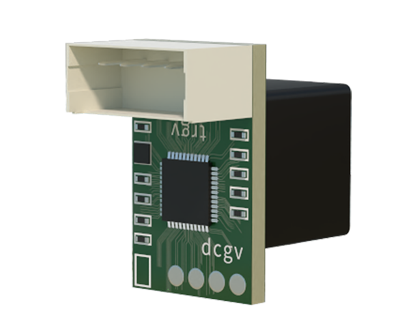
In the rapidly evolving landscape of sensing technology, Radar (Radio Detection and Ranging) and LiDAR (Light Detection and Ranging) sensors stand as two pivotal pillars. Both are active remote sensing systems, yet they operate on fundamentally different physical principles, leading to distinct performance characteristics, applications, and trade-offs. Understanding their core differences is essential for engineers and system designers selecting the optimal sensor for a given task.
Radar technology utilizes radio waves, typically in the microwave band of the electromagnetic spectrum. A radar transmitter emits pulsed or continuous radio waves. When these waves encounter an object, a portion of the energy is reflected back to the receiver. By analyzing the time delay, frequency shift (Doppler effect), and amplitude of the returned signal, radar systems can determine an object's range, velocity, and angle. Key advantages of radar include its exceptional performance in adverse weather conditions. Rain, fog, dust, and snow have a relatively minor attenuating effect on longer radio wavelengths, allowing radar to "see through" obscurants where optical systems fail. Furthermore, radar can directly measure radial velocity with high accuracy using the Doppler principle, a critical feature for speed enforcement and automotive adaptive cruise control. Modern automotive radars, operating at 77 GHz, offer fine resolution for object detection and are cost-effective for mass production. However, radar traditionally suffers from lower angular resolution compared to LiDAR. While advancements in MIMO (Multiple-Input Multiple-Output) and imaging radar are closing this gap, distinguishing fine details or identifying specific object shapes remains more challenging.
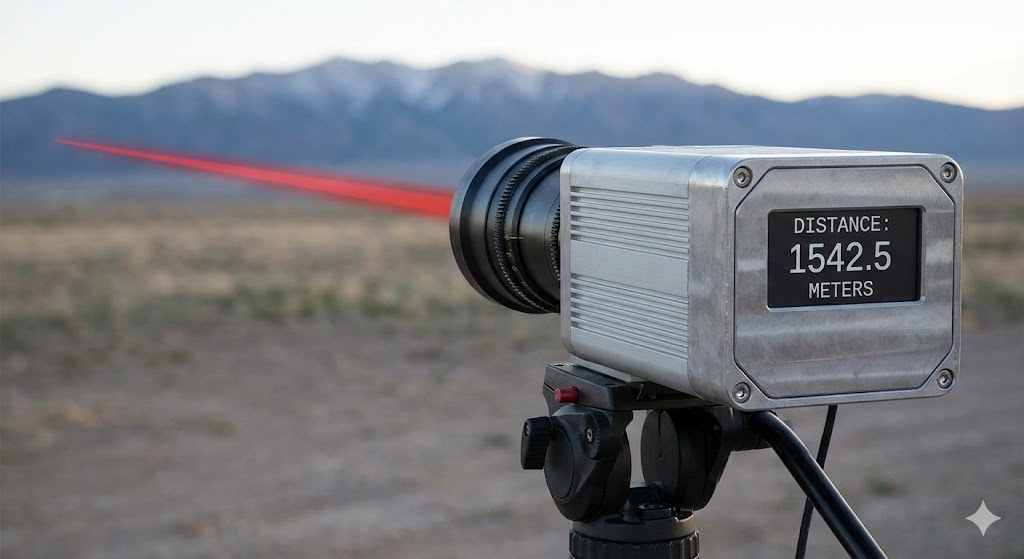
LiDAR, in contrast, uses laser light, usually in the near-infrared spectrum. It measures distance by emitting laser pulses and calculating the time-of-flight (ToF) for the light to reflect off a target and return. By scanning the laser beam rapidly across a field of view, a LiDAR sensor builds a precise, high-resolution three-dimensional point cloud map of its surroundings. This is LiDAR's paramount strength: exquisitely detailed spatial resolution. It can detect minute contours, classify objects (like distinguishing a pedestrian from a bicycle), and create highly accurate environmental models. This capability has made LiDAR indispensable for applications like topographic mapping, autonomous vehicle perception, and archaeology. However, LiDAR's primary weakness is its susceptibility to weather. Fog, heavy rain, and snow can scatter and absorb the laser light, significantly reducing effective range and point cloud density. Additionally, performance can degrade under direct, bright sunlight due to background noise. While solid-state LiDAR designs are reducing costs, high-performance mechanical scanning LiDAR units have historically been more expensive than radar systems.
The choice between Radar and LiDAR is rarely binary; rather, it is dictated by the application's specific requirements. In the automotive industry, this has led to a powerful trend of sensor fusion. Here, radar's robust velocity data and all-weather reliability are combined with LiDAR's high-fidelity 3D imaging. An autonomous vehicle might use long-range radar for high-speed forward collision warning, short-range radar for blind-spot monitoring, and a LiDAR suite for 360-degree environmental modeling. The strengths of one sensor compensate for the weaknesses of the other, creating a redundant and robust perception system. In industrial automation, radar is often preferred for presence detection in dusty or humid environments, such as mining or food processing. LiDAR finds its niche in precision tasks like robotic bin-picking, warehouse inventory management via 3D scanning, and guiding automated guided vehicles (AGVs) in controlled environments.
Looking forward, both technologies are undergoing significant miniaturization and cost reduction. Radar is moving to higher frequencies (e.g., 140 GHz) for improved resolution. LiDAR is transitioning from bulky mechanical assemblies to solid-state and flash-based systems, promising greater reliability and lower costs. The future of sensing lies not in a single technology dominating, but in the intelligent fusion of multi-modal data from Radar, LiDAR, cameras, and ultrasonic sensors. This synergistic approach, powered by advanced sensor fusion algorithms and artificial intelligence, will enable the next generation of autonomous systems, smart infrastructure, and industrial IoT solutions, providing a perception capability that is far greater than the sum of its individual parts.