In the rapidly evolving landscape of industrial automation and quality control, flat panel laser sensors have emerged as a cornerstone technology, driving unprecedented levels of accuracy, efficiency, and reliability. Unlike traditional point or line laser sensors, these advanced devices project a structured, two-dimensional laser plane onto a target surface. This innovation enables the simultaneous capture of vast amounts of topographic data, making them indispensable for high-speed, non-contact 3D profiling and inspection.
The core operating principle hinges on optical triangulation. A laser diode emits a fan-shaped beam, creating a precise line of light on the object's surface. A high-resolution CMOS or CCD camera, positioned at a known angle to the laser source, captures the deformation or displacement of this laser line. Sophisticated onboard processors then analyze this image in real-time, calculating height, depth, and contour variations with micron-level precision. This allows for the instantaneous generation of a detailed cross-sectional profile.
The applications for flat panel laser sensors are vast and transformative. In automotive manufacturing, they are deployed for rigorous gap and flush measurement between body panels, ensuring perfect alignment and aesthetic quality. In electronics assembly, they verify the coplanarity of solder balls on BGAs and inspect the precise placement of miniature components. The wood and metal industries utilize them for real-time thickness monitoring and warpage detection during milling and rolling processes. Furthermore, in logistics and warehousing, these sensors facilitate rapid parcel dimensioning and volume calculation, optimizing storage and shipping logistics.
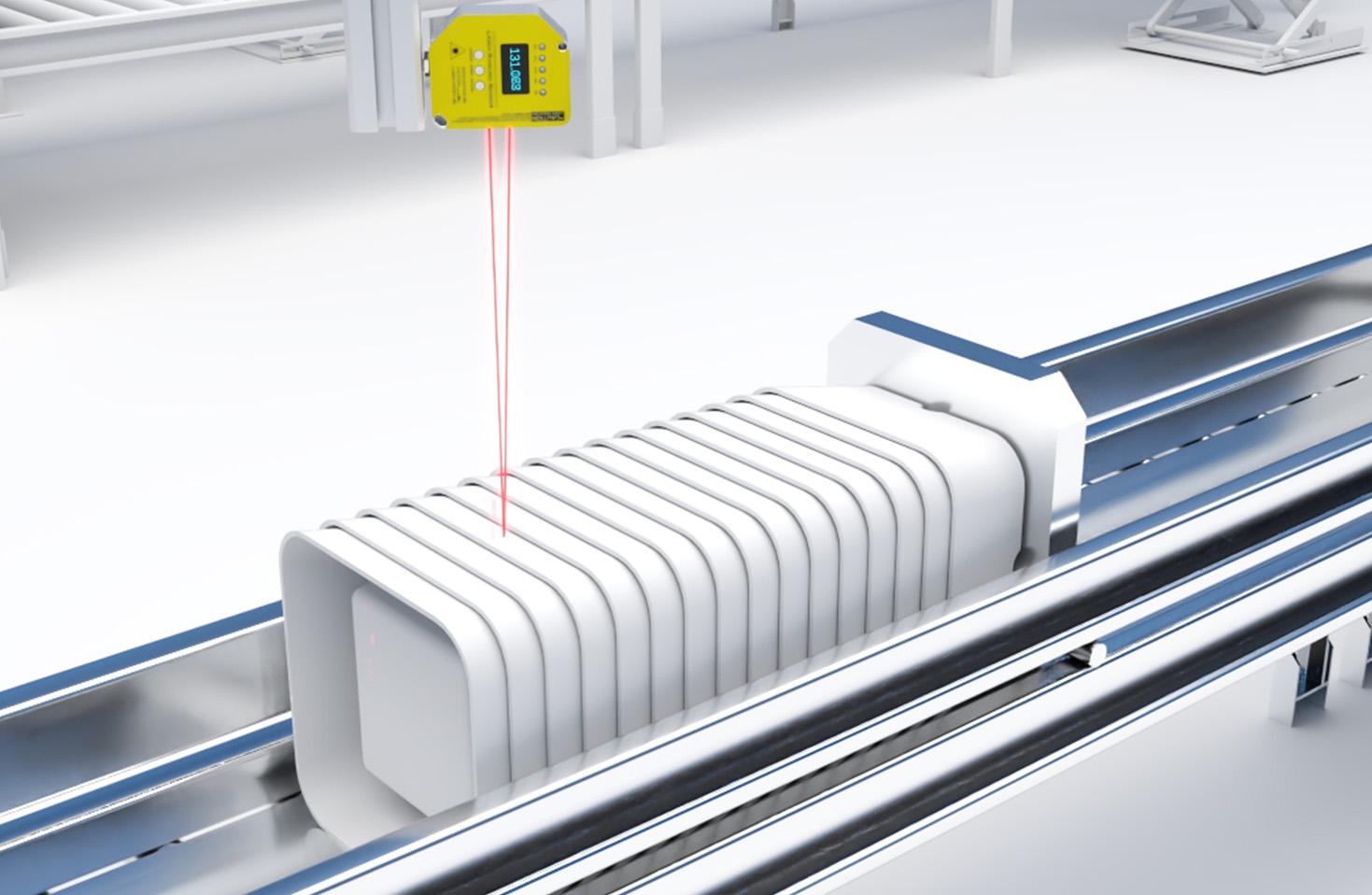
Several key advantages distinguish flat panel laser sensors from other measurement techniques. First is their exceptional speed; they can capture thousands of profiles per second, enabling 100% inline inspection without becoming a production bottleneck. Second is their robustness. Designed for harsh industrial environments, they are often housed in ruggedized casings with high IP ratings, resistant to dust, coolant, and vibration. Third is their versatility. With adjustable measurement ranges, field depths, and laser intensities, a single sensor model can be configured for diverse tasks, from detecting subtle surface defects to measuring large object deformations.
Integration into modern smart factories is seamless. These sensors typically offer standard industrial communication protocols like Ethernet/IP, PROFINET, or EtherCAT, allowing them to feed measurement data directly into PLCs, SCADA systems, and Manufacturing Execution Systems (MES). This integration facilitates closed-loop process control, where measurement data can instantly trigger adjustments in upstream machinery, maintaining tight tolerances autonomously and reducing waste.
When selecting a flat panel laser sensor, engineers must consider critical parameters such as measurement range, Z-axis resolution, profile frequency, and laser class. The choice of laser wavelength (typically red or blue) is also crucial, as blue lasers offer superior performance on shiny or organic surfaces by reducing specular reflection. Additionally, the sensor's software suite is paramount. User-friendly interfaces that allow for easy calibration, tool configuration (e.g., for edge detection, height measurement), and data logging are essential for maximizing productivity.

Looking ahead, the convergence of flat panel laser sensing with artificial intelligence and machine learning represents the next frontier. AI algorithms can be trained on vast datasets of sensor profiles to not only identify defects but also predict process deviations and potential equipment failures before they occur. This predictive capability promises to usher in a new era of zero-defect manufacturing and significantly enhanced operational efficiency.
In conclusion, flat panel laser sensors are far more than just measurement tools; they are enablers of intelligent manufacturing. By providing dense, accurate, and real-time 3D data, they empower industries to achieve higher quality standards, reduce costs, and accelerate innovation. Their continued adoption is a definitive step toward the fully automated, data-driven factories of the future.