In the realm of industrial automation and control systems, proximity sensors and magnetic switches (often referred to as magnetic proximity switches or "mag switches") are both pivotal components for non-contact detection and switching. While they share the common goal of sensing objects without physical touch, their underlying principles, performance characteristics, and ideal applications differ significantly. Understanding these distinctions is crucial for engineers and technicians to select the appropriate device for a given task, ensuring optimal system reliability, efficiency, and cost-effectiveness.
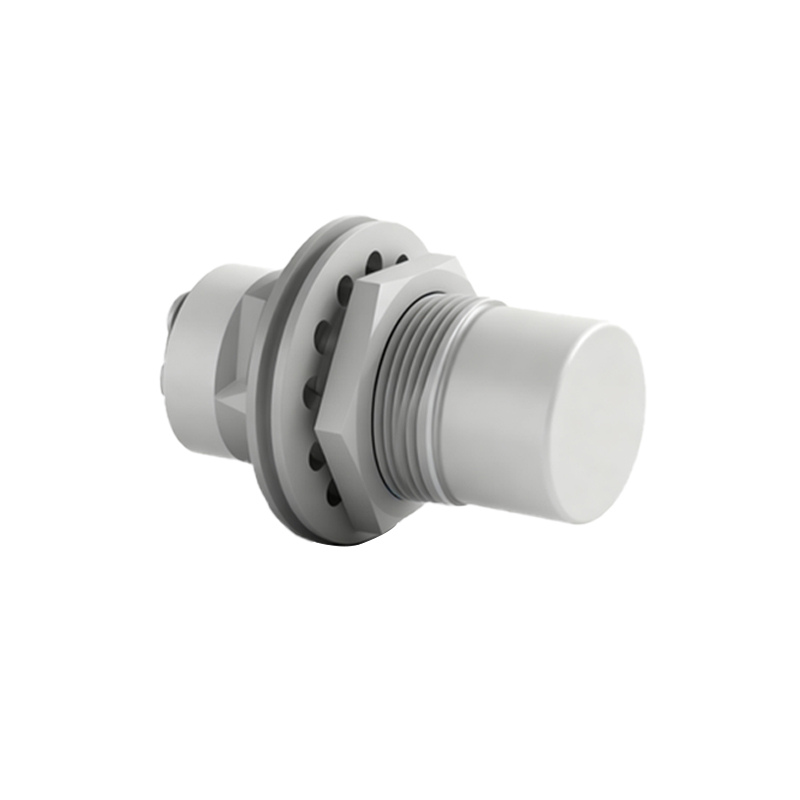
Proximity sensors are electronic devices designed to detect the presence or absence of an object within a specified sensing range without any physical contact. They operate based on various physical principles, with inductive, capacitive, and photoelectric being the most prevalent types in industrial settings. Inductive proximity sensors, for instance, generate an electromagnetic field. When a metallic object enters this field, it induces eddy currents within the sensor, causing a change in the oscillation amplitude. This change is detected by the sensor's circuitry, which then triggers an output signal. These sensors are highly effective for detecting metals and are known for their high switching frequency, precision, and resistance to environmental contaminants like dust, oil, and moisture. Capacitive sensors can detect both metallic and non-metallic objects (e.g., plastics, liquids, wood) by sensing changes in capacitance, making them versatile for level detection or material handling. Photoelectric sensors use light beams (visible, infrared, or laser) and are excellent for long-range detection and sensing transparent or small objects.
Magnetic switches, on the other hand, are simpler electromechanical devices that operate based on the interaction between a permanent magnet and a reed switch or Hall-effect sensor. The most common configuration involves a separate magnet attached to a moving part (like a door or cylinder piston) and a switch unit containing the sensing element. When the magnet approaches within a certain distance (typically a few millimeters to centimeters), the magnetic field actuates the reed contacts (causing them to close or open) or triggers a Hall-effect semiconductor to change state. This action completes or interrupts an electrical circuit. Magnetic switches are fundamentally binary devices: they indicate whether the magnet is "near" or "far." They are renowned for their simplicity, robustness, and ability to operate in harsh environments with extreme temperatures, vibrations, and potential explosive atmospheres (when properly housed). Their operation is not affected by non-ferrous materials, dust, or most liquids, but they specifically require a magnetic field for activation.
The core differences between these technologies are multifaceted. Firstly, the sensing principle: Proximity sensors rely on changes in electromagnetic fields, capacitance, or light, whereas magnetic switches depend solely on the presence of a magnetic field from a magnet. Secondly, the target material: Standard inductive proximity sensors only detect metals (ferrous and non-ferrous to varying degrees). Capacitive and photoelectric sensors have broader material compatibility. Magnetic switches require a magnet as the target; they do not directly sense the object itself but rather the position of the magnet attached to it. Thirdly, sensing range: Proximity sensors generally offer longer and more adjustable sensing distances, from a few millimeters up to several meters for some photoelectric types. Magnetic switches have very short, fixed operating distances, often below 50mm, dictated by the strength of the magnet. Fourthly, output and complexity: Proximity sensors typically provide solid-state electronic outputs (PNP/NPN analog or digital) and can offer additional features like analog proportionality, teach-in functionality, and IO-Link communication. Magnetic switches usually provide a simple dry contact (reed) or a basic switched semiconductor output. They are less complex with no active electronics in the sensing head in basic models. Fifthly, environmental robustness: While both can be rugged, magnetic switches often excel in extremely demanding conditions involving high temperatures, pressure, or washdowns because their sealed reed contacts have no active electronics susceptible to damage. Proximity sensors with advanced housing (e.g., stainless steel, PTFE) also achieve high ingress protection ratings but may have temperature limitations for their internal electronics.
Application scenarios highlight these differences. Proximity sensors are the workhorses of automated production lines. An inductive sensor counts metal parts on a conveyor, a capacitive sensor monitors fluid level in a non-metallic tank, and a photoelectric sensor verifies the presence of a product in packaging. They are chosen for tasks requiring high speed, precise positioning, or detection of specific materials. Magnetic switches find their niche in safety and position monitoring where absolute reliability is paramount. They are ubiquitous as limit switches on cylinder pistons in pneumatic systems, providing a definitive signal for "fully extended" or "fully retracted." They are also standard in door and guard interlock systems for machinery safety; the door's closure brings a magnet near the switch, sending