In the realm of industrial automation, process control, and advanced measurement, laser sensors stand as a cornerstone technology. But what exactly is a laser sensor? At its core, a laser sensor is a device that utilizes a focused beam of coherent light—laser light—to detect, measure, or profile an object. It operates on the principle of emitting a laser beam towards a target and analyzing the reflected light. The specific method of analyzing this return signal defines the sensor's type and its application capabilities.
The fundamental components include a laser diode as the light source, optics for focusing the beam, a photodetector to receive the reflected light, and sophisticated signal processing electronics. The key advantage lies in the laser's properties: coherence, monochromaticity, and low divergence. This allows for the creation of a precise, intense, and highly collimated beam that can be focused on a very small spot, enabling high-resolution measurements over long distances and in challenging environments where other sensing technologies might fail.
Several primary types of laser sensors dominate the market, each suited for specific tasks. Laser Distance Sensors, often based on Time-of-Flight (ToF) or phase-shift measurement principles, calculate distance by measuring the time it takes for the laser pulse to travel to the target and back. They are ubiquitous in applications like level monitoring in silos, vehicle dimensioning, and crane positioning. Laser Displacement Sensors are a subset designed for high-precision, non-contact measurement of an object's position, thickness, or vibration. They frequently use triangulation or confocal measurement principles, achieving micron or even sub-micron resolution. These are vital in semiconductor manufacturing, precision assembly, and quality inspection.

Laser Profilers or 3D Scanners project a laser line onto a target and use a camera to capture the deformation of that line, constructing a detailed 3D profile or contour of the object. This technology is revolutionary for reverse engineering, robotic guidance, and weld seam tracking. Laser Contrast Sensors are designed to detect marks, labels, or color differences on surfaces by evaluating the contrast in reflected light intensity. They are the workhorses of packaging and printing industries for ensuring correct labeling. Finally, Laser Safety Sensors, such as light curtains and area scanners, create an invisible protective field of laser beams. Any intrusion into this field triggers an immediate safety stop for machinery, safeguarding personnel in automated cells.
The applications of laser sensors are vast and continually expanding. In manufacturing, they enable robotic vision for pick-and-place operations, precise part inspection for tolerances, and real-time control of production processes. In logistics, they automate dimensioning for shipping, palletizing, and warehouse management. The automotive industry relies on them for body-in-white measurement, gap and flush analysis, and autonomous vehicle LiDAR systems. Even in consumer electronics, laser sensors enable features like facial recognition and autofocus in smartphone cameras.
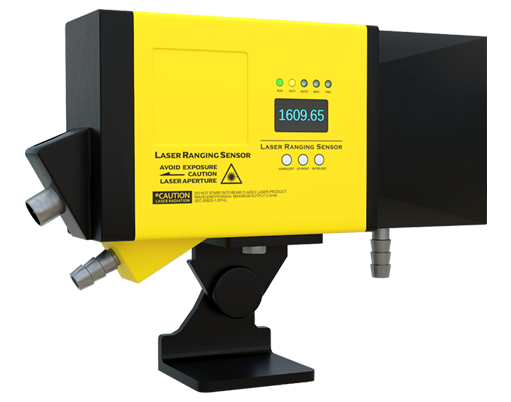
Selecting the right laser sensor requires careful consideration of several parameters. Measurement Range and Stand-off Distance define the operational envelope. Resolution and Repeatability determine the precision of the measurement. Spot Size is critical for measuring small features. The Sampling Rate or response speed must match the dynamics of the application. Environmental factors are paramount: the sensor must withstand ambient light interference, dust, moisture, vibration, and temperature extremes, often indicated by an IP (Ingress Protection) rating. The Output Interface (analog, digital, Ethernet, fieldbus) must be compatible with the existing control system. Finally, the Target Surface properties—color, material, reflectivity, and texture—can dramatically affect performance; some sensors offer automatic background suppression or are specifically calibrated for challenging surfaces like shiny metals or dark, absorbent materials.
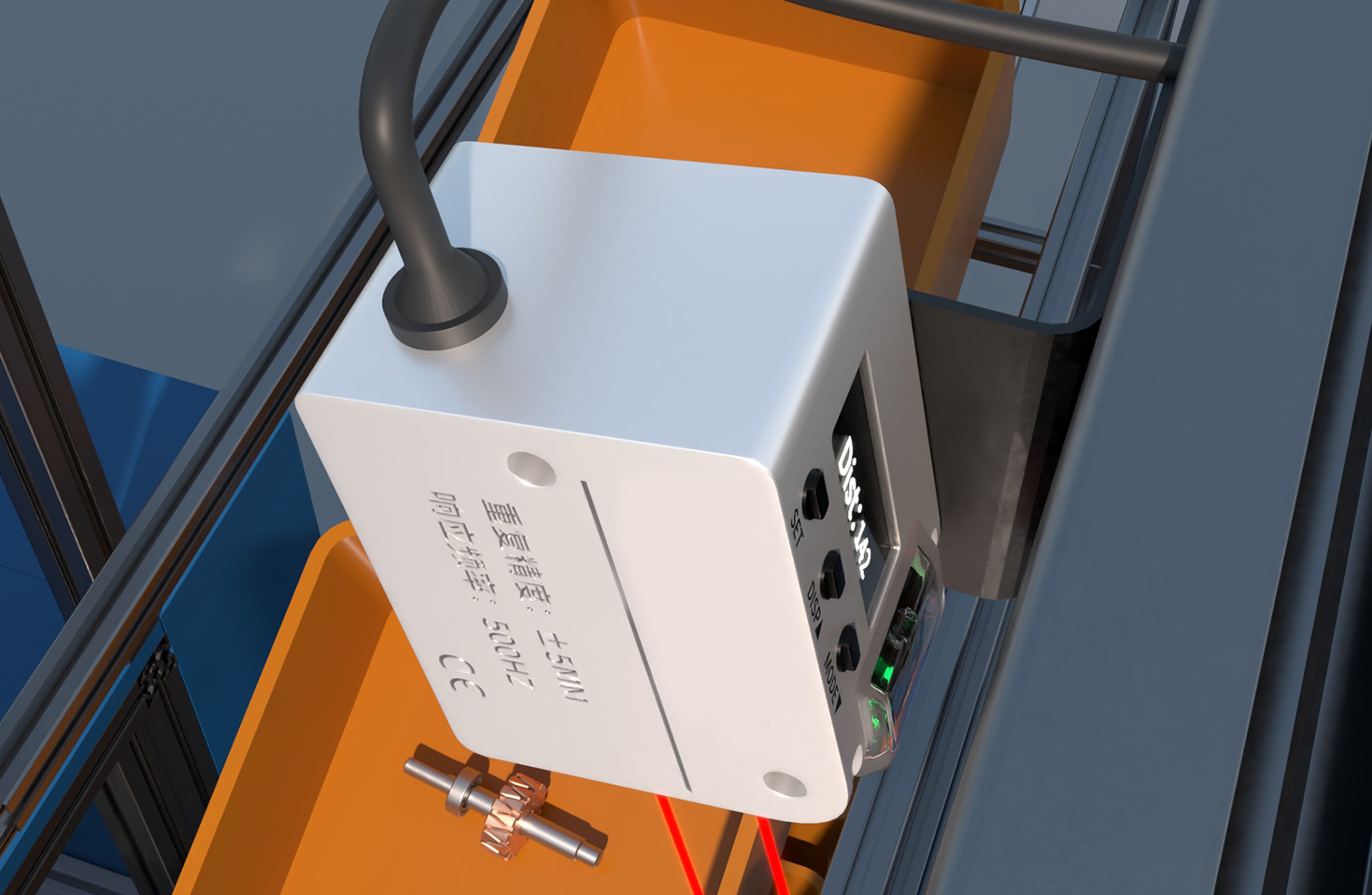
In conclusion, a laser sensor is far more than just a "laser beam switch." It is a sophisticated optoelectronic system that translates the physical properties of light interaction into precise, reliable, and actionable data. From ensuring micrometer-level accuracy on a factory floor to enabling the perception systems of autonomous machines, laser sensors are indispensable tools driving innovation and efficiency across countless industries. Understanding their principles, types, and selection criteria is the first step toward leveraging their full potential to solve complex measurement and detection challenges.