In the realm of industrial automation and safety systems, laser sensors have emerged as pivotal components, offering unparalleled precision and reliability. Among their diverse functionalities, the alarm feature stands out as a critical element for proactive monitoring and incident prevention. This article delves into the sophisticated alarm capabilities of modern laser sensors, elucidating their operational principles, configurations, and practical applications in various industrial settings.
Laser sensors operate by emitting a focused beam of light toward a target and analyzing the reflected signal. The alarm function is typically integrated into the sensor's evaluation electronics, which continuously monitor parameters such as distance, position, presence, or thickness. When the measured value deviates from a predefined setpoint or range, the sensor triggers an alarm output. This output can be configured as a digital signal (e.g., NPN/PNP transistor, relay) or analog signal (e.g., 4-20 mA, 0-10 V), enabling seamless integration with Programmable Logic Controllers (PLCs), Human-Machine Interfaces (HMIs), or centralized monitoring systems.
Advanced laser sensors offer multi-point or window alarm configurations. In a window mode, users define upper and lower thresholds, creating an acceptable operational band. If the measurement falls outside this window, an alarm is activated. This is particularly useful in applications like web guiding, where material edge position must be maintained within strict tolerances, or in fill-level monitoring to prevent overflows or shortages. Some sensors also provide dual independent alarms, allowing for separate warning and critical fault signals—enhancing graded response strategies.
The programmability of these alarms via software interfaces or teach-in buttons adds significant flexibility. Engineers can set hysteresis to prevent alarm chattering near threshold boundaries, adjust response times to filter out transient disturbances, and enable delay functions for stable state recognition. For instance, in conveyor belt systems detecting package presence, a short delay can ensure that brief gaps between items do not falsely trigger alarms, thereby reducing nuisance trips and maintaining operational continuity.

In safety-critical applications, such as intrusion detection in hazardous areas or machine guarding, laser sensors with alarm functions contribute to functional safety standards like IEC 61508 or ISO 13849. These sensors may include self-monitoring features that alert operators to internal faults (e.g., lens contamination, misalignment) or degradation in performance, ensuring fail-safe operation. Integration with safety relays or safety PLCs allows for immediate machine shutdown or activation of warning lights and sirens, mitigating risks of injury or equipment damage.
Environmental robustness further enhances alarm reliability. High-end laser sensors are designed with IP67 or higher ingress protection, resisting dust, moisture, and vibrations. Temperature compensation algorithms ensure stable measurements across varying ambient conditions, preventing false alarms due to thermal drift. In outdoor applications, such as perimeter security or vehicle detection, sensors with robust housing and advanced optics maintain accuracy despite rain, fog, or changing light intensities.
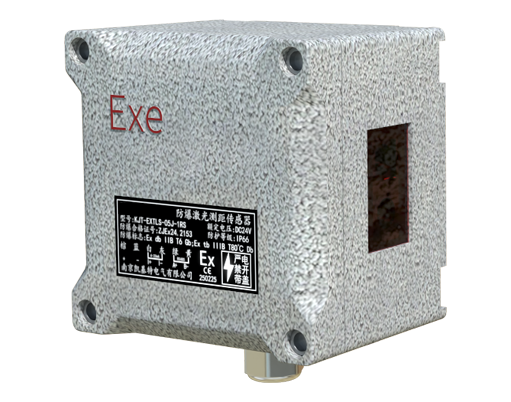
Case studies illustrate practical benefits. In automotive assembly, laser sensors monitor robot tool positioning, triggering alarms if deviations exceed microns—preventing costly collisions. In pharmaceutical packaging, they verify cap placement on vials, alarming if any cap is missing or misaligned to uphold quality control. In logistics, sensors on automated guided vehicles (AGVs) detect obstacles, issuing alarms to avert collisions and optimize route safety.
Looking ahead, the convergence of laser sensing with Industrial Internet of Things (IIoT) platforms is revolutionizing alarm management. Sensors equipped with Ethernet/IP, PROFINET, or wireless connectivity can transmit alarm data to cloud-based analytics systems. This enables predictive maintenance, where trends in measurement drift or increased alarm frequency signal impending failures, allowing preemptive interventions. Moreover, centralized dashboards provide real-time visibility across facilities, empowering managers to respond swiftly to anomalies and optimize overall equipment effectiveness (OEE).
In conclusion, the alarm functionality in laser sensors transcends simple binary signaling, embodying a sophisticated tool for enhancing operational safety, quality, and efficiency. By leveraging configurable thresholds, environmental resilience, and smart connectivity, these sensors empower industries to achieve higher standards of automation and risk management. As technology evolves, we can anticipate even more intelligent alarm systems, incorporating artificial intelligence for adaptive threshold adjustment and anomaly detection, further solidifying the role of laser sensors as indispensable guardians of modern industrial ecosystems.