In the world of industrial automation and machine control, the ability to detect the presence or absence of an object is fundamental. This critical task is most often performed by proximity sensors. While the term "proximity sensor" broadly encompasses both contact and non-contact types, this article will delve into the specific category of contact-type proximity sensors, often a point of confusion, and contrast them with their more prevalent non-contact counterparts.
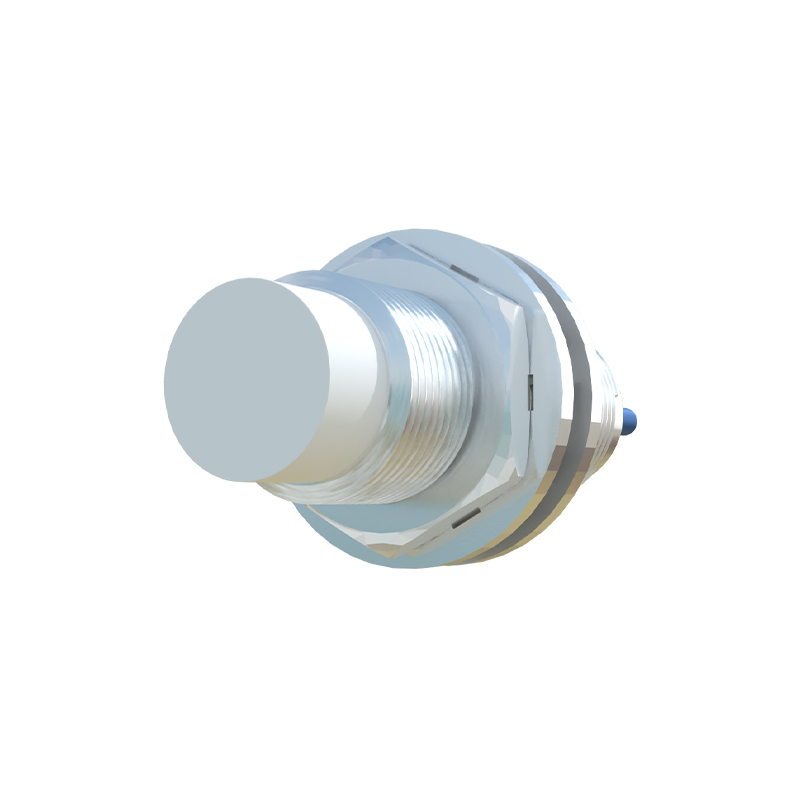
Firstly, it is essential to clarify terminology. In strict technical parlance, a true "proximity sensor" is inherently non-contact. It detects an object without any physical touch, using electromagnetic fields, light, or sound. Examples include inductive sensors (for metals), capacitive sensors (for various materials including liquids), and photoelectric sensors. However, in broader industrial vernacular, the term is sometimes loosely applied to certain contact-sensing devices that detect "proximity" through physical interaction, primarily limit switches.
The quintessential contact-type "proximity" device is the mechanical limit switch. Unlike a non-contact sensor, a limit switch operates on a simple, physical principle: it requires the target object to make direct contact with its actuator (a lever, roller, or plunger). This physical force moves the actuator, which in turn changes the internal electrical state of the switch contacts (open or closed), sending a signal to the controller. The detection is binary: contact is made, or it is not.
The advantages of such contact sensing are straightforward. They are generally simple in design, robust, and cost-effective for many applications. They provide a definitive, physical confirmation of presence. Their operation is not typically influenced by the material composition, color, or transparency of the target object—factors that can challenge optical or capacitive sensors. Furthermore, they can often withstand harsh environmental conditions like dust, oil, and coolant splash better than some sensitive non-contact sensors, as the switching mechanism can be well-sealed.
However, the disadvantages are significant and define their application boundaries. The primary drawback is mechanical wear. Repeated physical contact leads to eventual fatigue and failure of the moving parts. This limits their operational life, especially in high-cycle applications. The need for physical contact also introduces speed limitations; a machine must slow down to allow for reliable actuator engagement, which can limit process throughput. Contact can also cause marking or damage to delicate objects. Finally, the actuation force required means they are unsuitable for detecting very lightweight or fragile items.
In contrast, non-contact proximity sensors offer distinct benefits that have made them the default choice in modern automation. They have no moving parts subject to wear, leading to exceptionally long service life and high reliability. They enable very high-speed detection as no physical deceleration is needed. They can detect objects without touching them, preserving product integrity. Modern solid-state designs are highly resistant to vibration and can be extremely compact.
Choosing between a contact method (like a limit switch) and a true non-contact proximity sensor depends on a detailed application analysis. Consider a legacy machine tool where a limit switch verifies the end-of-travel position of a heavy carriage. The environment is oily, the position is fixed, and cycle speed is moderate. A rugged limit switch may be perfectly adequate and cost-efficient. Now, consider a high-speed bottling line where transparent plastic bottles must be counted. A contact method would be disastrous. A photoelectric sensor, a type of non-contact proximity sensor, is the clear solution, capable of rapid, non-damaging detection.
For true position sensing where physical touch is acceptable and environmental factors are severe, contact switches remain viable. However, for the core function of non-invasive proximity detection—monitoring object presence on conveyors, counting parts, detecting spindle rotation, or ensuring safety perimeters—non-contact sensors are overwhelmingly superior. Technologies like inductive sensors for metal detection or ultrasonic sensors for distance measurement provide solutions where contact is impossible or undesirable.
In conclusion, while mechanical limit switches serve an important role as contact-sensing devices, the term "proximity sensor" is best reserved for electronic, non-contact detection technologies. The evolution of industrial sensing is firmly oriented towards non-contact methods due to their reliability, speed, and flexibility. Engineers must understand the operational principle—physical contact versus field interaction—to select the correct sensor. The key is to match the sensor's characteristics to the application's demands for object type, required speed, environmental conditions, and desired maintenance cycle, ensuring optimal performance and longevity of the automated system.