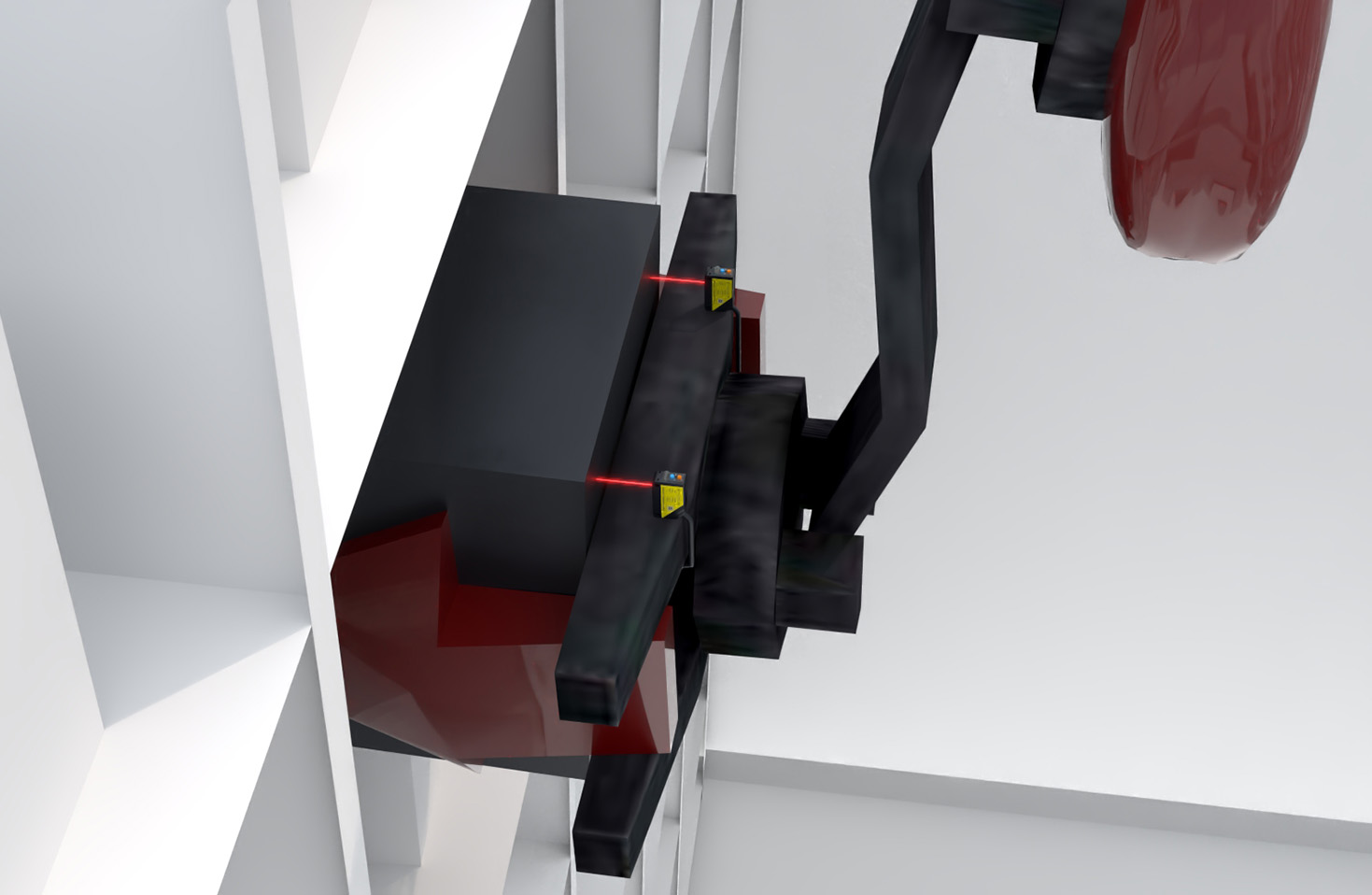
In the realm of industrial automation and precision measurement, point laser sensors have emerged as indispensable tools. These devices project a single, focused point of laser light onto a target surface and analyze the reflected light to determine critical parameters such as distance, displacement, height, or presence. Their operation is fundamentally based on triangulation or time-of-flight principles. Triangulation-based sensors, common for high-precision short to medium-range applications, use a laser diode, a receiving lens, and a position-sensitive detector (PSD) or CMOS/CCD array. The position of the reflected light spot on the detector shifts proportionally to the target's distance, allowing for micron-level resolution. Time-of-flight sensors, suitable for longer ranges, calculate distance by measuring the phase shift or the direct time delay between the emitted and received laser pulse.
The advantages of point laser sensors are numerous and drive their widespread adoption. They offer non-contact measurement, eliminating mechanical wear and allowing inspection of delicate or moving surfaces. High speed is another hallmark, with modern sensors capable of thousands of measurements per second, perfect for dynamic production lines. Their precision and resolution are exceptional, often surpassing traditional contact probes or ultrasonic sensors. Furthermore, the small, focused laser spot enables measurements on very small features or within confined spaces. Many models are designed with robust housings, rated IP67 or higher, to withstand harsh industrial environments involving dust, moisture, and vibration.
Applications span across virtually every manufacturing sector. In automotive assembly, they verify gap dimensions between body panels and measure weld seam profiles. In electronics manufacturing, they ensure precise component placement height on PCBs and inspect solder paste thickness. The packaging industry relies on them for fill-level control in bottles and cans, and for checking package thickness and presence. In metalworking, they monitor material thickness, control roll gap distances, and perform part profiling. They are also crucial for robotic guidance, providing precise distance feedback for tasks like bin picking or seam tracking.

Selecting the right point laser sensor requires careful consideration of several key parameters. First, define the measurement range and stand-off distance—the distance from the sensor housing to the target. Resolution and repeatability specifications must match the application's tolerance requirements. The laser spot size is critical; a smaller spot allows for finer feature measurement but may be more sensitive to surface irregularities. The target surface properties significantly impact performance: dark, matte, or transparent materials absorb or scatter laser light, potentially requiring sensors with higher laser power or specialized algorithms, while shiny surfaces can cause specular reflection issues. Output interfaces (analog, digital I/O, Ethernet, fieldbus) must integrate with the existing control system. Finally, environmental factors like ambient light, temperature extremes, and potential obstructions must be accounted for.
Integration and setup are straightforward but vital for optimal performance. Proper mechanical mounting to minimize vibration, correct alignment to the target, and stable power supply are essential. Most sensors feature teach-in functions or software for easy configuration of measurement windows and output scaling. Regular maintenance is minimal, typically involving keeping the front lens clean from dust or oil buildup. As technology advances, we see trends toward smarter sensors with integrated processors for edge computing, enhanced connectivity for Industry 4.0 data streams, and improved capabilities for challenging surfaces. When deployed correctly, point laser sensors deliver unparalleled reliability and data integrity, forming the backbone of modern quality control and automated process optimization.