Solid-state laser sensors represent a transformative advancement in industrial measurement technology, offering unparalleled precision, reliability, and versatility. Unlike traditional mechanical or pneumatic sensors, these devices utilize semiconductor laser diodes to emit coherent light, which interacts with a target object. The reflected or scattered light is then analyzed to determine critical parameters such as distance, displacement, thickness, vibration, and presence. This non-contact measurement principle eliminates wear and tear, reduces maintenance costs, and enables high-speed inspection in demanding environments.
The core technology hinges on several measurement methods. Time-of-Flight (ToF) sensors calculate distance by measuring the round-trip time of a laser pulse. Triangulation sensors, ideal for high-resolution short-range measurements, use a laser spot, a receiving lens, and a position-sensitive detector to determine distance based on the angle of reflected light. Laser contrast sensors excel at detecting marks or flaws by analyzing the intensity difference between the laser beam reflected from the target surface and its background.
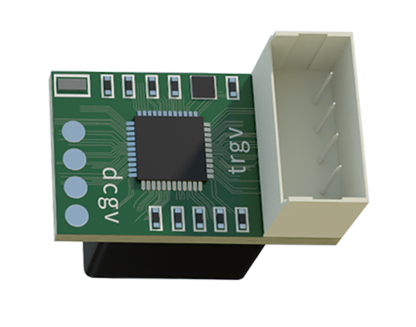
In manufacturing, solid-state laser sensors are indispensable. On automotive assembly lines, they ensure precise gap and flush measurements between body panels with micron-level accuracy. In electronics, they verify component placement on PCBs and measure solder paste thickness. The packaging industry relies on them for fill-level control, label inspection, and counting. Furthermore, their robustness against dust, moisture, and temperature fluctuations makes them perfect for harsh settings like metal foundries, wood processing, and outdoor logistics.
Beyond traditional manufacturing, these sensors are enabling Industry 4.0 and smart factories. Integrated into robotic systems, they provide real-time feedback for precise guidance and handling. As key components of automated quality control stations, they facilitate 100% inline inspection, drastically reducing defects. Their digital outputs seamlessly integrate with PLCs and SCADA systems, feeding data into centralized analytics platforms for predictive maintenance and process optimization.
The advantages are compelling. They offer sub-micron resolution, response times in the microsecond range, and long operational lifetimes. Modern designs are increasingly compact, energy-efficient, and equipped with intelligent features like automatic calibration, teach-in functions, and IO-Link communication for parameter setting and diagnostics.
However, selecting the right sensor requires careful consideration. Factors include the required measurement range, resolution, target material (as reflectivity affects performance), environmental conditions, and necessary housing rating (e.g., IP67). For transparent objects or challenging surfaces, specialized models with adjustable sensitivity or background suppression are available.
Looking ahead, the integration of solid-state laser sensing with AI and machine vision is a key trend. This fusion allows for more complex pattern recognition, anomaly detection, and adaptive process control. Miniaturization continues, paving the way for their use in tighter spaces and consumer electronics. As laser diode technology advances, we can expect even higher power efficiency, longer ranges, and reduced costs, further solidifying their role as a cornerstone of modern industrial automation. In conclusion, solid-state laser sensors are not merely tools but strategic enablers, driving efficiency, quality, and intelligence across the entire industrial landscape.