In the world of industrial automation and machine design, proximity sensors are the silent sentinels, enabling countless processes with their non-contact detection capabilities. As an electrical engineer with years of field experience, I've witnessed their evolution from simple electromechanical devices to sophisticated, intelligent components. This guide delves into the most commonly used proximity sensors, explaining their operating principles, key applications, and critical selection criteria.
The fundamental principle behind a proximity sensor is its ability to detect the presence or absence of a target object without physical contact. This non-contact operation eliminates mechanical wear, ensures high reliability, and allows for extremely fast response times—often in the microsecond range. The most prevalent technologies can be categorized into four main types: inductive, capacitive, ultrasonic, and photoelectric sensors.
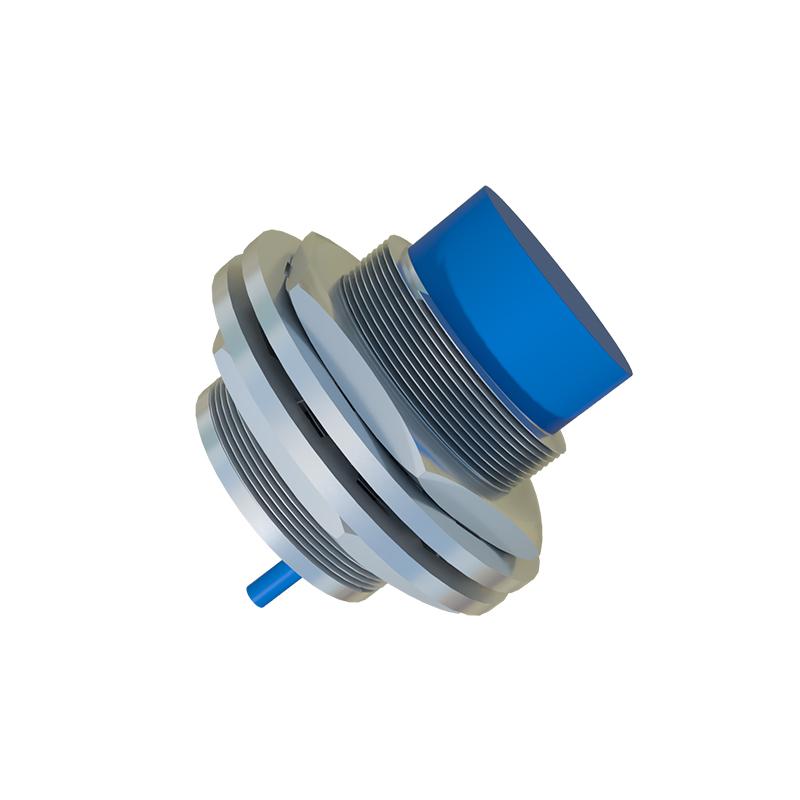
Inductive proximity sensors are arguably the workhorses of the industry, especially in manufacturing. They generate an electromagnetic field and detect eddy current losses induced in metallic targets. Their primary strength is their robustness; they are virtually immune to environmental factors like dust, oil, and moisture. You'll find them ubiquitously in metal detection tasks—counting gear teeth, verifying the position of a robotic arm, or as end-of-travel limit switches on automated machinery. They are typically used for short-range detection of ferrous and non-ferrous metals, with sensing distances ranging from a few millimeters to about 60 mm.
Capacitive proximity sensors operate on a different principle. They generate an electrostatic field and detect changes in capacitance caused by the presence of any material that alters the dielectric constant of the field. This makes them versatile for detecting non-metallic objects such as plastics, glass, wood, and liquids. A classic application is in level sensing for tanks containing liquids or granular materials. They are also excellent for detecting filled vs. empty bottles on a conveyor line, regardless of the bottle's material. However, they can be sensitive to environmental changes like humidity.
Photoelectric sensors use light beams—typically infrared, visible red, or laser—to detect objects. They consist of an emitter and a receiver. The three main configurations are through-beam (separate emitter and receiver), retro-reflective (with a reflector), and diffuse (or proximity) mode, where the sensor detects light reflected from the target itself. Diffuse sensors are extremely common for general-purpose object detection at longer ranges than inductive or capacitive sensors. They are ideal for detecting objects on high-speed conveyors, in packaging machinery, and for part presence verification. Their limitation is susceptibility to interference from ambient light or highly reflective surfaces.
Ultrasonic sensors measure the time it takes for a sound wave to reflect off a target and return. They excel at precise distance measurement and level detection, even for transparent or irregularly shaped objects that photoelectric sensors might struggle with. Common uses include monitoring liquid levels in opaque tanks, controlling loop tension in web processes, and detecting stacked materials like sheets of glass or metal. They are less affected by color, transparency, or dust compared to photoelectric sensors but can be influenced by temperature gradients and air turbulence.
Selecting the right sensor is a critical engineering decision. The process begins with defining the application: What is the target material? What is the required sensing distance? What is the operating environment (temperature, presence of contaminants, washdown requirements)? Electrical requirements are next: Does the application need a 2-wire, 3-wire, or 4-wire DC sensor, or an AC model? What is the required output type—PNP (sourcing) or NPN (sinking)? Physical characteristics like housing style (barrel, rectangular, ring-shaped), size, and connection type (pre-wired, quick-disconnect) must also match the installation constraints.
Finally, consider performance specifications. Key parameters include nominal sensing distance (Sn), repeatability, hysteresis, switching frequency, and protection ratings like IP67 or IP69K for harsh environments. Always derate the nominal sensing distance for reliable operation, typically using 70-80% of Sn to account for manufacturing tolerances and temperature effects.
In conclusion, understanding the core technologies of inductive, capacitive, photoelectric, and ultrasonic sensors provides a solid foundation. There is no universal "best" sensor; the optimal choice is a function of the specific target, environment, and performance requirements. By systematically evaluating these factors, engineers can ensure reliable, maintenance-free operation, forming the backbone of efficient and safe automated systems. The ongoing integration of IO-Link and other smart sensor protocols is adding diagnostic and parameterization capabilities, making these ubiquitous devices even more powerful tools in the modern engineer's arsenal.