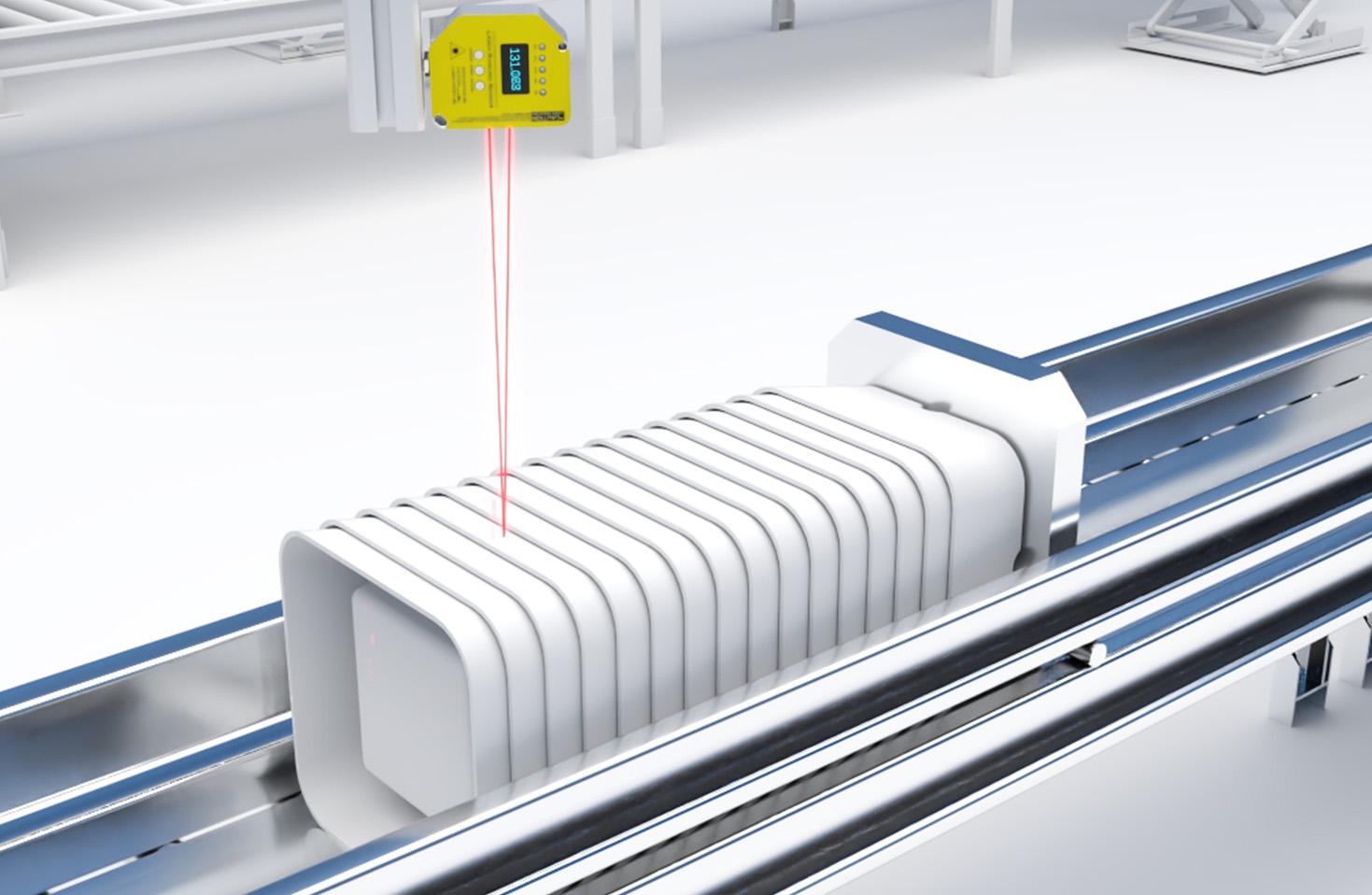
In the rapidly evolving landscape of industrial automation, laser band sensors have emerged as a pivotal technology for precision measurement and detection. These sensors utilize a focused laser beam to create a defined band or line of light, enabling high-accuracy sensing across various applications. Unlike traditional single-point laser sensors, laser band sensors project a continuous line, allowing for the simultaneous monitoring of multiple points or the entire surface of an object. This capability is particularly valuable in industries such as manufacturing, robotics, and quality control, where detailed inspection and real-time data are critical.
The core principle behind laser band sensors involves the emission of laser light, typically from a diode, which is then shaped into a thin, uniform band using specialized optics. When this band strikes a target object, it reflects back to a receiver within the sensor. By analyzing the deformation, intensity, or displacement of the reflected band, the sensor can determine parameters like distance, height, thickness, or presence of defects. Advanced models incorporate CMOS or CCD imaging technology to capture detailed profiles, making them ideal for 3D scanning and contour measurement tasks. For instance, in automotive assembly lines, laser band sensors are deployed to verify the precise alignment of components, ensuring that gaps between panels are consistent and within tolerance limits. Similarly, in electronics manufacturing, they inspect solder joints or detect minute cracks on circuit boards, enhancing product reliability.

One of the key advantages of laser band sensors is their ability to operate in challenging environments. They are often designed with robust housings that resist dust, moisture, and vibrations, common in industrial settings. Additionally, many sensors feature adjustable focus and wavelength options, allowing customization for specific materials or surfaces. For example, infrared laser bands may be used for dark or non-reflective objects, while blue laser bands offer higher resolution for fine details. Integration with programmable logic controllers (PLCs) and industrial networks like Ethernet/IP or PROFINET further simplifies data processing and automation workflows. This connectivity enables seamless feedback loops, where sensor data directly influences machine actions, such as triggering alarms or adjusting robotic arms.

Despite their benefits, implementing laser band sensors requires careful consideration. Factors like ambient light interference, surface reflectivity, and object speed can impact accuracy. Engineers must calibrate sensors appropriately, often using software tools to set thresholds and filter noise. Regular maintenance, including lens cleaning and alignment checks, is essential to sustain performance. Looking ahead, trends in miniaturization and smart sensor technology are driving innovations. Future laser band sensors may incorporate artificial intelligence for adaptive learning, predicting anomalies or optimizing processes autonomously. As industries embrace Industry 4.0, these sensors will play an increasingly integral role in creating efficient, data-driven production systems.
In summary, laser band sensors represent a sophisticated solution for modern industrial challenges, offering unparalleled precision and versatility. By understanding their operation, applications, and best practices, engineers can leverage this technology to enhance automation, improve quality, and reduce operational costs. Whether for simple presence detection or complex 3D imaging, laser band sensors continue to redefine the boundaries of what is possible in electrical and mechanical engineering domains.