Laser emission sensors represent a critical advancement in industrial automation and precision measurement technologies. These devices operate based on the fundamental principles of stimulated emission of radiation, a process first theorized by Albert Einstein in 1917 and later realized in practical laser systems. At their core, laser emission sensors generate a highly coherent, monochromatic, and collimated beam of light, which is then utilized for various sensing functions including distance measurement, object detection, alignment, and surface profiling.
The operational principle begins within the laser diode, the most common source in industrial sensors. When electrical current is applied to the semiconductor junction of the diode, it creates a population inversion—a state where more electrons occupy a higher energy level than a lower one. As these excited electrons return to their ground state, they emit photons. Within the laser's optical cavity, bounded by reflective surfaces, these photons stimulate the emission of further identical photons, leading to a cascading effect and the amplification of light. The result is the emission of a intense, focused beam through a partially reflective mirror.
For sensing applications, this emitted laser beam is projected onto a target. The interaction between the laser light and the target is then measured and interpreted. The primary methods include triangulation, time-of-flight (ToF), and laser Doppler vibrometry. In triangulation-based sensors, the laser spot on the target is viewed from an angle by a precision lens and a position-sensitive detector (PSD) or a CMOS/CCD array. Any change in the target's distance causes a proportional shift in the position of the reflected spot on the detector, allowing for highly accurate distance or displacement measurements. This method is prevalent in applications requiring micron-level precision, such as in semiconductor manufacturing or automotive assembly line gap measurement.
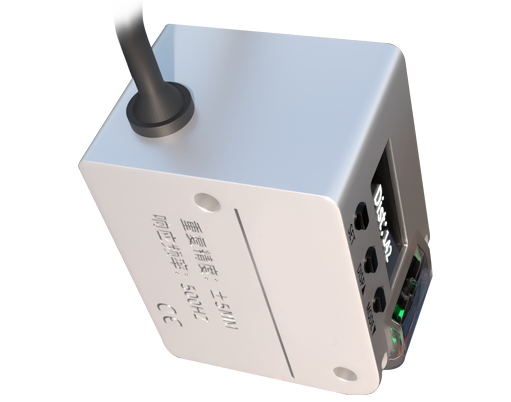
Time-of-flight sensors, on the other hand, measure the round-trip time for a laser pulse to travel to the target and back. Given the constant speed of light, this time interval is directly proportional to the distance. Modern ToF sensors use sophisticated electronic circuits to measure these nanosecond-scale intervals with extreme accuracy, enabling long-range measurement and 3D imaging for applications like warehouse logistics, autonomous vehicle navigation, and bulk material level monitoring.
Another key principle is the analysis of the reflected beam's properties. In contrast sensors, the presence or absence of a reflected beam indicates object detection. More advanced sensors analyze the modulation, phase shift, or frequency shift of the returned light. For instance, Laser Doppler Vibrometers (LDVs) exploit the Doppler effect, where the frequency of light reflected from a vibrating surface shifts proportionally to its velocity, allowing for non-contact vibration analysis critical in predictive maintenance.
The performance of a laser emission sensor is dictated by several parameters: wavelength, output power, beam divergence, and coherence length. Industrial sensors often use visible red lasers (around 650 nm) for easy alignment or infrared lasers (e.g., 850 nm, 1550 nm) for eye-safety and reduced environmental interference. Output power is carefully controlled to comply with international laser safety standards (IEC 60825). Beam quality and stability are paramount, as any deviation can introduce measurement error.

Environmental factors pose significant challenges. Ambient light, dust, smoke, and surface characteristics (like color, reflectivity, and texture) can affect signal strength and accuracy. Modern sensors incorporate advanced signal processing algorithms, adaptive thresholding, and sometimes multiple wavelengths to compensate for these variables. For example, a sensor might use a modulated laser signal and synchronous detection to filter out constant ambient light.
Integration into industrial systems is facilitated through standardized digital interfaces (like IO-Link, Ethernet/IP) and analog outputs. This allows for seamless data communication with Programmable Logic Controllers (PLCs) and supervisory control systems, enabling real-time process control and feedback loops.

In conclusion, the principle of laser emission sensors hinges on the generation of a controlled laser beam and the precise interpretation of its interaction with a target. By leveraging the unique properties of laser light—coherence, low divergence, and monochromaticity—these sensors deliver unmatched precision, speed, and reliability. They form the backbone of modern quality control, robotics, and automated inspection systems, driving efficiency and innovation across manufacturing, logistics, and research sectors. Future developments are likely to focus on miniaturization, increased intelligence through embedded AI for pattern recognition, and enhanced robustness for even harsher industrial environments.