In industrial automation and robotics, the ability to detect objects from unconventional angles is crucial for enhancing operational efficiency and safety. Laser sensors, known for their precision and reliability, have emerged as a powerful tool for sensing objects from behind or through indirect pathways. This article delves into the principles, technologies, and practical applications of using laser sensors to detect surfaces or objects from the rear, offering insights for engineers and technicians in the electrical and automation sectors.
Laser sensors operate by emitting a focused beam of light—typically infrared or visible laser—toward a target. The sensor then measures the reflected light to determine distance, presence, or other characteristics. For detecting objects from behind, the key lies in the sensor's ability to capture reflections from non-frontal surfaces. This is often achieved through diffuse reflection methods, where the laser beam strikes a surface at an angle, and the scattered light is detected by the receiver. Advanced models incorporate time-of-flight (ToF) or triangulation techniques to calculate distance even when the object is not directly facing the sensor. For instance, in a setup where an object's backside is obscured, a laser sensor can be positioned to shoot beams around obstacles, leveraging reflective surfaces or ambient conditions to gather data.
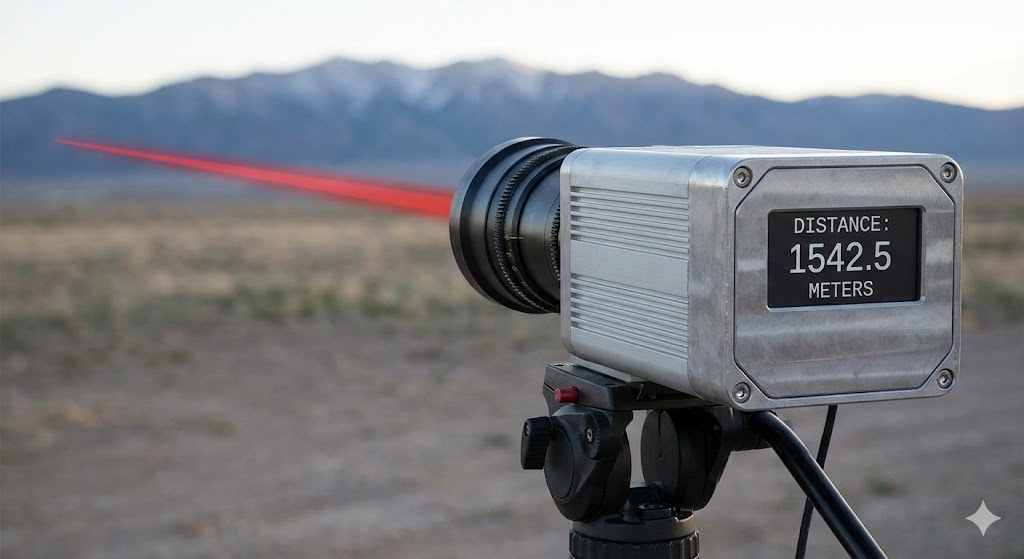
The core technology enabling rear detection involves high-sensitivity photodiodes and signal processing algorithms. These components filter out noise—such as ambient light interference—and amplify weak reflections from distant or angled surfaces. In practice, laser sensors with wide detection angles (e.g., up to 180 degrees) can scan environments and identify objects based on rear profiles. For example, in automotive assembly lines, sensors are used to inspect the backside of components like brake pads or engine parts, ensuring they meet specifications without direct line-of-sight. Similarly, in logistics, laser sensors detect pallets from behind storage racks, optimizing inventory management.
Applications of laser sensors for rear sensing span multiple industries. In manufacturing, they facilitate quality control by inspecting hidden surfaces of products, reducing manual checks and errors. Robotics integrates these sensors for navigation, allowing machines to avoid collisions by sensing obstacles from behind during reverse movements. In security systems, laser sensors monitor perimeters by detecting intrusions from blind spots, such as the back of fences or walls. Additionally, in aerospace, they assist in aligning aircraft components from hard-to-reach angles, enhancing assembly accuracy.
However, challenges exist in implementing rear detection with laser sensors. Factors like surface material (e.g., transparent or highly reflective objects) can affect reflection quality, requiring calibration or multi-sensor setups. Environmental conditions, such as dust or humidity, may also impact performance. Engineers must select sensors with appropriate ranges (short-range for precise tasks, long-range for large areas) and consider integration with other systems like IoT platforms for real-time data analysis.
In conclusion, laser sensors offer a versatile solution for detecting objects from behind, driven by advanced optical and electronic technologies. As industries evolve toward smarter automation, their role in enabling non-contact, high-precision sensing will expand. By understanding the principles and applications outlined here, professionals can leverage these tools to innovate in fields from industrial engineering to robotics, ultimately boosting productivity and safety.