Fiber optic sensors have become integral components in modern laser marking systems, offering unparalleled precision and reliability. These sensors utilize light transmitted through optical fibers to detect, measure, and monitor various parameters critical to the marking process. Their primary function is to ensure accurate positioning, focus control, and real-time feedback, which are essential for achieving high-quality, consistent marks on diverse materials such as metals, plastics, ceramics, and glass.
The operational principle of fiber optic sensors in laser marking revolves around the modulation of light properties. Typically, a light source, often a laser diode or LED, emits light that travels through a core optical fiber. When this light interacts with the target surface or an environmental factor—such as distance, presence, or surface reflectivity—its characteristics, including intensity, phase, or wavelength, are altered. A photodetector then analyzes these changes, converting them into electrical signals. These signals are processed by the marking machine's control system to make instantaneous adjustments. For instance, in autofocus applications, the sensor continuously measures the distance between the laser head and the workpiece, dynamically adjusting the focal point to maintain optimal marking clarity, even on uneven or curved surfaces.
One of the standout advantages of fiber optic sensors is their immunity to electromagnetic interference (EMI). In industrial environments filled with electrical noise from motors, drives, and other machinery, traditional electronic sensors can suffer from signal degradation, leading to errors. Fiber optics, being dielectric, are unaffected by EMI, ensuring stable and accurate performance. Additionally, their small size and flexibility allow for installation in confined spaces within the marking machine, facilitating precise sensing close to the laser beam path without obstructing operations. They are also highly durable, resistant to high temperatures, vibrations, and corrosive atmospheres commonly found in manufacturing settings, which minimizes downtime and maintenance needs.
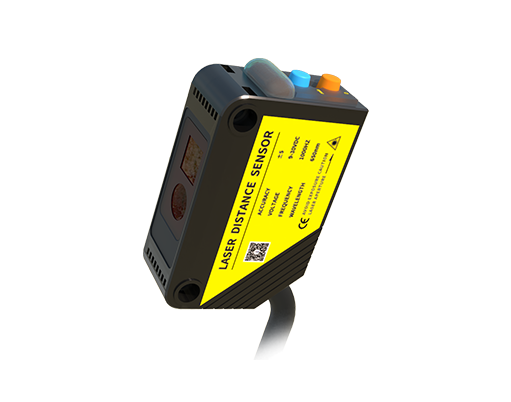
In laser marking, specific sensor types are commonly employed. Diffuse reflective sensors are used for object detection and positioning, emitting light and measuring the reflection from the target. Through-beam sensors, consisting of separate transmitter and receiver units, offer higher accuracy for edge detection or part presence verification. Contrast sensors excel in applications requiring mark verification or differentiation between materials based on color or reflectivity, ensuring that markings meet quality standards. Furthermore, advanced fiber optic sensors integrated with spectroscopy capabilities can even analyze material composition in real-time, enabling adaptive laser parameter adjustments for different substrates.
The integration of these sensors significantly enhances process automation and quality control. Automated systems can use sensor data to align parts correctly, trigger the laser precisely, and inspect marks post-application. This reduces human intervention, increases throughput, and minimizes waste from mis-marked products. For example, in the electronics industry, where marking tiny serial numbers on circuit boards is crucial, fiber optic sensors ensure each mark is perfectly placed and legible, supporting traceability and compliance.
Looking ahead, trends indicate a move toward smarter, networked sensors within Industry 4.0 frameworks. These sensors can communicate data to central systems for predictive maintenance, process optimization, and integration with other smart factory components. Innovations in fiber Bragg grating (FBG) sensors also promise enhanced capabilities for monitoring strain and temperature directly on the laser optics, preemptively addressing potential system failures.

In summary, fiber optic sensors are pivotal in advancing laser marking technology. Their precision, robustness, and adaptability not only improve marking quality and efficiency but also enable more sophisticated, automated manufacturing processes. As laser marking continues to evolve toward greater miniaturization and complexity, the role of these sensors will only expand, driving further innovations in industrial marking solutions.