In the realm of industrial automation and process control, the ability to detect objects without physical contact is paramount. Among the various non-contact sensing technologies available, ultrasonic proximity sensors stand out for their unique capability to operate over exceptionally long distances. This article delves into the fundamental principles, operational characteristics, key advantages, and typical applications of these robust sensing devices.
At its core, an ultrasonic proximity sensor is a device that uses sound waves at frequencies above the human hearing range (typically between 20 kHz and several hundred kHz) to detect the presence, absence, or distance of an object. The fundamental operating principle is based on the time-of-flight (ToF) measurement. The sensor emits a short burst of ultrasonic pulses from its transducer. These sound waves travel through the air until they encounter a target object. Upon striking the object, the waves are reflected back towards the sensor. A receiver within the sensor detects this echo. By precisely measuring the time interval between the emission of the pulse and the reception of its echo, and knowing the speed of sound in the ambient medium (approximately 343 meters per second in air at 20°C), the sensor's internal electronics can calculate the distance to the object with high accuracy. This calculated distance is then compared to a pre-set switching threshold to determine the sensor's output state.
What truly defines an "ultra-long range" ultrasonic sensor is its ability to perform this detection at distances far exceeding those of standard inductive, capacitive, or even photoelectric sensors. While standard ultrasonic sensors may have ranges up to 1-2 meters, specialized ultra-long-range models can reliably detect objects at distances of 6 meters, 10 meters, or even 15 meters and beyond. This extended capability is achieved through a combination of factors: high-power ultrasonic transducers that emit strong, focused sound waves; sophisticated signal processing algorithms that can distinguish the true echo from background acoustic noise; and sensitive receiver circuits capable of detecting faint return signals. The beam angle, or the spread of the ultrasonic cone, is also a critical factor. Long-range sensors often have a narrower beam to concentrate energy over a greater distance, whereas short-range sensors may have a wider beam for broader coverage.
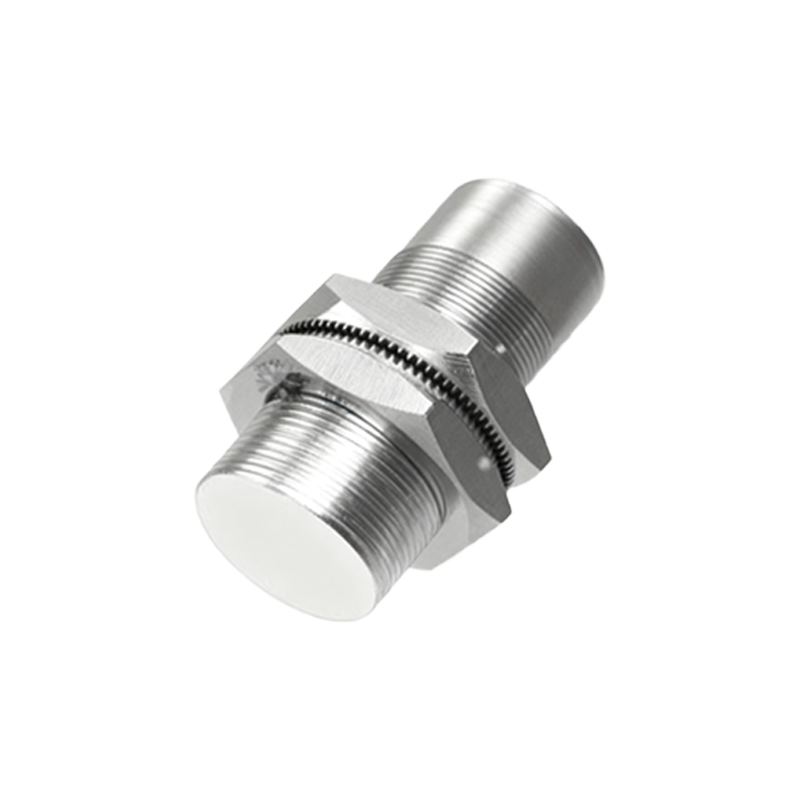
The advantages of employing ultrasonic proximity sensors for long-distance applications are numerous. First and foremost is their remarkable insensitivity to the target object's material properties. Unlike photoelectric sensors, which can struggle with transparent, glossy, or darkly colored materials, ultrasonic waves reflect well from almost any solid or liquid surface, regardless of color, transparency, or material composition (metal, plastic, wood, glass, etc.). This makes them incredibly versatile. Secondly, they are largely unaffected by ambient light conditions, dust, smoke, or fog—environmental factors that frequently plague optical sensing methods. Their performance can be influenced by extreme temperature variations or strong air turbulence, as these affect the speed of sound, but many modern sensors include temperature compensation to mitigate this effect. Furthermore, they provide true distance information (analog output) in addition to simple switching (digital output), enabling applications like continuous level monitoring or precise positioning.
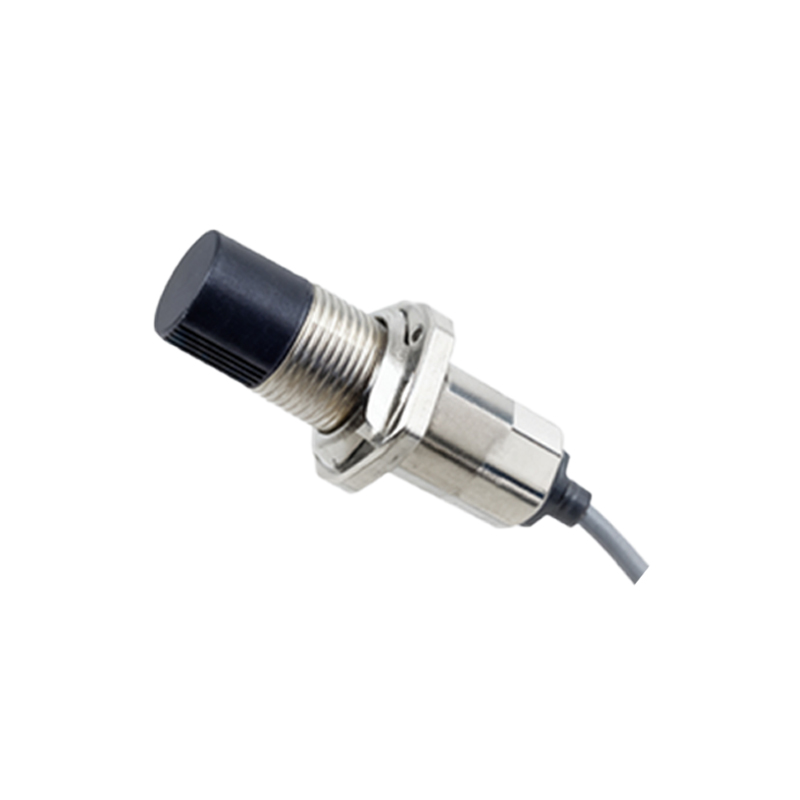
Typical industrial applications for ultra-long-range ultrasonic proximity sensors are diverse. A primary use is in bulk material level measurement in large silos or tanks for substances like grain, plastic pellets, or powders, where the sensor is mounted at the top, looking down over many meters. They are also extensively used in vehicle detection for automated guided vehicles (AGVs) and in parking guidance systems, where they monitor the presence of cars or obstacles over long aisles. In forestry and lumber handling, they can detect the position of logs on conveyor systems. In manufacturing, they are used for large-part presence verification on expansive assembly lines or for monitoring the sag of large sheets of material. Their robustness also makes them suitable for outdoor applications, such as detecting ships at docks or monitoring bin levels in harsh environments.
When selecting and installing an ultrasonic sensor for long-range duty, several considerations are crucial. The required sensing range and the size/reflectivity of the target must be matched to the sensor's specifications. The mounting position should be chosen to avoid acoustic interference from mechanical structures (like beams or walls) that could create false echoes. For very long ranges, a stable mounting is essential to prevent vibration from affecting the measurement. Regular maintenance, such as keeping the transducer face clean from dust or condensation, ensures optimal performance over time.
In conclusion, ultrasonic proximity sensors represent a powerful and reliable solution for non-contact object detection at distances where other technologies fall short. Their material-independent operation, environmental robustness, and ability to provide precise distance data make them an indispensable tool in the advanced engineer's arsenal for solving complex automation challenges across a wide spectrum of industries. As signal processing and transducer technology continue to advance, we can expect these sensors to push the boundaries of range, accuracy, and reliability even further.