In the intricate and safety-critical ecosystem of modern metro train operations, proximity sensors serve as the silent, vigilant sentinels. These non-contact detection devices are fundamental to the automated control and safety protocols that define contemporary urban rail transit. Their primary function is to detect the presence or absence of a target object—such as a train car, a door, or infrastructure components—within a specified range without any physical contact, providing essential data to the train's Vehicle Control Unit (VCU) and other subsystems.
The operational principle of these sensors varies, with inductive, capacitive, and ultrasonic types being most prevalent in rail applications. Inductive sensors, for instance, generate an electromagnetic field to detect metallic objects like wheels or axles, making them ideal for precise positioning at station platforms or within maintenance depots. Their robustness against environmental contaminants like dust, oil, and moisture is a key advantage in the demanding underground or elevated track environments.
One of the most visible and critical applications is in the Automatic Train Operation (ATO) and Platform Screen Door (PSD) systems. As a train approaches and aligns with a station platform, an array of proximity sensors meticulously monitors its speed and exact stopping position. This data is continuously fed back to the ATO system, enabling smooth deceleration and pinpoint accuracy in berthing. This precision is not merely about convenience; it is a vital safety feature ensuring the train doors align perfectly with the fixed platform screen doors, preventing passenger accidents. The sensors provide the definitive "all-clear" or "obstruction detected" signal that allows door closure sequences to proceed safely.
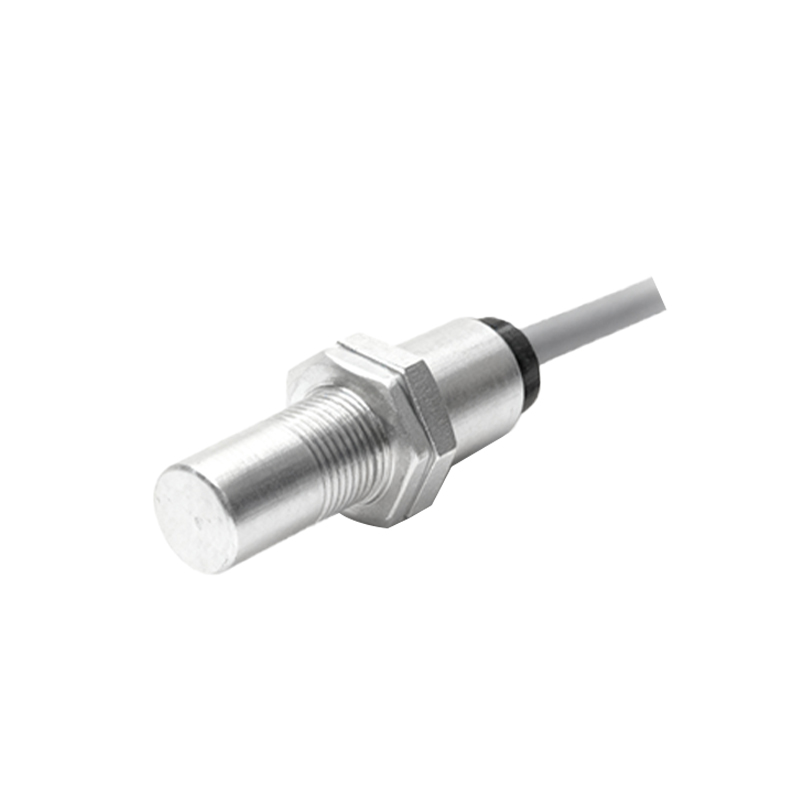
Beyond passenger interfaces, proximity sensors are integral to the train's own mechanical and electrical health. They monitor the status of critical components such as brake caliper position, pantograph height (for overhead line systems), and even the secure locking of access panels. In auxiliary systems like onboard compressors or cooling units, sensors can detect abnormal vibrations or displacements, triggering maintenance alerts before a minor issue escalates into a service-disrupting failure. This predictive capability is central to modern condition-based maintenance strategies, significantly enhancing fleet availability and reliability.
Furthermore, within the confines of a maintenance depot, these sensors facilitate automated inspection and washing systems. They guide robotic arms for tasks like wheel profiling or undercarriage cleaning by providing real-time positional data, minimizing human intervention in potentially hazardous areas and increasing operational efficiency.
The selection and integration of proximity sensors in metro systems are governed by rigorous standards. They must exhibit exceptional reliability, often quantified by a Mean Time Between Failures (MTBF) in the tens of thousands of hours. Their design must ensure immunity to electromagnetic interference (EMI) from traction motors and power lines, as well as resilience against wide temperature fluctuations, constant vibration, and mechanical shock. Redundancy is frequently designed into safety-critical loops; for example, a door control system may utilize multiple sensors in a voting logic configuration to prevent a single point of failure.
In essence, the humble proximity sensor is a cornerstone of metro train intelligence. It translates physical-world events into the binary language of control systems, enabling the high levels of automation, safety, and efficiency that passengers now take for granted. From ensuring a seamless door operation to safeguarding the train's vital functions, these devices are indispensable in the relentless pursuit of a safer, more reliable, and punctual urban rail service. Their continuous evolution, with trends toward miniaturization, enhanced sensing ranges, and digital smart sensors with self-diagnostic capabilities, promises to further refine the operational art of metro transportation.