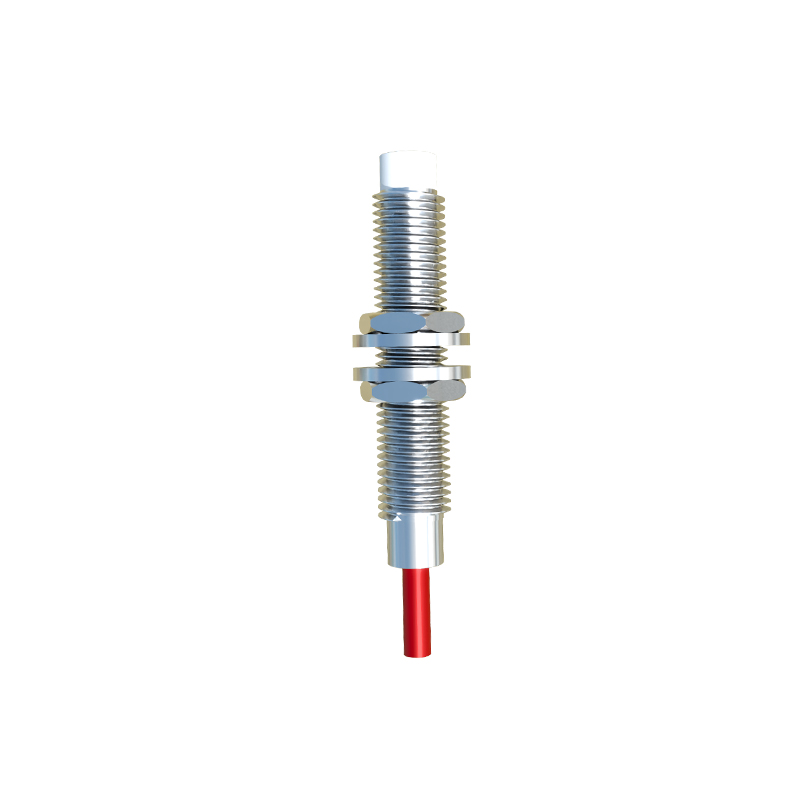
In the realm of industrial automation and process control, liquid level proximity eddy current sensors have emerged as a pivotal technology for precise and reliable level detection. These sensors operate on the principle of electromagnetic induction, where an alternating current in a coil generates a magnetic field. When this field interacts with a conductive target—such as a metal float or the liquid itself in conductive applications—it induces eddy currents. The resulting change in the coil's impedance is measured, allowing for non-contact detection of liquid levels. One of the standout features of these sensors is their exceptional accuracy, often achieving resolutions in the micrometer range, making them ideal for critical applications in industries like chemical processing, pharmaceuticals, and power generation.
Durability and robustness are hallmarks of liquid level proximity eddy current sensors. Constructed from materials such as stainless steel or specialized polymers, they can withstand harsh environments, including exposure to corrosive liquids, high temperatures up to 200°C, and extreme pressures. This resilience ensures long-term stability and reduces maintenance needs, which is crucial for continuous industrial operations. Additionally, their non-contact nature eliminates mechanical wear, further enhancing lifespan and reliability. Unlike capacitive or ultrasonic sensors, eddy current variants are less affected by factors like foam, vapor, or changes in dielectric constants, providing consistent performance even in challenging conditions.

Another key advantage is the fast response time of these sensors, typically in the millisecond range. This enables real-time monitoring and control, essential for dynamic processes where liquid levels fluctuate rapidly. The sensors can be integrated seamlessly into automated systems via standard interfaces like 4-20 mA analog outputs, IO-Link, or digital protocols, facilitating easy data acquisition and system interoperability. Their compact design allows for installation in confined spaces, and options for flush or non-flush mounting enhance versatility across different tank geometries.
However, it's important to note limitations, such as reduced effectiveness with non-conductive liquids or when used in applications with strong electromagnetic interference. Calibration may be required for specific media to optimize performance. Despite this, the overall benefits—including high precision, environmental resistance, and low maintenance—make liquid level proximity eddy current sensors a preferred choice for engineers seeking dependable level sensing solutions. As technology advances, innovations in signal processing and materials are expected to broaden their applicability, solidifying their role in modern industrial automation.