In the realm of industrial automation, the reliable detection of objects without physical contact is a fundamental requirement. Among the various sensing technologies available, the 24V DC 3-wire proximity sensor stands as a cornerstone, offering a robust and versatile solution for countless applications. This article delves into the operational principles, wiring configurations, key specifications, and best practices for integrating these essential components into modern control systems.
At its core, a proximity sensor is a device that detects the presence or absence of a target object within its sensing range. The 3-wire DC variant operates on a 24-volt direct current supply, a standard voltage in industrial control panels due to its balance of safety and sufficient power for most logic-level devices. The "3-wire" designation refers to the number of electrical connections: one for power supply positive (typically brown wire), one for power supply negative or common (typically blue wire), and one for the output signal (typically black wire for NPN or black/white for PNP).
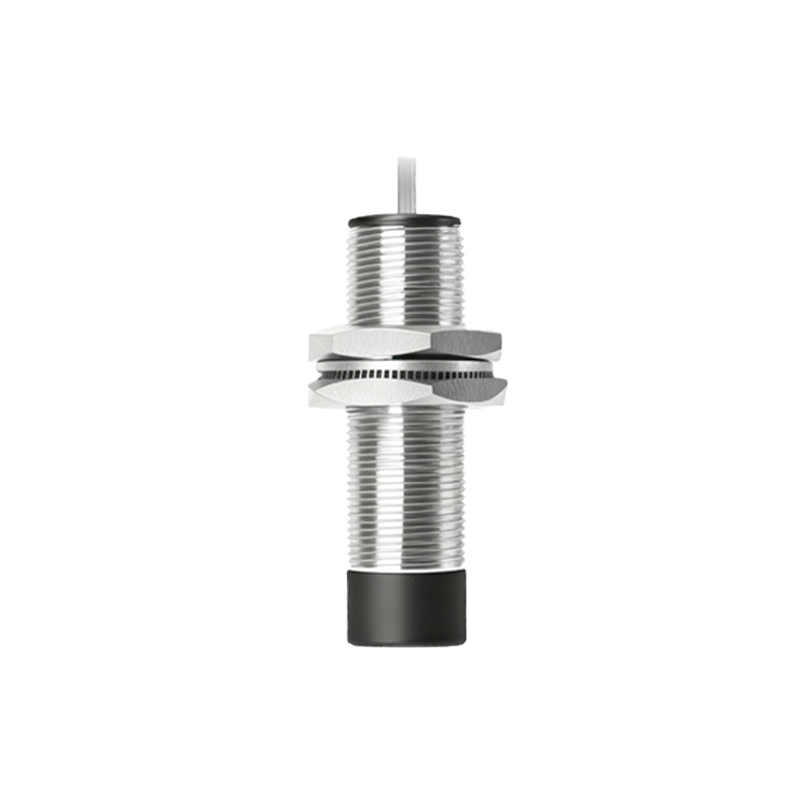
The output configuration is a critical distinction. Sensors are classified as either NPN (sinking) or PNP (sourcing). An NPN sensor switches the negative (0V) line to the load; when active, it connects the output signal line to the common negative, effectively "sinking" current. Conversely, a PNP sensor switches the positive (+24V) line to the load; when active, it provides the positive voltage to the output signal line, "sourcing" current. The choice between NPN and PNP is often dictated by the input type of the connected controller (e.g., PLC) and regional conventions, with PNP being more common in Europe and NPN in some Asian markets.
Wiring a 24V DC 3-wire sensor is straightforward but requires attention to detail. For a PNP sensor, the brown wire connects to +24V DC, the blue wire to 0V DC (common), and the black (or black/white) output wire connects to the PLC input module. The PLC input itself is then connected back to the common (0V). For an NPN sensor, the brown wire still connects to +24V, the blue to 0V, but the black output wire connects to the PLC input. The PLC input's common, however, must be connected to +24V to complete the circuit. Incorrect wiring is a common source of failure and can potentially damage the sensor or controller.
Key performance parameters define a sensor's suitability for an application. The sensing range, usually specified in millimeters, indicates the maximum distance at which a standard target can be reliably detected. Factors like target material (steel, aluminum, brass), size, and shape can affect this effective range. Switching frequency defines how quickly the sensor can respond, measured in Hertz (Hz), which is vital for high-speed counting or positioning tasks. Housing material, typically nickel-plated brass, stainless steel, or PBT plastic, is chosen based on environmental conditions such as exposure to chemicals, washdowns, or physical impact. Most industrial-grade sensors feature IP67 or IP68 ingress protection ratings, making them resistant to dust and temporary or prolonged immersion in water.
The advantages of using 24V DC 3-wire sensors are numerous. They provide a solid-state, wear-free switching solution compared to mechanical limit switches. They offer high switching speeds and excellent repeat accuracy. The 24V DC supply is inherently safer in wet environments compared to higher AC voltages. Furthermore, the separate supply and output wires in a 3-wire design allow for simpler diagnostics and more stable operation compared to 2-wire AC/DC sensors.
For successful implementation, consider the following best practices. Always ensure the sensor's operating voltage range includes your supply voltage (typically 10-30V DC). Use a stable, regulated power supply to avoid voltage spikes that can shorten sensor life. Pay close attention to mounting conditions; metallic surroundings can influence the sensing field, so adhere to manufacturer guidelines for recessed or flush mounting. For sensing non-ferrous metals, ensure you select a sensor specifically designed for that purpose, such as a capacitive or a factor-1 reduced-sensing-range inductive model. Finally, always incorporate electrical protection such as fuses or circuit breakers in the supply line.
In conclusion, the 24V DC 3-wire proximity sensor is an indispensable tool in industrial automation. Its reliability, speed, and durability make it the go-to choice for object detection, position verification, and counting tasks. A clear understanding of its operating principles, careful selection based on application requirements, and proper installation are the keys to leveraging its full potential, ensuring seamless integration and long-term, trouble-free operation within any automated system.