Right angle reflective laser sensors represent a critical advancement in industrial sensing technology, offering precise detection capabilities in complex environments. These sensors operate by emitting a laser beam at a 90-degree angle, which reflects off a target object back to the receiver. This design allows for installation in tight spaces where direct path sensors are impractical, such as in machinery with limited clearance or intricate assembly lines. The core principle relies on time-of-flight or triangulation methods to measure distance or detect presence with high accuracy, often achieving resolutions down to micrometers. Key components include a laser diode, photodetector, and signal processing unit, which work in tandem to filter ambient light interference and ensure reliable operation.
In industrial applications, right angle reflective laser sensors excel in tasks like object counting, edge detection, and quality inspection. For instance, in packaging lines, they verify label placement on products moving at high speeds, while in automotive manufacturing, they monitor component alignment during robotic welding. Their robustness against dust, vibration, and temperature fluctuations makes them suitable for harsh environments, such as mining or metal processing plants. Compared to diffuse or through-beam sensors, the right angle configuration reduces blind spots and enhances sensitivity to small or low-reflectivity targets, like black rubber or matte surfaces.
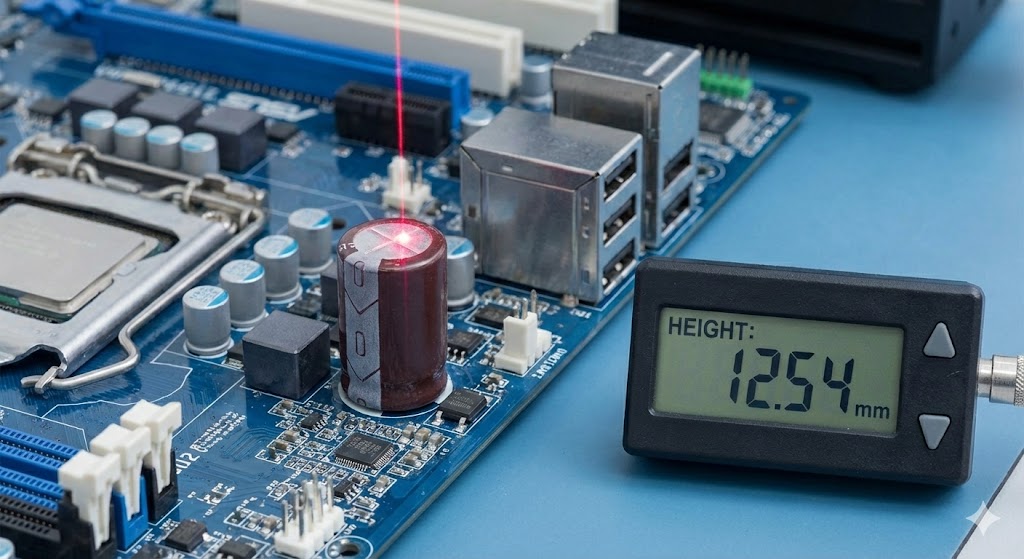
Recent innovations have integrated smart features, such as IO-Link connectivity for real-time data exchange and self-diagnostic functions that alert users to lens contamination or misalignment. When selecting a sensor, engineers must consider factors like sensing range, response time, and beam spot size. A typical model might offer a range of 50mm to 300mm with a response time under 1ms, enabling high-speed automation cycles. Maintenance involves periodic cleaning of the lens and calibration checks to sustain performance.

The future of these sensors points toward miniaturization and enhanced AI integration, allowing for adaptive threshold settings based on machine learning algorithms. As Industry 4.0 evolves, right angle reflective laser sensors will play a pivotal role in enabling flexible, data-driven production systems. By providing non-contact, precise detection, they contribute to reduced downtime, improved safety, and higher product quality across sectors from electronics to pharmaceuticals.