In the realm of industrial automation and control systems, the reliability and precision of sensing technology are paramount. Among the diverse array of sensors available, the three-wire square proximity sensor stands out as a robust and versatile solution for countless detection and positioning tasks. This article delves into the operational principles, key features, wiring configurations, and practical applications of this essential industrial component.
Fundamentally, a proximity sensor is a device that detects the presence or absence of an object within its sensing range without physical contact. The three-wire square variant is named for its distinct rectangular or square housing and its three-wire electrical connection. These sensors are predominantly inductive, meaning they generate an electromagnetic field to detect metallic targets, typically ferrous metals like steel and iron. When a metal object enters this oscillating field, eddy currents are induced on the object's surface, causing a change in the sensor's oscillation amplitude. This change is detected by the internal circuitry, which then triggers a switching action.
The three-wire design is a standard for DC-powered sensors and is crucial for integration into programmable logic controller (PLC) systems and other digital control units. The three wires consist of:
1. Brown Wire (+V): This is the positive power supply line, usually connected to a DC voltage source (commonly 10-30V DC).
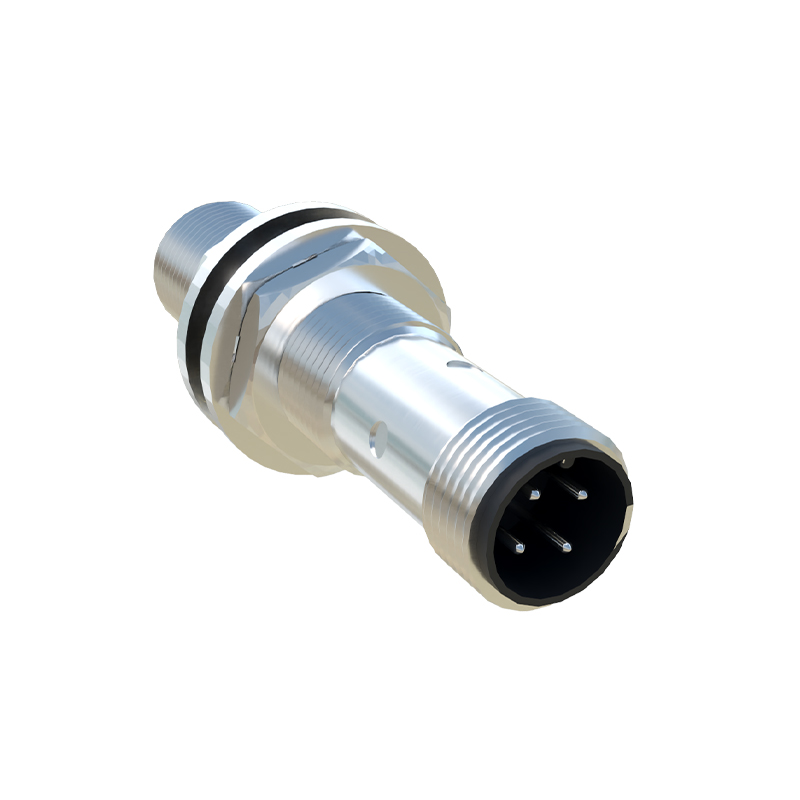
2. Blue Wire (0V or GND): This is the negative power supply line or ground connection.
3. Black Wire (Output): This is the signal output line. The state of this wire changes based on the sensor's detection. In a normally open (NO) configuration, the black wire switches to the supply voltage when a target is detected. In a normally closed (NC) configuration, it switches off (to 0V) upon detection.
The output type is a critical specification. Three-wire sensors are available with either NPN (sinking) or PNP (sourcing) transistor outputs. PNP sensors switch the positive voltage to the load, while NPN sensors switch the negative or ground side. The choice between NPN and PNP depends on the input requirements of the connected controller.
The square housing offers significant advantages. Its shape allows for easier and more secure mounting in tight spaces or on machine frames using standard brackets. The flat surfaces often feature mounting holes or slots, providing flexibility in installation orientation. Furthermore, the robust construction, typically from materials like nickel-plated brass or stainless steel, ensures high resistance to mechanical impacts, vibrations, and harsh industrial environments, including exposure to coolants, oils, and metal chips.
Key performance parameters for engineers to consider include:
Sensing Distance: The nominal range at which the sensor can reliably detect a standard target. Square inductive sensors offer ranges from a few millimeters to several tens of millimeters.
Repeatability: The consistency of the switching point when the target approaches repeatedly.
Switching Frequency: The maximum number of on/off cycles the sensor can perform per second, critical for high-speed applications.
Hysteresis: The difference between the switch-on and switch-off points, which prevents chatter when a target is at the edge of the sensing range.
Protection Rating: Ingress Protection (IP) ratings like IP67 or IP68 indicate high resistance to dust and water, making them suitable for washdown areas.
Application scenarios for three-wire square proximity sensors are vast. They are indispensable in conveyor systems for counting, sorting, and detecting the position of metal parts. In machine tools, they serve as limit switches to determine the end position of a spindle or tool carrier. They are used in automated assembly lines to verify the presence of components, in packaging machinery to detect foil or metal lids, and in robotic cells for precise positioning of arms or end-effectors. Their non-contact nature eliminates mechanical wear, ensuring long-term reliability and minimal maintenance.
When selecting and installing these sensors, attention must be paid to the target material, size, and approach direction. The sensor should be mounted securely, with adequate clearance from surrounding metal objects to avoid false triggering. Proper wiring according to the datasheet—ensuring correct polarity and voltage—is essential to prevent damage. For environments with strong electromagnetic interference, shielded cables may be necessary.
In conclusion, the three-wire square proximity sensor is a fundamental building block of modern industrial automation. Its durable construction, reliable non-contact operation, and straightforward integration make it a preferred choice for engineers seeking to enhance the efficiency, safety, and precision of automated processes. Understanding its specifications and correct application is key to designing robust and fault-resistant control systems.