In the rapidly evolving landscape of industrial automation, laser sensors have emerged as a cornerstone technology for precise measurement and quality control. Their ability to capture high-resolution, non-contact data makes them indispensable in applications ranging from robotic guidance to surface inspection. At the heart of this capability lies the contour algorithm—a sophisticated software component that interprets raw point cloud data to define the precise shape, dimensions, and features of a target object. This article delves into the core principles, advanced methodologies, and practical implementations of contour algorithms in modern laser sensing systems.
The fundamental operation begins with the laser sensor projecting a line or pattern of light onto the target surface. The reflected light is captured by a receiver, generating a dense set of 2D or 3D coordinate points known as a point cloud. A raw point cloud, however, is merely a collection of data; it requires intelligent processing to become actionable information. This is where contour algorithms take center stage. The primary task is to extract a continuous, meaningful boundary or profile from this discrete data set. Basic algorithms often employ edge-detection techniques, such as searching for significant gradients in point density or intensity to identify sudden changes that indicate an edge. For simpler applications, these methods can be sufficient, but industrial environments demand more robustness.
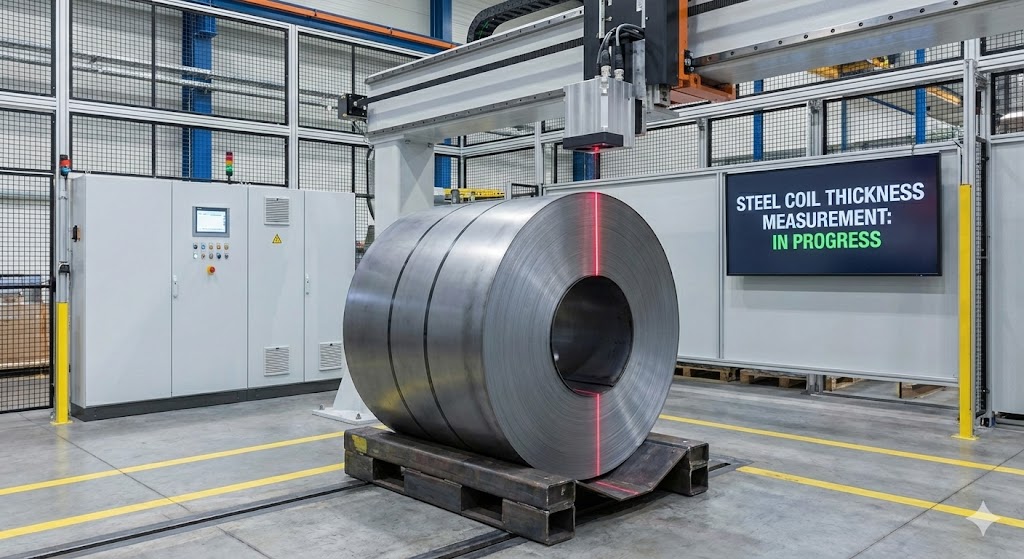
Advanced contour algorithms integrate multiple stages of processing to handle real-world complexities. A critical first step is noise reduction. Industrial settings are rife with optical interference, ambient light variations, and surface reflectivity issues. Algorithms utilize statistical filters (like Gaussian or median filters) and adaptive thresholding to cleanse the data, preserving genuine contour features while suppressing artifacts. Following this, point cloud registration and segmentation algorithms may group points belonging to the same physical surface or feature, separating the object of interest from the background or other entities in the sensor's field of view.
The core of contour extraction often involves sophisticated curve-fitting and model-based approaches. Polynomial fitting, B-splines, and non-uniform rational B-splines (NURBS) are employed to approximate smooth contours from the discrete points. These mathematical models provide a compact, accurate representation of the shape, which is essential for downstream tasks like dimensional analysis. For complex or known geometries, model-based algorithms compare the captured data against a predefined CAD model or template. This allows for not only contour extraction but also deviation analysis, identifying defects or wear by highlighting areas where the measured contour diverges from the ideal reference.
Machine learning, particularly deep learning, is revolutionizing contour algorithm development. Convolutional Neural Networks (CNNs) can be trained on vast datasets of point clouds and corresponding contours. These networks learn to recognize patterns and features directly from the raw or minimally processed data, excelling in scenarios with high noise or overlapping objects where traditional algorithms struggle. They can infer contours even with partial data occlusions, a common challenge in automated assembly lines. The integration of AI enables adaptive algorithms that improve their performance over time, learning the specific characteristics of a production environment.
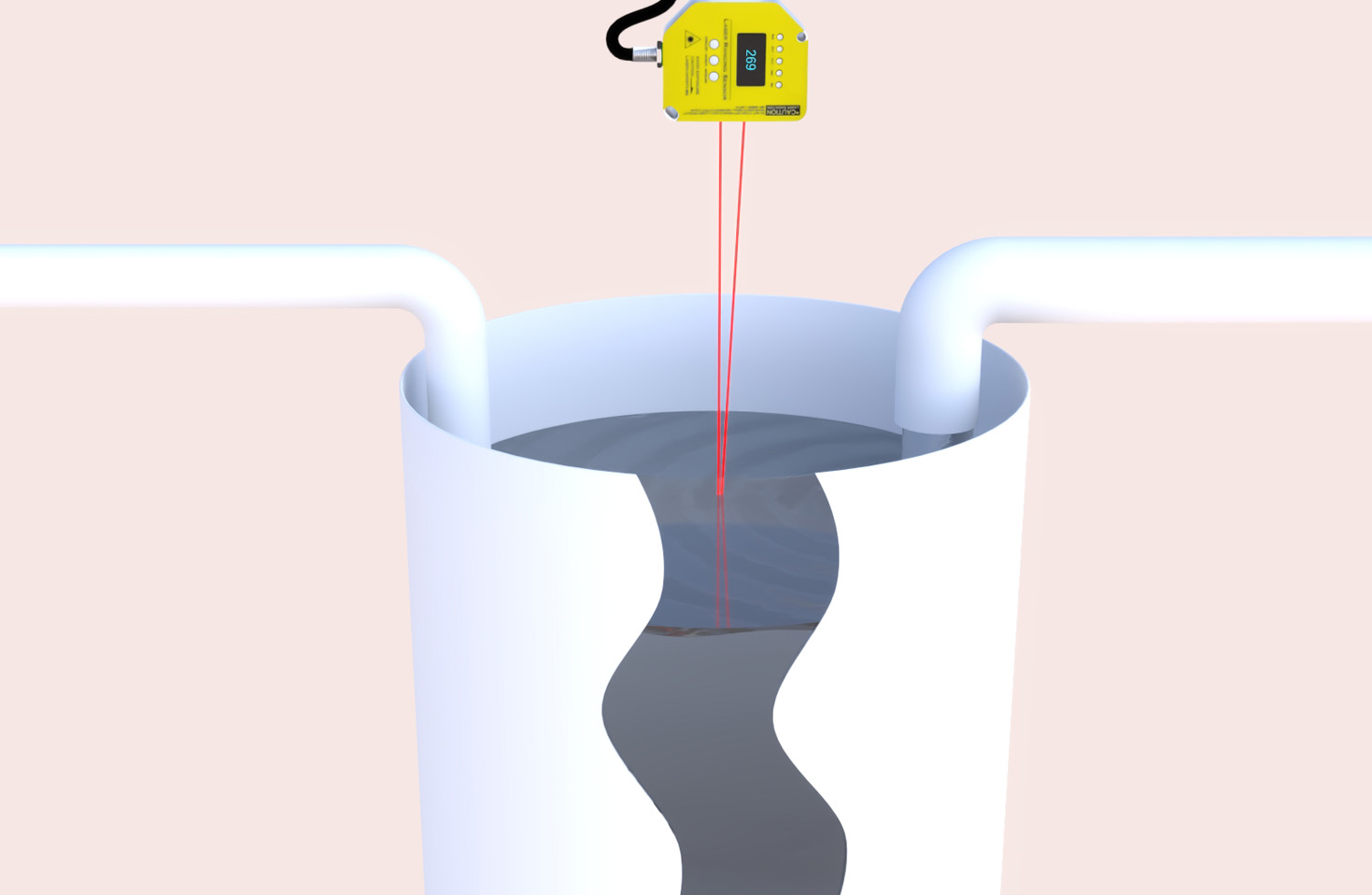
Implementation considerations are paramount for engineers. The choice of algorithm directly impacts system performance metrics: speed, accuracy, and computational resource requirements. In high-speed production lines, such as bottling or electronics manufacturing, algorithms must process contours in milliseconds. This often necessitates optimized C++ code running on dedicated industrial PCs or FPGA hardware. Accuracy, measured in micrometers, depends on the sensor's intrinsic resolution and the algorithm's ability to sub-sample and interpolate points precisely. Furthermore, the algorithm must be configurable to handle different materials (e.g., matte vs. shiny metal) and object colors without manual recalibration.
A practical application exemplifying these algorithms is in automated weld seam inspection. A laser sensor scans the seam, and the contour algorithm extracts its precise 3D profile. It then analyzes parameters like bead width, height, and undercut by comparing the extracted contour to specification tolerances. Any deviation outside the acceptable range triggers an alert. Similarly, in robotic bin picking, contour algorithms help identify the orientation and boundaries of randomly piled parts, enabling the robot to calculate an optimal grasp point.
The future trajectory of contour algorithms points towards greater intelligence and integration. The fusion of data from multiple sensors (laser, vision, tactile) will provide richer contextual information, allowing algorithms to generate more reliable and comprehensive contours. Edge computing will push processing closer to the sensor, reducing latency. Furthermore, the development of standardized algorithm libraries and interfaces will simplify deployment, making advanced contour analysis accessible for a broader range of industrial applications.
In conclusion, the contour algorithm is the intelligent interpreter that transforms raw laser sensor data into a precise digital representation of the physical world. Its continuous advancement, driven by both refined mathematical models and artificial intelligence, is critical for unlocking higher levels of automation, quality, and efficiency in modern manufacturing and beyond. Engineers must carefully select and tailor these algorithms to meet the specific demands of their application, balancing the trade-offs between speed, precision, and robustness.