In the rapidly evolving landscape of industrial automation and smart manufacturing, laser sensor technology stands as a cornerstone of precision and reliability. Among the leaders in this field, Wanji has established itself as a prominent provider of high-performance laser sensors, catering to diverse applications from logistics and automotive to robotics and infrastructure. This article delves into the core technologies, applications, and advantages of Wanji laser sensors, illustrating why they are becoming indispensable tools for engineers and system integrators worldwide.
Wanji laser sensors primarily utilize time-of-flight (ToF) and phase-shift measurement principles to achieve exceptional accuracy in distance and position detection. Unlike traditional ultrasonic or infrared sensors, laser-based systems offer superior resolution, often down to the millimeter or even sub-millimeter range, with minimal interference from ambient light or environmental noise. The sensors emit modulated laser beams—typically in the safe, invisible infrared spectrum—and calculate distances by analyzing the reflection time or phase difference of the returned signal. This method ensures consistent performance even in challenging conditions, such as low visibility or high-vibration environments.

One of the standout features of Wanji laser sensors is their versatility. In logistics and warehousing, they are deployed for palletizing, dimensioning, and vehicle guidance, enabling automated systems to handle goods with pinpoint accuracy. For instance, in automated storage and retrieval systems (AS/RS), Wanji sensors provide real-time data on package dimensions and positions, optimizing space utilization and reducing operational errors. In the automotive sector, these sensors play a critical role in assembly line automation, where they monitor component alignment, inspect weld quality, and ensure precise robotic movements. The high-speed response time—often in the microsecond range—makes them ideal for dynamic production lines where efficiency is paramount.
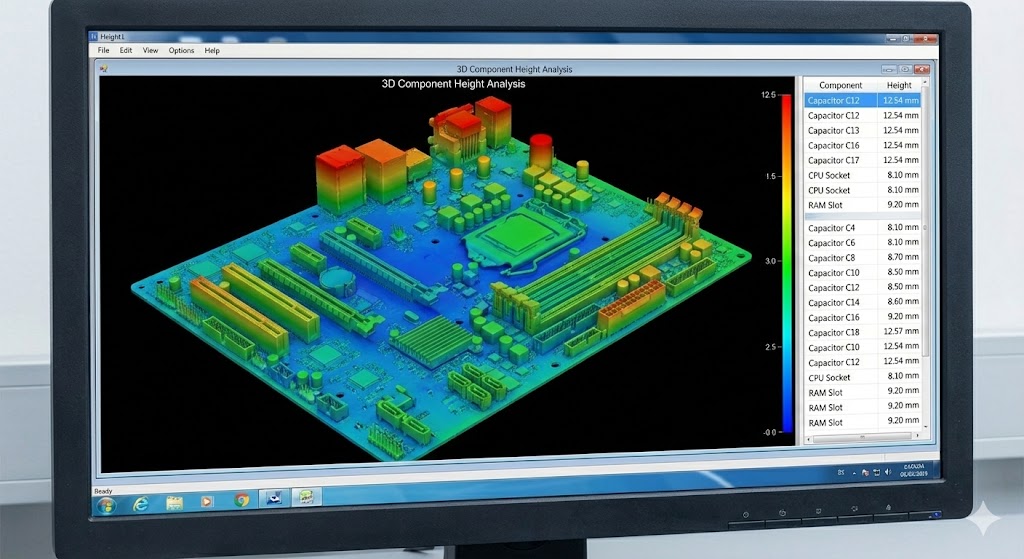
Beyond industrial settings, Wanji laser sensors contribute significantly to smart infrastructure projects. They are integrated into traffic management systems for vehicle classification, speed detection, and congestion monitoring. By offering non-contact measurement, they minimize wear and tear, leading to lower maintenance costs and extended service life. Additionally, their compact design and robust housing (typically rated IP67 or higher for dust and water resistance) allow for installation in harsh outdoor environments, from construction sites to port terminals.
The integration of advanced software algorithms further enhances the functionality of Wanji sensors. Many models come with programmable interfaces and compatibility with industrial communication protocols like PROFINET, EtherCAT, and IO-Link. This enables seamless connectivity with PLCs (Programmable Logic Controllers) and SCADA (Supervisory Control and Data Acquisition) systems, facilitating data analytics and predictive maintenance. Engineers can customize detection ranges, output formats, and filtering parameters to match specific application needs, thereby improving system adaptability.
From a technical perspective, Wanji emphasizes innovation in laser diode efficiency and signal processing. Recent product lines incorporate eye-safe Class 1 laser technology, ensuring compliance with international safety standards without compromising performance. The sensors also feature adaptive calibration mechanisms that automatically adjust to surface reflectivity variations—whether measuring shiny metal surfaces or dark, absorbent materials. This reduces the need for manual tuning and enhances measurement consistency across different objects.
In comparison to competing technologies like ultrasonic or capacitive sensors, Wanji laser sensors offer distinct advantages. They provide higher accuracy over longer distances (up to several hundred meters in some models), faster response times, and better resistance to electromagnetic interference. While the initial investment may be higher, the long-term benefits in terms of reduced downtime, improved product quality, and operational efficiency justify the cost for many enterprises. Case studies from logistics centers show that implementing Wanji sensors can increase throughput by up to 30% while cutting error rates by half.
Looking ahead, the future of Wanji laser sensors is intertwined with trends in Industry 4.0 and the Internet of Things (IoT). Emerging applications include autonomous mobile robots (AMRs) for material handling, where sensors enable precise navigation and obstacle avoidance, and digital twin simulations, where real-time sensor data feeds virtual models for process optimization. Wanji is also exploring the integration of AI-driven analytics to enable predictive fault detection and adaptive control systems.
In conclusion, Wanji laser sensors represent a fusion of precision engineering and practical innovation. By delivering reliable, high-accuracy measurement solutions, they empower industries to achieve greater automation, safety, and productivity. As technology advances, these sensors will continue to evolve, addressing new challenges and unlocking possibilities in an increasingly connected industrial world. For engineers seeking to enhance measurement capabilities, Wanji offers a proven and forward-looking toolkit that aligns with the demands of modern automation.