Infrared proximity sensors are pivotal components in modern industrial automation, offering non-contact detection capabilities that enhance efficiency and safety. These sensors operate by emitting infrared light and measuring the reflection from nearby objects. The core principle relies on the fact that infrared radiation, with wavelengths typically between 700 nm and 1 mm, is invisible to the human eye but detectable by specialized photodetectors. When an object enters the sensor's field of view, it reflects the emitted IR beam back to the sensor. The receiver then converts this reflected light into an electrical signal, which is processed to determine the object's presence, distance, or position.
One of the key advantages of infrared proximity sensors is their immunity to ambient light interference, achieved through modulation techniques. By pulsing the IR light at a specific frequency and tuning the receiver to that same frequency, these sensors can filter out background noise from sunlight or artificial lighting. This makes them highly reliable in diverse environments, from manufacturing floors to outdoor applications. Additionally, they are capable of detecting a wide range of materials, including non-metallic objects like plastics, glass, and liquids, which may be challenging for other sensor types such as inductive or capacitive sensors.
In industrial settings, infrared proximity sensors are commonly used for tasks like object counting, position verification, and level detection. For instance, in conveyor belt systems, they can monitor product flow and trigger automated actions when items pass specific points. Their fast response time, often in the millisecond range, ensures minimal lag in high-speed operations. Moreover, these sensors are designed to withstand harsh conditions, with many models featuring robust housings that offer resistance to dust, moisture, and mechanical shocks. This durability extends their lifespan and reduces maintenance needs, contributing to lower operational costs.
When selecting an infrared proximity sensor, engineers must consider factors such as sensing range, beam pattern, and output type. Sensing ranges vary from a few centimeters to several meters, depending on the model and application requirements. Beam patterns can be focused for precise detection or diffuse for broader coverage. Output options include digital signals (e.g., NPN or PNP transistors) for simple on/off control, or analog signals (e.g., 4-20 mA or 0-10 V) for continuous distance measurement. Integration with programmable logic controllers (PLCs) and industrial networks like IO-Link further enhances their functionality, enabling real-time data exchange and remote configuration.
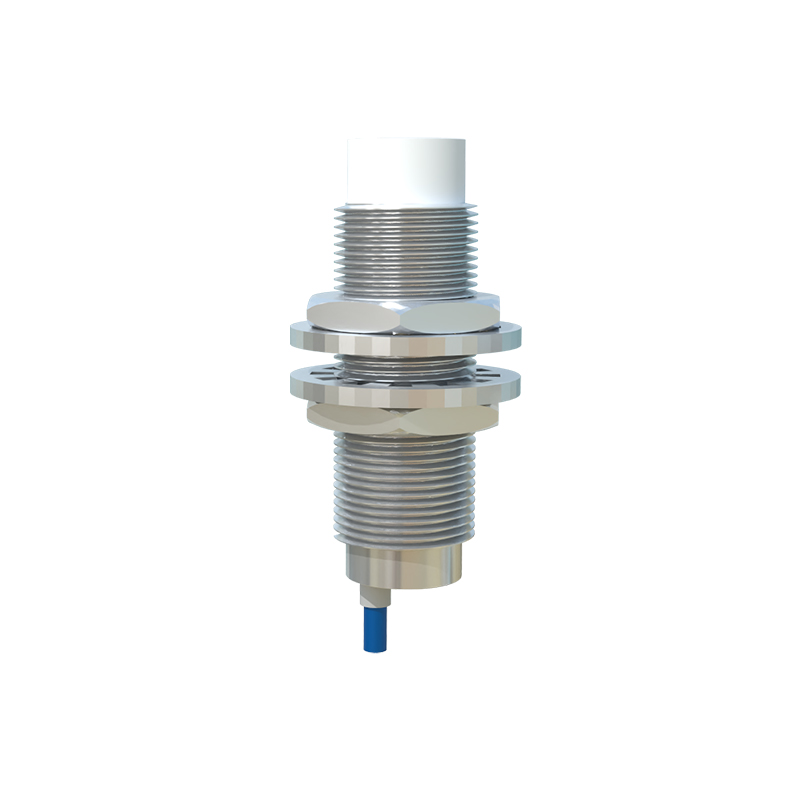
Despite their benefits, infrared proximity sensors have limitations. They may struggle with highly reflective or transparent surfaces, which can scatter or absorb IR light, leading to inaccurate readings. Environmental factors like fog or steam can also attenuate the signal. To mitigate these issues, advanced models incorporate background suppression technology or time-of-flight (ToF) measurement for improved accuracy. Regular calibration and proper installation—ensuring alignment and avoiding obstructions—are essential for optimal performance.
Looking ahead, innovations in infrared sensor technology are driving smarter automation. The integration of artificial intelligence and machine learning algorithms allows for adaptive sensing, where sensors can learn and adjust to changing conditions. Miniaturization and energy-efficient designs are expanding their use in robotics and IoT devices. As industries embrace Industry 4.0, infrared proximity sensors will continue to evolve, offering greater precision and connectivity for automated systems. By understanding their working principles and applications, engineers can leverage these sensors to build more responsive and reliable industrial solutions.