In the realm of precision measurement, laser displacement sensors are indispensable tools across industries such as automotive manufacturing, semiconductor production, and robotics. A critical, yet often misunderstood, aspect of these sensors is their laser power. This parameter directly influences measurement accuracy, operational safety, and suitability for different materials and environments. This article delves into the fundamentals of laser power in displacement sensors, its implications, and practical guidelines for selection.
Laser power, typically measured in milliwatts (mW), refers to the optical output power of the laser diode within the sensor. It is not a measure of the sensor's electrical consumption but of the intensity of the laser beam projected onto the target surface. Common power ratings for industrial laser displacement sensors range from below 1 mW (Class 1 or Class 2) to several tens of milliwatts (Class 3R). The classification is based on international safety standards (IEC 60825-1), which define the potential hazard to human eyes and skin.
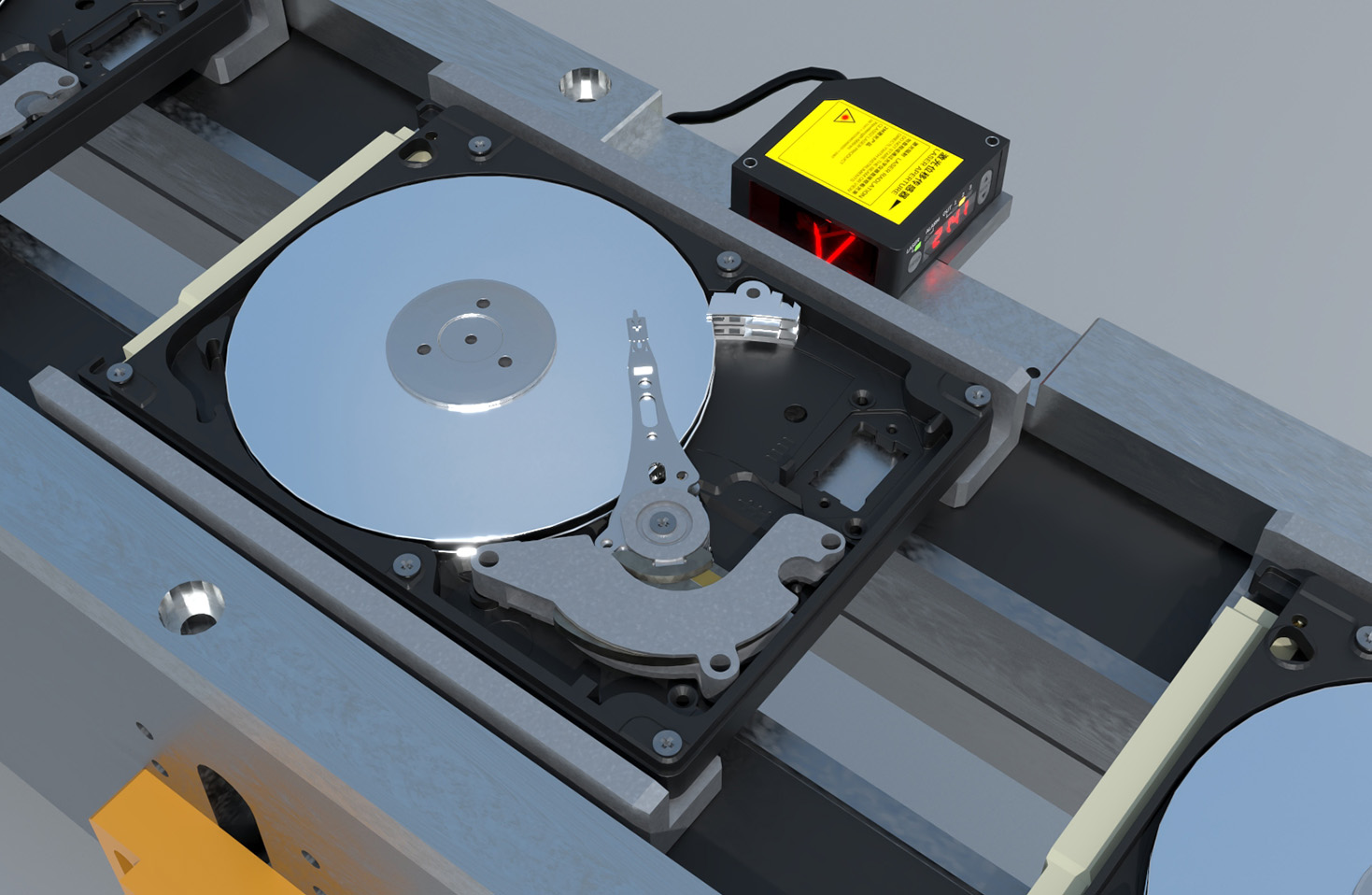
The primary role of laser power is to ensure a sufficiently strong signal is reflected from the target back to the sensor's receiver. Higher laser power can improve signal strength, which is beneficial when measuring:
* Dark, Low-Reflectance, or Rough Surfaces: Materials like black rubber, carbon fiber, or coarse castings absorb or scatter much of the incident light. A more powerful laser can overcome this signal loss, maintaining a stable measurement.
* Longer Stand-off Distances: As distance increases, the laser spot expands, and the reflected light intensity diminishes according to the inverse-square law. Increased power compensates for this drop.

* High-Speed Measurements: For rapidly moving targets, the sensor's exposure time per reading is extremely short. A stronger laser pulse provides a clearer signal within that brief window, reducing noise.
However, simply opting for the highest available power is not advisable. Several trade-offs and limitations exist:
1. Eye Safety: This is the paramount concern. Class 1 lasers are considered safe under all normal conditions of use. Class 2 lasers (visible, up to 1 mW) are safe due to the human blink reflex. Class 3R lasers (up to 5 mW for visible) pose a higher risk and require precautionary labels and controlled use. Higher-power sensors necessitate strict safety protocols, including protective eyewear and restricted access areas.
2. Target Material Effects: Excessive power can cause heating, especially on delicate materials like plastics, thin films, or organic tissues. It may even alter the surface properties, leading to measurement errors. For sensitive applications, a low-power, Class 1 laser is mandatory.
3. Saturation of Receiver: If the reflected signal is too strong for the sensor's photodetector, it can saturate, causing a loss of linearity and accuracy. Modern sensors often feature automatic gain control (AGC) to mitigate this, but operating within the optimal power range is still crucial.
4. Power Consumption and Heat Dissipation: Higher-output lasers generally consume more electrical power and generate more heat. This can affect the sensor's long-term stability, lifespan, and may require additional cooling in compact designs.
When selecting a laser displacement sensor, evaluating the required power involves a systematic approach:
* Identify the Target Material: Create a list of all materials to be measured. Determine their reflectivity, color, and surface texture. Consult sensor datasheets which often specify measurable reflectance ranges (e.g., 2% to 90%).
* Define the Measurement Conditions: Establish the required stand-off distance, measurement range, and possible target speeds. Consider environmental factors like ambient light, which can act as noise; a stronger laser signal improves the signal-to-noise ratio (SNR).
* Prioritize Safety: Always default to the lowest power class that meets the technical requirements. For general factory floor integration where operator exposure is possible, Class 1 or Class 2 lasers are strongly preferred. Class 3R units should be enclosed in guarded systems.
* Consult Application Notes and Experts: Manufacturers provide detailed application examples. Sharing your specific target samples and conditions with technical support engineers can lead to a validated recommendation, often including a feasibility test.
In practice, most standard measurements on machined metal parts, white surfaces, or at short distances perform excellently with Class 1 or Class 2 laser sensors. The trend in industry is towards smarter sensors with adjustable or modulated power output, allowing dynamic adaptation to different surfaces within a single program, optimizing both performance and safety.
Ultimately, understanding laser displacement sensor power is about balancing the need for a robust, reliable measurement signal with the imperative of operational safety and material compatibility. By carefully analyzing the application and respecting safety classifications, engineers can specify the optimal sensor, ensuring precision, reliability, and a safe working environment. The power setting is not a mere specification but a fundamental bridge between the sensor's capability and the physical world it measures.