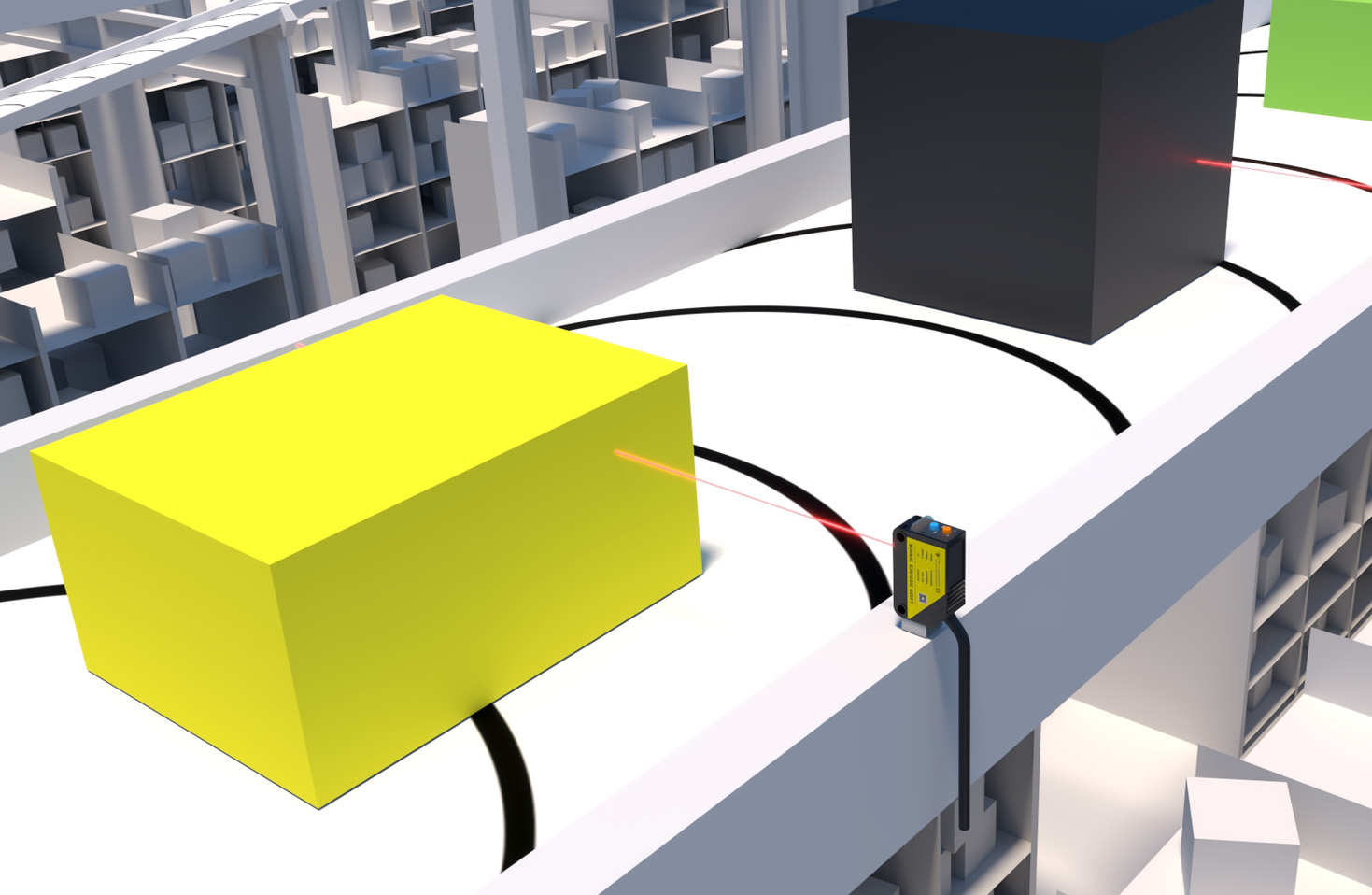
In the rapidly evolving landscape of automotive safety, active braking systems have emerged as a cornerstone of modern vehicle design. At the heart of these advanced systems lies a critical component: the laser sensor. This technology, often utilizing LiDAR (Light Detection and Ranging) principles, is fundamentally reshaping how vehicles perceive their environment and execute life-saving maneuvers. Unlike traditional radar or camera-based systems, laser sensors offer unparalleled precision in object detection and distance measurement, enabling split-second decisions that can prevent collisions.
The operational principle of an active braking laser sensor is elegantly sophisticated. It emits rapid pulses of infrared laser light—invisible to the human eye—towards the vehicle's forward path. These light waves travel outward, strike objects such as other vehicles, pedestrians, or obstacles, and reflect back to the sensor's receiver. By calculating the time difference between the emission and the return of each pulse (Time-of-Flight, ToF), the sensor's onboard processor can determine the exact distance to the object with centimeter-level accuracy. This data is processed thousands of times per second, creating a dynamic, real-time 3D map of the vehicle's surroundings. When this map indicates an impending collision—for instance, if the relative speed and closing distance to a lead vehicle exceed a safe threshold—the system's electronic control unit (ECU) autonomously initiates a graduated response. This typically begins with audible and visual warnings to the driver. If no corrective action is taken, the system progresses to priming the braking system and ultimately applying automatic partial or full braking force to mitigate or avoid the impact entirely.
The advantages of laser-based sensors for active braking are manifold. Their primary strength is exceptional accuracy in spatial resolution. They can detect not only the presence of an object but also its precise shape and size, which is crucial for distinguishing between a pedestrian, a cyclist, and roadside debris. Furthermore, laser sensors perform remarkably well in a variety of lighting conditions, including low-light, nighttime, and situations with blinding glare from the sun or oncoming headlights, where camera-based systems may struggle. Their ability to generate high-fidelity point cloud data allows for superior performance in complex urban environments with multiple moving objects.
However, the technology is not without its challenges. Performance can be significantly degraded by adverse weather conditions. Heavy rain, fog, snow, and even dense dust can scatter or absorb the laser pulses, reducing the effective range and reliability of the sensor. This remains a key area of research and development. Additionally, the current cost of high-performance automotive-grade LiDAR units, though decreasing, is still a consideration for mass-market vehicle adoption. Engineers are continuously working on solid-state LiDAR solutions that are more compact, robust, and cost-effective.

The integration of laser sensor data is rarely done in isolation. For a truly robust active braking system, sensor fusion is the industry standard. Here, data from laser sensors is combined in real-time with inputs from complementary technologies like millimeter-wave radar (excellent for velocity measurement and weather penetration) and high-resolution cameras (providing color and texture information for object classification). This fusion, processed by powerful AI algorithms, creates a comprehensive and redundant perception suite, ensuring system reliability even if one sensor modality is temporarily impaired.
Looking forward, the role of laser sensors is set to expand beyond active emergency braking. They are a foundational technology for the development of higher levels of autonomous driving (AD). From adaptive cruise control and traffic jam assist to fully autonomous navigation, the precise environmental modeling enabled by LiDAR is indispensable. Ongoing advancements aim to increase range, improve weather resilience, and drastically reduce the size and power consumption of these units. As the automotive industry marches steadily toward a vision of zero accidents, the active braking laser sensor stands as a pivotal innovation, transforming vehicles from passive machines into proactive guardians of safety on the road.