In industrial automation and control systems, proximity sensors play a pivotal role in detecting the presence or absence of objects without physical contact. Among various types, the three-wire proximity sensor stands out due to its widespread application and reliability. This article delves into the fundamental working principle, internal circuitry, and operational characteristics of three-wire proximity sensors, providing a comprehensive overview for engineers and technicians in the electrical and automation fields.
A three-wire proximity sensor typically consists of three distinct wires: one for power supply (usually labeled V+ or brown wire), one for ground (often black or blue wire), and one for the output signal (commonly white or black wire, depending on the sensor type). These sensors are designed to operate with DC power sources, commonly 12V or 24V DC, making them suitable for integration into modern industrial control panels. The core principle behind their operation is based on electromagnetic induction or capacitive sensing, depending on whether they are inductive or capacitive proximity sensors. Inductive sensors, the most common type, detect metallic objects by generating an oscillating electromagnetic field. When a metallic target enters this field, it induces eddy currents that dampen the oscillation, triggering a change in the sensor's output state.
Internally, a three-wire inductive proximity sensor comprises an oscillator circuit, a demodulator, a trigger circuit, and an output switching element. The oscillator generates a high-frequency electromagnetic field at the sensing face. In the absence of a target, the oscillator runs freely, and the output remains in its default state (either normally open or normally closed). As a metallic object approaches, the induced eddy currents absorb energy from the oscillator, causing its amplitude to decrease. This change is detected by the demodulator, which converts it into a DC signal. The trigger circuit then processes this signal to activate the output switch—typically a transistor (NPN or PNP) that controls the flow of current to the load. The output wire carries this switched signal to external devices like PLCs, relays, or indicators.
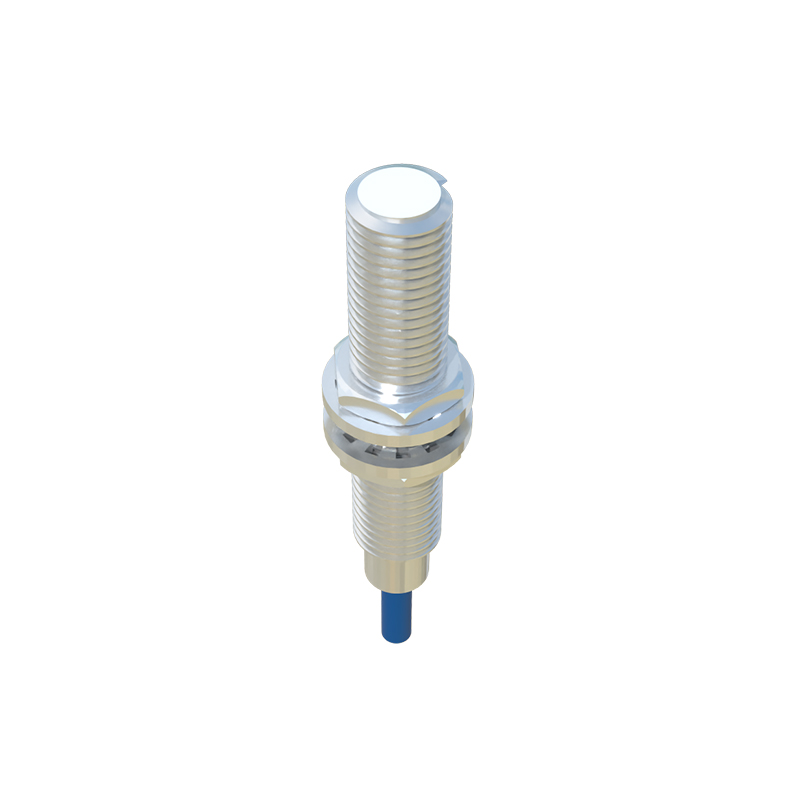
One key advantage of three-wire sensors is their ability to provide a stable output with minimal leakage current, enhancing precision in detection tasks. They are categorized into two main output configurations: NPN (sinking) and PNP (sourcing). In an NPN sensor, the output transistor connects the load to ground when activated, suitable for common-negative systems. Conversely, a PNP sensor connects the load to the positive supply, fitting common-positive setups. This flexibility allows seamless compatibility with various control systems worldwide. Additionally, three-wire sensors often include built-in protection against short-circuits, overloads, and reverse polarity, ensuring durability in harsh industrial environments.
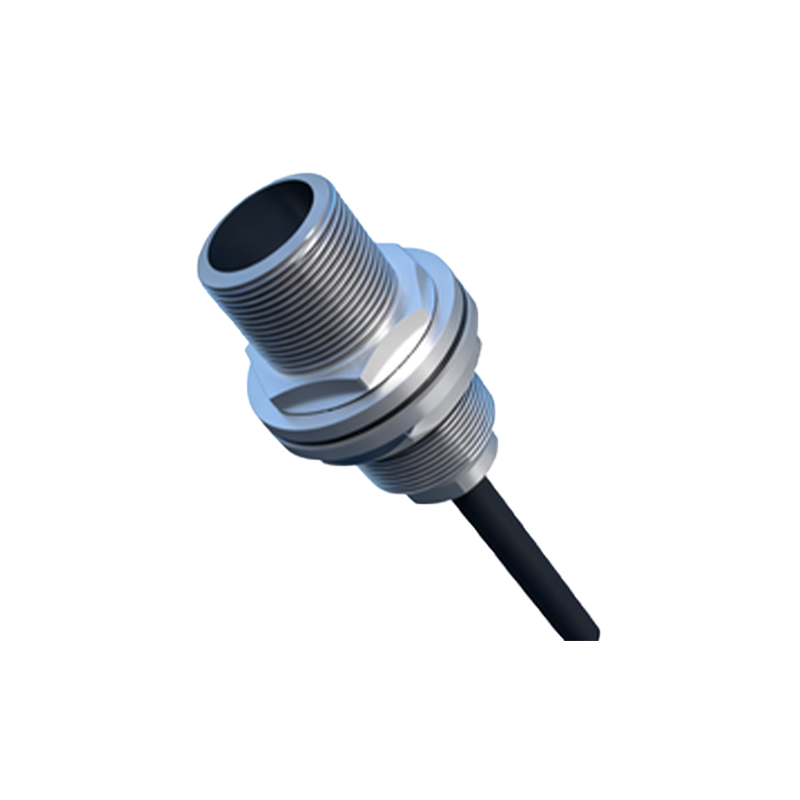
In practice, selecting a three-wire proximity sensor involves considering factors such as sensing range, target material, environmental conditions, and electrical requirements. For instance, inductive sensors are ideal for detecting ferrous and non-ferrous metals but may not work with non-metallic objects, where capacitive sensors would be preferred. Installation requires proper wiring: the power supply must match the sensor's voltage rating, and the load should be connected in series with the output wire. Miswiring can lead to malfunction or damage, so adhering to manufacturer guidelines is crucial.
Maintenance of three-wire proximity sensors is generally minimal due to their solid-state design, but regular checks for contamination, physical damage, or electrical drift are recommended to ensure long-term performance. With advancements in technology, modern variants offer features like analog outputs, IO-Link communication, and enhanced resistance to electromagnetic interference, expanding their utility in smart factories and IoT applications.
Overall, the three-wire proximity sensor is a cornerstone of industrial automation, offering non-contact detection with high accuracy and robustness. Its principle hinges on efficient signal conversion and switching, enabling reliable object sensing in diverse applications from conveyor systems to robotic arms. By understanding its inner workings, engineers can optimize sensor selection and integration, driving efficiency and safety in automated processes.