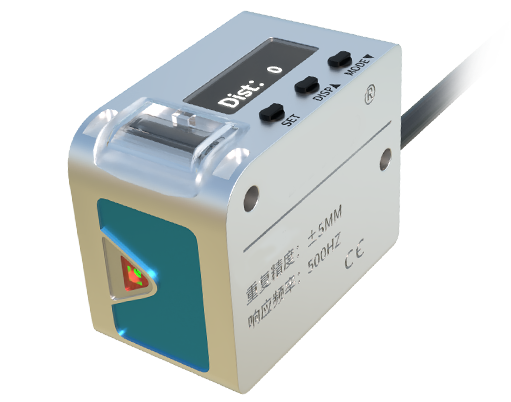
Laser photoelectric sensors represent a critical advancement in industrial automation and precision measurement technologies. Utilizing coherent, highly collimated laser light, these sensors offer unparalleled accuracy, long sensing ranges, and exceptional reliability compared to traditional LED-based photoelectric sensors. This article delves into the operational principles, key types, diverse applications, and essential selection criteria for laser photoelectric sensors, providing a comprehensive guide for engineers and system integrators.
The fundamental principle of a laser photoelectric sensor, often referred to as a "laser through-beam" or "laser opposed mode" sensor, is based on the interruption of a laser beam. The system consists of two separate units: a laser transmitter and a receiver. The transmitter emits a continuous or modulated beam of laser light, which is precisely aimed at the receiver unit. The receiver's photodetector continuously monitors the intensity of the incoming light. When an object passes between the two units, it interrupts the beam, causing a significant drop in the light intensity at the receiver. This change triggers an output signal from the sensor, indicating the presence or precise position of the object.
The core advantage of using laser light lies in its properties. Laser beams have very low divergence, meaning they remain tightly focused over long distances. This allows for sensing ranges that can extend to several hundred meters, far exceeding the capabilities of standard photoelectric sensors. Furthermore, the small, precise spot size of the laser beam enables the detection of extremely small objects or the achievement of high positional accuracy. The coherent nature of the light also provides excellent resistance to ambient light interference, ensuring stable operation even in challenging environments with fluctuating background illumination.
Several configurations exist within the laser photoelectric sensor family. The most common is the Through-Beam (Opposed) Type, described above, which offers the longest range and highest reliability. The Retro-reflective Type uses a single housing containing both the transmitter and receiver. It emits a laser beam towards a specialized reflector (corner cube reflector), which returns the beam directly back to the receiver. An object breaking this beam path triggers the sensor. This type simplifies alignment but has a shorter range than through-beam systems. For applications requiring detection from one side, Diffuse Reflective (Proximity) Type sensors are used. Here, the sensor emits a laser and detects the light scattered back from the target object itself. The sensing distance depends on the size, color, and surface texture of the object.
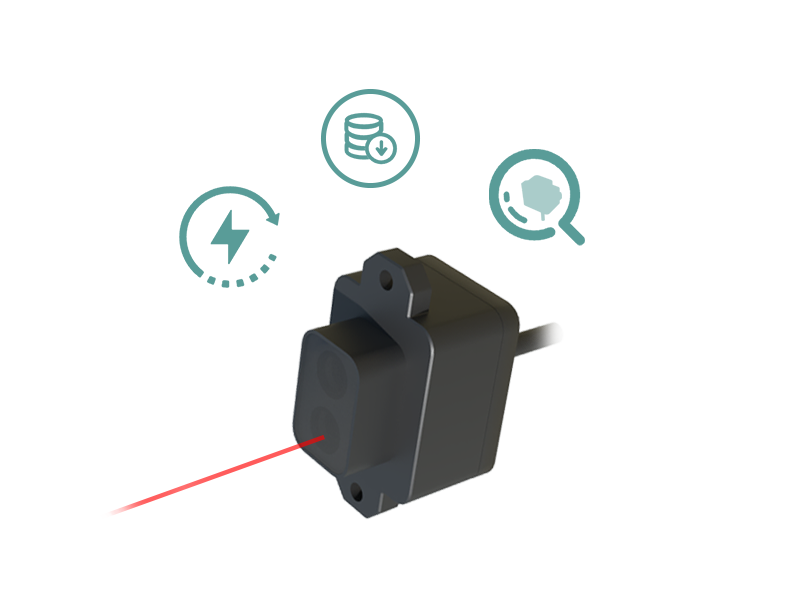
The applications for laser photoelectric sensors are vast and span numerous industries. In material handling and logistics, they are indispensable for precise object detection on high-speed conveyor belts, package counting, and height detection for sorting systems. The automotive manufacturing sector relies on them for robot guidance, part presence verification, and weld seam tracking due to their micron-level accuracy. In electronics assembly, they detect minute components like microchips and connectors. Packaging machinery uses them for label detection, fill level control, and wrapper break monitoring. Beyond manufacturing, they are crucial in security systems as invisible intrusion detection beams and in agricultural automation for vehicle guidance and crop monitoring.

Selecting the appropriate laser photoelectric sensor requires careful consideration of several parameters. Sensing Distance is paramount; choose a through-beam model for maximum range or a diffuse type for shorter, proximity-based tasks. Spot Size determines the minimum detectable object size and positional resolution; a smaller spot allows for finer detection. Response Time is critical for high-speed production lines; faster sensors can detect objects moving at very high velocities. Output Type (e.g., NPN/PNP transistor, analog, IO-Link) must be compatible with the controller (PLC). Environmental Factors such as temperature, humidity, dust, and vibration ratings (IP67, IP69K) are essential for reliable operation in harsh conditions. Finally, features like adjustable sensitivity, built-in timers, and alignment indicators (often visible red laser beams for easy setup) significantly ease installation and maintenance.
In conclusion, laser photoelectric sensors are powerful tools that bring high precision and reliability to modern industrial systems. Their ability to provide long-range, small-spot detection makes them superior for demanding applications where standard sensors fall short. By understanding their operating modes—through-beam, retro-reflective, and diffuse—and meticulously evaluating application requirements against key specifications, engineers can effectively leverage this technology to enhance automation efficiency, improve quality control, and enable innovative solutions across a broad spectrum of industries. Proper installation, focusing on stable mounting and precise beam alignment, is the final step to ensuring optimal and sustained sensor performance.