Laser displacement sensors are pivotal components in modern industrial automation, offering non-contact, high-precision measurement capabilities. At the core of their operation lies modulation—a technique that enhances performance, reliability, and accuracy in challenging environments. This article delves into the modulation methods employed in laser displacement sensors, explaining their principles, advantages, and practical applications.
The primary function of modulation is to distinguish the sensor's emitted light from ambient light interference, such as factory lighting or sunlight. Without modulation, external light sources could saturate the detector, leading to erroneous readings. By modulating the laser beam—varying its intensity, frequency, or phase—the sensor encodes a unique signature onto the light. The receiver then demodulates the reflected signal, filtering out noise and extracting only the relevant data. This process significantly improves signal-to-noise ratio (SNR), enabling measurements in bright or dynamically lit settings.
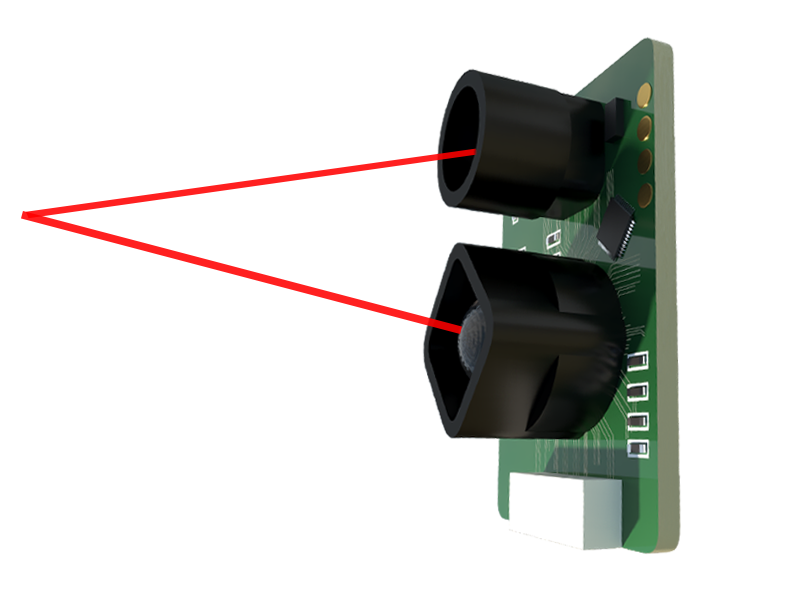
Common modulation techniques include amplitude modulation (AM), frequency modulation (FM), and pulse modulation. In AM, the laser intensity is varied at a specific frequency, typically in the kilohertz range. The reflected light's amplitude changes are analyzed to determine distance, as the phase shift between emitted and received signals correlates to displacement. AM is widely used for its simplicity and effectiveness in medium-range applications. However, it can be susceptible to amplitude-based noise from reflective surface variations.
Frequency modulation (FM) involves sweeping the laser frequency linearly over time. The distance is calculated by comparing the frequency of the emitted and reflected beams, using the time delay to derive displacement. FM offers high resolution and is less affected by ambient light or surface reflectivity changes, making it suitable for long-range measurements and rough surfaces. Its complexity, though, often results in higher costs.
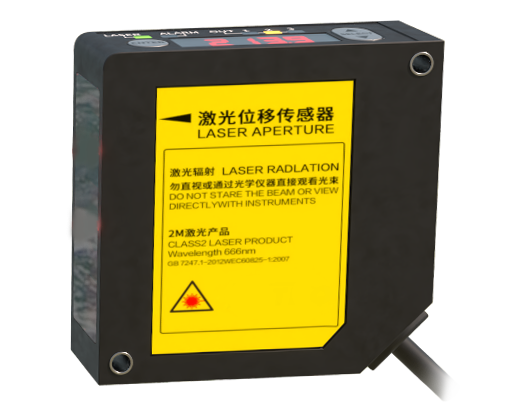
Pulse modulation, or time-of-flight (ToF) modulation, emits short laser pulses and measures the time taken for them to return. This method excels in long-distance applications, as it is largely immune to ambient light and can handle multiple targets. Advanced ToF sensors use coded pulses to further enhance noise immunity. While offering fast measurement speeds, pulse modulation may require precise timing circuits, impacting design complexity.
In industrial practice, choosing the right modulation depends on factors like measurement range, target surface properties, and environmental conditions. For instance, in automotive assembly lines, FM-based sensors monitor panel gaps despite glossy paints, while AM sensors inspect textured materials in packaging machinery. Integration with programmable logic controllers (PLCs) allows real-time data processing, facilitating adaptive control in robotics and quality assurance systems.
Emerging trends include the use of digital modulation schemes, such as spread-spectrum techniques, which improve robustness in electrically noisy environments. Additionally, miniaturization and cost reduction are driving the adoption of modulated laser sensors in consumer electronics and medical devices. Engineers must consider modulation bandwidth, power consumption, and compliance with safety standards like IEC 60825 when designing systems.
In summary, modulation is indispensable for laser displacement sensors, transforming raw optical signals into reliable metric data. By understanding these techniques, professionals can optimize sensor selection, enhance measurement accuracy, and drive innovation in industrial automation. As technology advances, modulated laser sensing will continue to evolve, supporting smarter manufacturing and precision engineering worldwide.