Laser tracking sensors are pivotal components in modern industrial automation, offering high-precision, non-contact measurement and positioning capabilities. These sensors utilize laser beams to detect, track, and measure objects with exceptional accuracy, making them indispensable in fields such as robotics, aerospace, automotive manufacturing, and quality control. Understanding the various types of laser tracking sensors is essential for selecting the right technology to meet specific application demands. This article explores the primary categories of laser tracking sensors, their operational principles, and typical use cases.
The first major type is the Time-of-Flight (ToF) laser tracking sensor. This sensor calculates distance by measuring the time it takes for a laser pulse to travel to a target and back. ToF sensors are known for their long-range capabilities, often effective over several meters, and are relatively immune to ambient light interference. They are commonly used in applications like warehouse automation for inventory management, autonomous vehicle navigation for obstacle detection, and large-scale metrology in construction. However, their precision can be influenced by the reflectivity of the target surface and environmental conditions such as fog or dust.
Another prominent category is the Triangulation-based laser tracking sensor. These sensors operate on the geometric principle of triangulation, where a laser diode projects a spot or line onto an object, and a receiver (typically a CCD or CMOS camera) captures the reflected light at an angle. By analyzing the displacement of the laser point on the receiver, the sensor calculates the distance to the object with high resolution, often in the micrometer range. Triangulation sensors excel in short to medium-range applications requiring fine detail, such as 3D scanning for reverse engineering, surface inspection in electronics assembly, and precision alignment in semiconductor manufacturing. Their performance can be affected by highly reflective or transparent surfaces, necessitating careful calibration.

Laser Doppler Vibrometers (LDVs) represent a specialized type used for tracking vibrational motion. LDVs employ the Doppler effect, where the frequency shift of laser light reflected from a moving surface is measured to determine velocity and displacement. These sensors provide non-contact, high-frequency vibration analysis, crucial for condition monitoring in rotating machinery, structural health assessment in civil engineering, and acoustic testing in automotive components. While offering exceptional sensitivity, LDVs are typically more complex and costly, suited for research and critical industrial diagnostics.

Phase-shift laser trackers are advanced systems often used in large-volume metrology for dimensional inspection. They emit amplitude-modulated laser beams and measure the phase difference between the outgoing and reflected signals to determine distance. Combined with precise angular encoders in a motorized gimbal, these trackers can dynamically follow a retroreflector target, providing 3D coordinate measurements with accuracy up to a few microns over tens of meters. Industries like aerospace rely on them for aligning aircraft components, while automotive manufacturers use them for assembly verification and tool calibration. Their high accuracy comes with a significant investment and requires skilled operation.
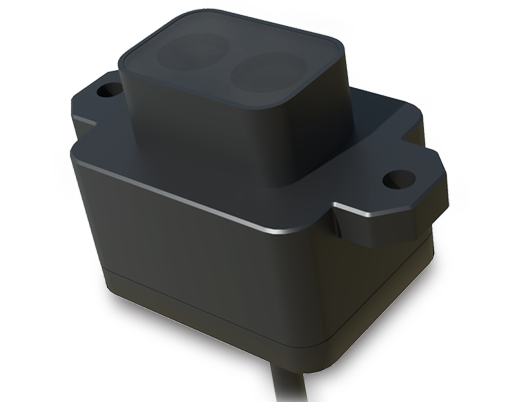
Lastly, Confocal Chromatic sensors utilize a unique principle where white light is focused through a lens, and only a specific wavelength is reflected back from the target surface based on its distance. By detecting this wavelength, the sensor determines displacement with nanometer-level resolution. Although not strictly a "laser" sensor, they are often grouped with laser tracking technologies for similar applications. They are ideal for measuring thickness, surface topography, and small displacements in microelectronics, medical device production, and optical coating processes. Their compact design allows integration into tight spaces, but they are generally limited to very short ranges.
In conclusion, selecting a laser tracking sensor depends on factors like required range, precision, environmental conditions, and budget. ToF sensors offer robust long-range tracking, triangulation sensors provide detailed close-range measurement, LDVs specialize in vibration analysis, phase-shift trackers deliver extreme accuracy for large-scale metrology, and confocal sensors achieve ultra-high resolution for microscopic applications. As Industry 4.0 advances, integrating these sensors with IoT platforms and AI-driven analytics will further enhance their capabilities, enabling smarter, more adaptive manufacturing and inspection systems. Engineers must stay informed about these technologies to leverage their full potential in driving efficiency and innovation.
SEO Keywords:laser tracking sensors, Time-of-Flight sensor, triangulation sensor, industrial automation, precision measurement
SEO Description:Explore various laser tracking sensor types including Time-of-Flight, triangulation, and phase-shift systems used in industrial automation for high-precision measurement and tracking applications.