In the realm of industrial automation, robotics, and precision measurement, laser distance sensors have become indispensable tools. Their ability to provide non-contact, high-accuracy, and high-speed distance measurements makes them critical for applications ranging from level monitoring and object detection to 3D profiling and automated guidance. A fundamental parameter that dictates the suitability of a sensor for any given application is its measurement range. This article delves into the technical aspects of laser distance sensor ranges, exploring the factors that influence them, the different range specifications, and key considerations for selection.
Defining Measurement Range
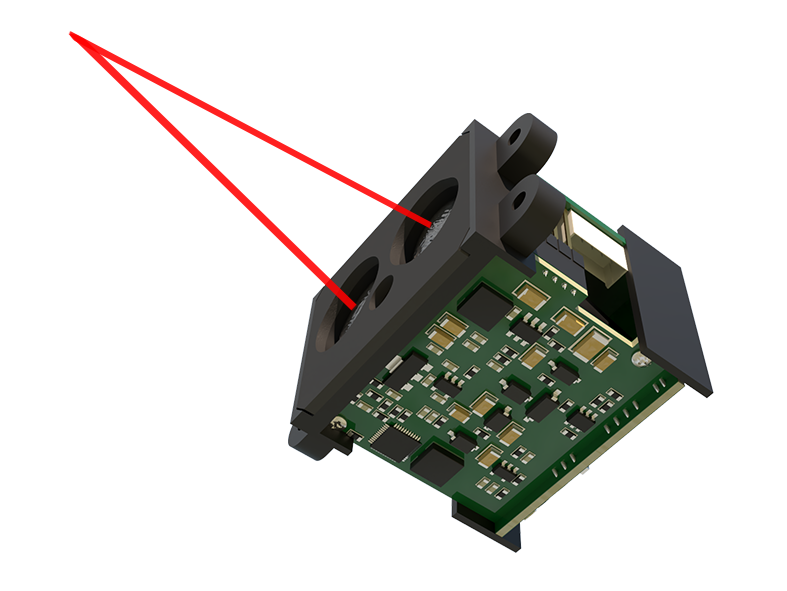
The measurement range of a laser distance sensor is the span of distances over which it can reliably and accurately measure. It is typically defined by a minimum and maximum distance. For instance, a sensor with a range of 50 mm to 10 m can measure objects positioned anywhere within that interval. It is crucial to distinguish between the measurement range and the dead zone. The dead zone (or blind zone) is the area immediately in front of the sensor, starting from the lens, within which measurements are not possible due to internal signal processing limitations or optical saturation. A sensor rated for 0.1 m to 30 m likely has a dead zone from 0 to 0.1 meters.
Factors Influencing the Effective Range
The specified nominal range of a sensor is determined under ideal laboratory conditions (e.g., a high-reflectivity white target, clean air, stable temperature). In real-world applications, the effective range can be significantly impacted by several factors:
1. Target Surface Properties: This is arguably the most critical factor. The reflectivity, color, and texture of the target surface dramatically affect the amount of laser light returned to the sensor's receiver.
* Reflectivity & Color: A matte white surface reflects diffusely and abundantly, allowing the sensor to achieve its maximum range. A shiny black or transparent surface (like glass or clear plastic) reflects specularly or absorbs most of the light, drastically reducing the effective range. Many datasheets provide derating curves or correction factors for different materials.
* Texture: Rough surfaces scatter light, which can be beneficial for triangulation-based sensors but may reduce signal strength for time-of-flight sensors.
2. Environmental Conditions:
* Ambient Light: Intense ambient light, especially sunlight containing infrared components, can flood the sensor's photodetector, causing signal-to-noise ratio degradation and reducing maximum range or causing measurement errors. Sensors with modulated laser light and narrow optical filters are more immune to this.
* Atmospheric Conditions: Fog, dust, steam, or heavy rain can scatter and attenuate the laser beam, limiting the effective range. For outdoor or harsh environments, sensors with higher laser power (Class 2M or 3R, with appropriate safety considerations) may be necessary.
* Temperature: Extreme temperatures can affect the laser diode's output and the electronics' performance, potentially narrowing the operational range.
3. Sensor Technology Principle: The underlying technology sets the baseline for possible ranges.
* Triangulation (Red Laser): Common in compact sensors, this method offers very high accuracy at short to medium ranges (typically from 1-2 cm up to several meters). The range is limited by the geometry of the receiver lens and the baseline distance.
* Time-of-Flight (ToF): This method measures the time for a laser pulse to travel to the target and back. It is suited for much longer ranges, from a few meters up to several hundred meters or even kilometers for specialized LiDAR units. Accuracy is generally lower than triangulation but sufficient for many industrial and logistical applications.
* Phase-Shift Measurement: A subtype of ToF using modulated continuous-wave laser light, offering a good compromise between range (tens to hundreds of meters) and accuracy.
Understanding Range Specifications
When evaluating a sensor datasheet, pay close attention to how the range is specified:
* Guaranteed Measurement Range: The distance over which all performance specifications (linearity, accuracy, repeatability) are guaranteed.
* Extended Range/Maximum Detection Distance: The absolute farthest distance at which the sensor might detect a signal, but likely with degraded accuracy or only under ideal conditions. Relying on this limit is not recommended for critical measurements.
* Reference Target Size: The range is often specified for a target of a certain minimum size and reflectivity (e.g., "90% diffuse white, >50mm diameter"). Measuring a smaller or less reflective target will reduce the effective range.
Selection Guidelines for Engineers
Choosing the right sensor range involves more than just matching numbers to your application's maximum distance.
1. Apply a Safety Margin: Never select a sensor whose maximum rated range is exactly your maximum required distance. Account for target variability, environmental dirt, and aging. A common rule is to select a sensor with a nominal maximum range 1.5 to 2 times your actual maximum needed distance.
2. Consider the Minimum Distance: Ensure your closest measurement point is outside the sensor's dead zone and within its specified minimum range.
3. Prioritize Target Analysis: Characterize your target's surface. If it is low-reflectivity, select a sensor with a much longer nominal range or one specifically designed for "dark surface" detection, often using higher-power lasers or special algorithms.
4. Evaluate the Environment: For outdoor use, specify sensors with high ambient light immunity (e.g., >50,000 lux) and appropriate ingress protection (IP67/IP69K). For dirty environments, consider the laser's ability to penetrate minor obstructions.
5. Accuracy vs. Range Trade-off: Recognize that within a sensor's range, accuracy often degrades at the extremes. The best performance is usually in the middle third of the specified range.
In conclusion, the measurement range of a laser distance sensor is not a single, static number but a system performance parameter heavily dependent on the target and environment. A thorough understanding of the application conditions, careful analysis of the sensor's datasheet beyond the headline range figure, and the application of prudent safety margins are essential for a successful and reliable integration. By respecting these principles, engineers can leverage the full potential of laser distance sensing technology to build robust, accurate, and efficient automated systems.