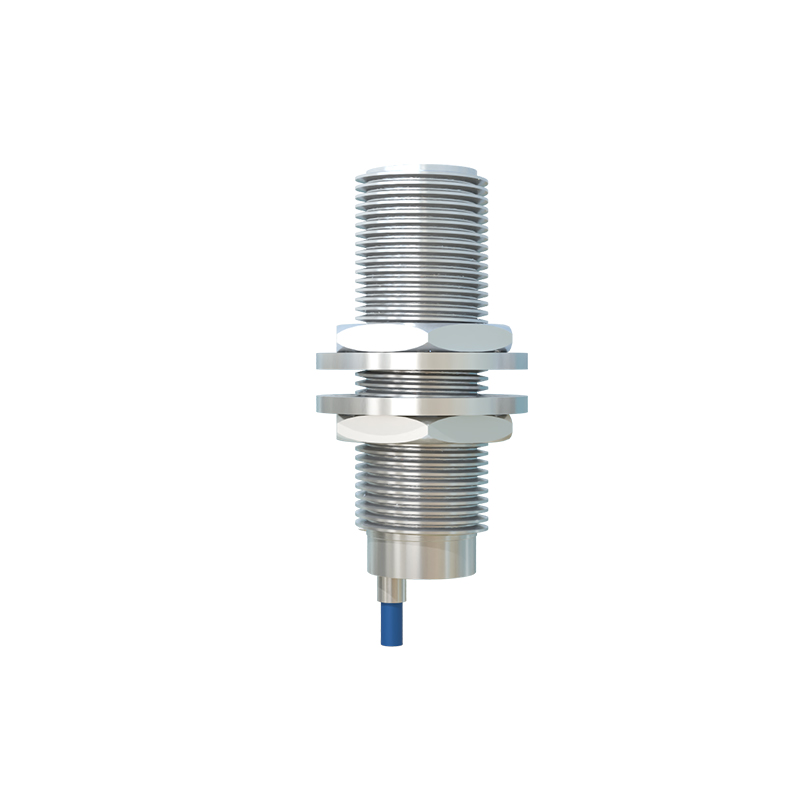
In industrial automation and control systems, proximity sensors are indispensable components for detecting the presence or absence of objects without physical contact. While many are familiar with binary (on/off) output sensors, a significant category operates with analog output, providing a continuous signal that varies proportionally with the distance to the target. These sensors, often termed analog proximity sensors or measuring sensors, offer nuanced data crucial for precision applications.
The core principle behind these devices remains based on electromagnetic fields (inductive sensors for metals) or capacitive fields (for various materials). However, unlike their digital counterparts that trigger a simple switch at a set point, analog variants are designed to output a signal—typically voltage (e.g., 0-10V) or current (e.g., 4-20mA)—that changes linearly or non-linearly within a defined sensing range. For instance, as a metal target approaches the sensor face, the oscillation amplitude in an inductive sensor changes continuously. This change is processed by internal circuitry to generate a corresponding analog output value.
The primary advantage of this variable output is the ability to perform precise distance or position measurement. Applications are diverse: monitoring thickness of materials, controlling tension in winding systems, gauging fill levels in tanks (using capacitive types), or ensuring precise positioning in robotic arms. In a machining center, an analog inductive sensor can provide real-time feedback on tool wear by monitoring the gradual change in distance as the tool erodes. Similarly, in assembly lines, they can verify if components are seated correctly by measuring insertion depth, rather than just confirming presence.
Selecting the right sensor requires careful consideration. Key parameters include the sensing range, linearity (how accurately the output signal corresponds to distance change), resolution (smallest detectable change), repeatability, and response time. Environmental factors like temperature fluctuations, presence of contaminants, or electromagnetic interference can affect signal stability. Therefore, sensors with temperature compensation and robust housing (e.g., IP67 rated) are preferred for harsh industrial environments.
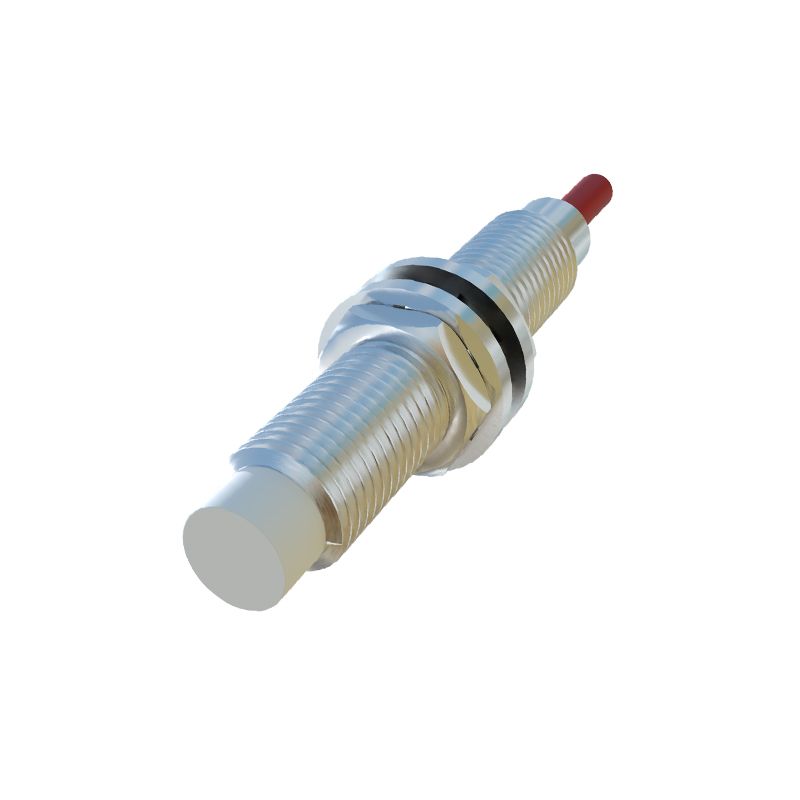
Integration into control systems is straightforward. The analog signal is fed into a programmable logic controller (PLC) or a data acquisition system's analog input module. Engineers can then scale this raw signal within the controller's software to represent actual engineering units (millimeters, inches, etc.). Calibration is essential. During setup, the output at the minimum and maximum sensing distances is recorded to establish a reliable transfer function.
Maintenance involves periodic checks for output drift and ensuring the sensing face remains clean. A common diagnostic step is to observe the signal with a known target at a fixed distance; any deviation from the expected value may indicate contamination, sensor damage, or electrical issues.
In conclusion, proximity sensors with variable analog output bridge the gap between simple detection and precise measurement. They provide a continuous stream of positional data, enabling more intelligent, adaptive, and precise control in automated systems. As Industry 4.0 and smart manufacturing demand richer data from the shop floor, the role of these versatile sensors is set to expand further, driving efficiencies in complex processes where every millimeter counts.