In the realm of industrial automation, pneumatic cylinders are ubiquitous actuators, providing linear motion for a vast array of applications from packaging machinery to robotic assembly cells. A critical aspect of their reliable operation is precise position sensing, which is where magnetic inductive proximity sensors come into play. These robust, non-contact devices are the preferred solution for detecting the piston position within a cylinder, enabling seamless integration with programmable logic controllers (PLCs) for process control, sequencing, and safety interlocks.
The fundamental operating principle of a magnetic inductive proximity sensor, when used with a pneumatic cylinder, hinges on a simple yet effective magnetic coupling. A permanent magnet is typically integrated into the piston of the cylinder. As the piston moves through its stroke, the embedded magnet passes within the detection range of the sensor, which is mounted externally on the cylinder body. The sensor itself does not detect the metal of the piston directly; instead, it contains a ferrite core with a coil and an oscillator circuit. When the magnetic field from the piston magnet enters the sensor's active zone, it induces eddy currents in a specially designed sensing element. This causes a change in the oscillation amplitude within the circuit, which is detected and processed by an evaluation unit. Subsequently, the sensor's solid-state output switches state, providing a clean, bounce-free signal indicating the piston's presence at that specific point.
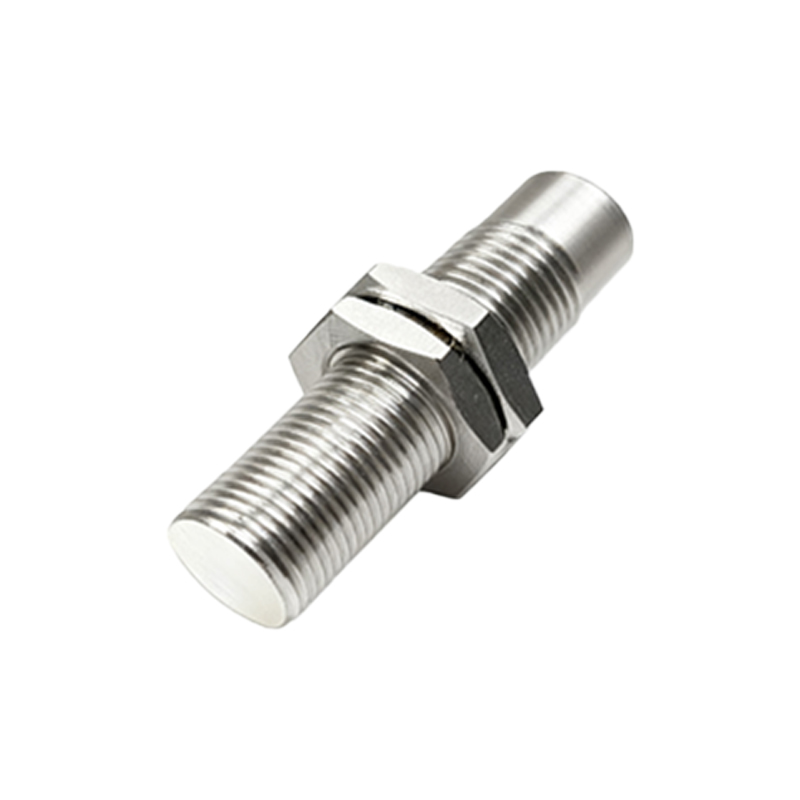
Selecting the appropriate magnetic inductive sensor for a cylinder application requires careful consideration of several key parameters. First is the cylinder type and the corresponding sensor mounting style. Standardized designs like ISO 21287 (formerly VDMA 24562) for compact cylinders and ISO 15552 for larger bore cylinders define specific form factors and grooves for sensor mounting. Sensors are thus categorized as slot-mounted (for cylinders with a T-slot), rectangular, or tubular. The sensing distance, a crucial specification, is typically very short for these applications, often just a few millimeters, ensuring accurate and repeatable detection without interference. The sensor's output type must match the control system's input requirements. Common options include PNP (sourcing), NPN (sinking), or Namur outputs for intrinsically safe applications. DC two-wire and three-wire versions are standard, with voltage ratings like 10-30V DC being prevalent. Environmental factors cannot be overlooked. An IP67 or higher ingress protection rating is almost mandatory to withstand washdowns, coolants, and dust. The housing material, often stainless steel (V4A/AISI 316L) or nickel-plated brass, must resist corrosion from aggressive media. Operating temperature range, resistance to shock and vibration, and electromagnetic compatibility (EMC) are also vital for long-term reliability in harsh plant environments.
The advantages of using magnetic inductive sensors on pneumatic cylinders are numerous. Their non-contact nature eliminates mechanical wear, leading to a virtually infinite mechanical lifespan compared to mechanical limit switches. They offer high switching frequency and repeat accuracy, enabling fast cycle times and precise control. The sealed construction allows for reliable operation in dirty or wet conditions where other sensor types might fail. Installation is generally straightforward, with many sensors offering LED status indicators for easy commissioning and diagnostics. Furthermore, their compatibility with a wide range of cylinder brands and models, thanks to international mounting standards, offers significant flexibility in system design and maintenance.
For optimal application, proper installation is paramount. The sensor must be correctly aligned within the cylinder's mounting groove to ensure the magnet passes within its sensing window. The use of non-magnetic mounting brackets is essential to avoid shielding the magnetic field. Wiring should follow best practices, such as using shielded cables in electrically noisy environments and ensuring correct polarity for DC models. For cylinders with multiple position sensing points, such as end-of-stroke and mid-stroke positions, multiple sensors can be mounted along the cylinder's length. It is also critical to verify the magnetic field strength of the piston magnet, especially at extreme temperatures, as this can affect the reliable sensing distance.
In conclusion, magnetic inductive proximity sensors form a symbiotic and indispensable partnership with pneumatic cylinders in automated systems. Their robust, contactless sensing technology provides the reliable feedback necessary for modern, efficient, and safe machine operation. By understanding their operating principles and meticulously selecting sensors based on mechanical, electrical, and environmental requirements, engineers and technicians can ensure maximum performance and longevity of their pneumatic motion systems, minimizing downtime and optimizing productivity across countless industrial applications.