In modern industrial automation, laser sensors play a critical role in ensuring precision, safety, and efficiency across various applications, from object detection and positioning to quality control and measurement. A laser sensor disconnect alarm is a vital diagnostic feature designed to alert operators when the sensor loses communication or power, preventing potential system failures, production downtime, or safety hazards. This article delves into the mechanisms, causes, and best practices for addressing laser sensor disconnect alarms in industrial settings.
Laser sensors operate by emitting a focused beam of light and detecting its reflection or interruption. They are commonly used in environments requiring high accuracy, such as assembly lines, robotic guidance, and material handling systems. When integrated into a control system, these sensors continuously transmit data to a programmable logic controller (PLC) or other monitoring devices. A disconnect alarm is triggered when the expected signal from the sensor is lost, indicating a break in communication. This can occur due to several factors, including physical damage to the sensor or cabling, loose connections, power supply issues, or environmental interference like excessive dust, moisture, or temperature extremes.
The primary function of a disconnect alarm is to provide immediate notification, allowing for swift troubleshooting. In many systems, the alarm may manifest as an audible alert, visual indicator on a human-machine interface (HMI), or a logged error in the control software. Ignoring such alarms can lead to significant consequences. For instance, in a packaging line, a disconnected laser sensor might fail to detect misaligned products, resulting in jams or defective outputs. In safety-critical applications, such as perimeter guarding on machinery, a sensor failure could compromise worker safety. Therefore, understanding the alarm's root cause is essential for maintaining operational integrity.
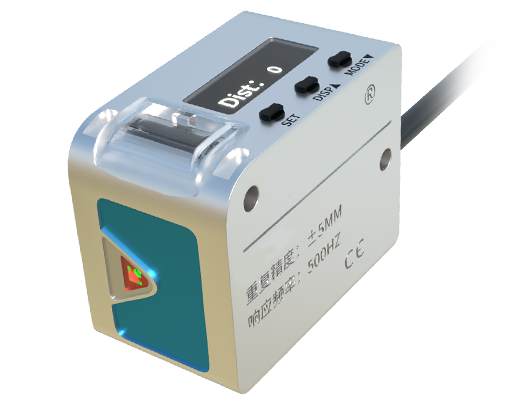
Common causes of laser sensor disconnects include wiring faults, such as severed cables or corroded connectors, which are prevalent in harsh industrial environments. Vibration from machinery can gradually loosen connections, while electrical noise from nearby equipment may interfere with signal transmission. Additionally, sensor degradation over time—due to lens contamination or internal component wear—can lead to intermittent signals that trigger false alarms. To mitigate these issues, regular preventive maintenance is recommended. This includes inspecting cables for damage, ensuring secure mounting, cleaning sensor lenses, and verifying power supply stability. Many modern laser sensors also feature built-in diagnostics, such as LED status indicators or output signals that provide detailed error codes, simplifying the identification of problems.

When a disconnect alarm activates, a systematic approach to troubleshooting is advised. First, check the physical connections and power supply to the sensor. Use a multimeter to confirm voltage levels and continuity in the wiring. Next, examine the sensor's environment for obstructions or contaminants that might block the laser beam. If the sensor appears functional, review the PLC or controller programming to ensure proper configuration and alarm thresholds. In some cases, recalibrating the sensor or updating firmware may resolve communication issues. For persistent problems, consulting the sensor manufacturer's documentation or technical support can provide model-specific guidance.
Implementing robust network architectures, such as using shielded cables and surge protectors, can enhance sensor reliability. Additionally, integrating redundancy—where multiple sensors monitor the same parameter—can reduce downtime by providing backup detection. Training personnel on alarm response protocols is equally important, as quick action minimizes production losses. As Industry 4.0 advances, smart sensors with IoT capabilities are becoming more prevalent, offering remote monitoring and predictive analytics to anticipate disconnects before they cause alarms, further optimizing system resilience.
In conclusion, laser sensor disconnect alarms are essential safeguards in industrial automation, highlighting potential faults that could disrupt operations. By understanding their causes, conducting regular maintenance, and adopting proactive troubleshooting strategies, engineers can ensure these sensors perform reliably, supporting continuous productivity and safety in demanding applications. As technology evolves, leveraging advanced diagnostic tools will further streamline the management of such alarms, contributing to smarter, more efficient industrial ecosystems.