In the dynamic landscape of industrial automation and precision measurement, laser sensors have become indispensable tools. Their ability to provide non-contact, high-accuracy, and high-speed detection makes them ideal for a vast array of applications, from object detection and positioning to thickness measurement and edge guidance. However, the performance and suitability of a laser sensor are profoundly influenced by its operating mode. Selecting the incorrect mode can lead to inaccurate readings, system instability, and increased downtime. This article provides a comprehensive guide for engineers and system integrators on how to navigate the critical decision of laser sensor mode selection.
The primary operating modes of laser sensors can be broadly categorized into three types: diffuse reflection, retro-reflective, and through-beam. Each mode operates on a distinct principle and offers unique advantages and limitations.
Diffuse Reflection Mode: This is one of the most common configurations. The sensor houses both the laser emitter and the receiver in a single unit. The emitted laser beam strikes the target object, and a portion of the diffusely reflected light is received by the sensor's photodetector. The key advantage is the simplicity of installation, requiring only a single device to be mounted on one side of the target. It is highly effective for detecting objects with non-reflective, matte surfaces at relatively short to medium ranges. However, its performance can be significantly affected by the target's color, surface texture, and material. A dark, absorbent surface will reflect less light than a bright, white one, potentially reducing the effective sensing range or causing detection failures. Environmental factors like ambient light and dust can also introduce noise.
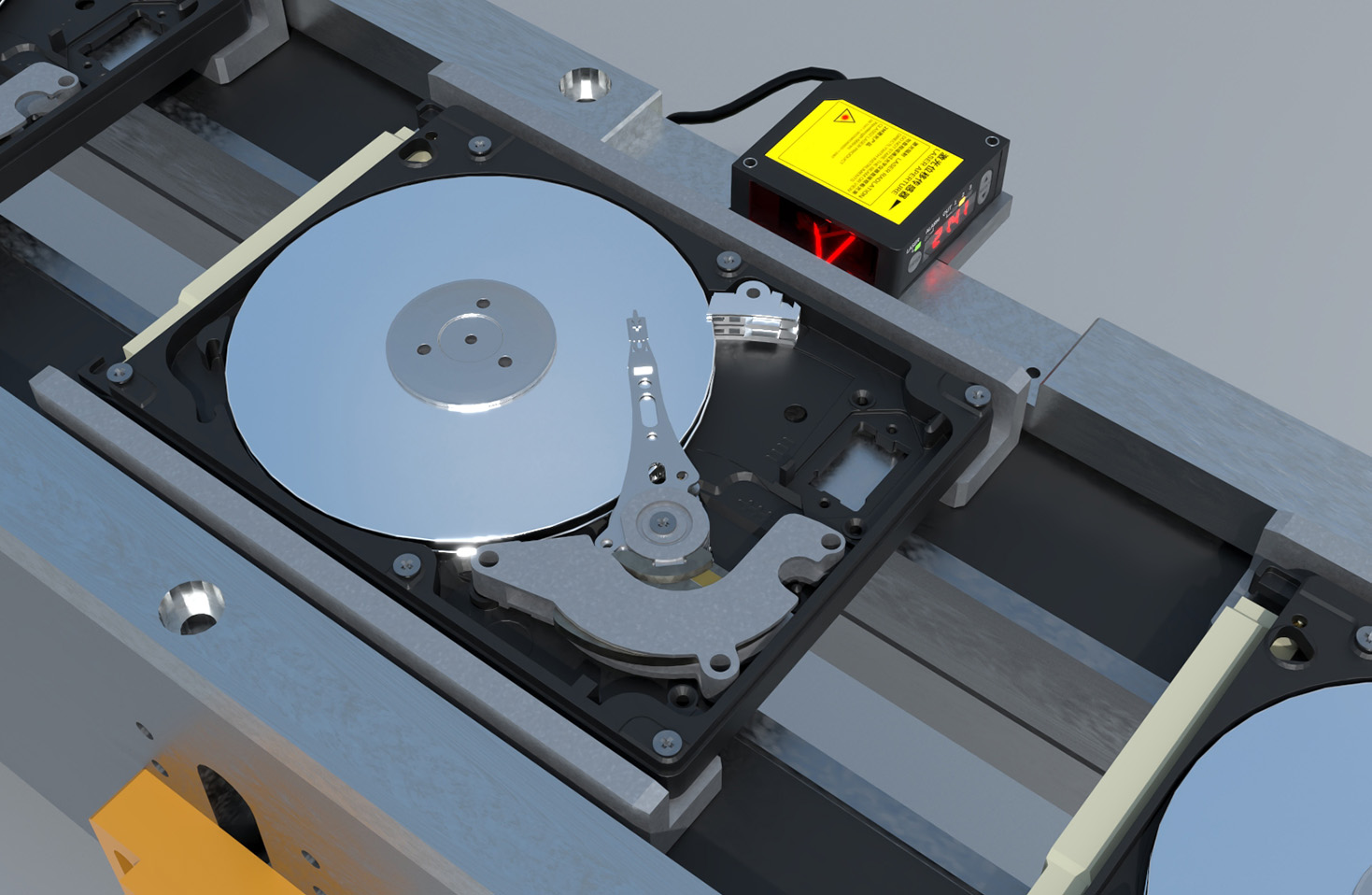
Retro-Reflective Mode: In this mode, the emitter and receiver are also co-located in the same housing, but they rely on a separate reflector (a retro-reflective tape or prism) placed opposite the sensor. The sensor detects the presence of an object when it interrupts the beam path between the sensor and the reflector. This mode offers a longer sensing range compared to standard diffuse reflection and is less sensitive to the color or surface finish of the target object, as the detection is based on beam interruption rather than the quality of reflection. It is excellent for applications requiring reliable detection over longer distances or for transparent objects, provided the object sufficiently interrupts the beam. A potential drawback is the need for precise alignment with the reflector and the risk of false triggers if the reflector becomes dirty or misaligned.
Through-Beam Mode: This mode represents the gold standard for reliability and long-range detection. It employs two separate units: a laser emitter and a receiver placed opposite each other. Detection occurs when the target object breaks the beam traveling from the emitter to the receiver. Through-beam sensors offer the longest possible sensing range, highest immunity to environmental interference (like dust or ambient light), and are virtually unaffected by the target's color, reflectivity, or surface angle. They are ideal for demanding environments, small object detection, and high-speed counting applications. The main trade-offs are the higher cost (requiring two devices) and the more complex installation involving alignment of two separate units across the detection path.
Beyond these fundamental modes, modern laser sensors often incorporate advanced features that blend these principles. Background Suppression (BGS) and Foreground Suppression (FGS) are intelligent diffuse reflection variants. BGS sensors use triangulation to measure the distance to the target, allowing them to detect an object only within a precise, predefined range while ignoring any background beyond it. This is perfect for detecting objects on a conveyor belt, ignoring the belt itself or objects further behind. Conversely, FGS ignores close objects and detects those farther away.
The selection process must be driven by a detailed analysis of the application parameters:
1. Target Characteristics: Object size, color, material, surface finish (shiny, matte, transparent), and temperature.
2. Required Sensing Range: The distance between the sensor and the target during detection.
3. Environmental Conditions: Presence of dust, smoke, oil mist, vibration, and ambient light (sunlight or strong artificial light).
4. Performance Requirements: Needed accuracy, resolution, response speed, and required output signal (digital switch, analog, or serial communication).
5. Installation Constraints: Available space, mounting options, and accessibility for alignment and maintenance.
For instance, detecting a glossy metal component on an assembly line might challenge a standard diffuse sensor due to specular reflection; a polarized diffuse or through-beam mode would be preferable. For bottle fill-level detection in a beverage plant, a transparent object, a through-beam or specialized retro-reflective mode designed for clear materials is necessary. In a logistics warehouse for parcel dimensioning, a background suppression sensor can accurately measure package height by ignoring the conveyor belt.
In conclusion, there is no universal "best" laser sensor mode. The optimal choice is a calculated compromise between performance, reliability, environmental robustness, and cost. A thorough understanding of the core operating principles—diffuse, retro-reflective, and through-beam—coupled with a meticulous assessment of the specific application demands, is the cornerstone of a successful implementation. Consulting with sensor manufacturers and leveraging their application engineering support during the design phase can prevent costly errors and ensure the selected laser sensor mode delivers precise, reliable, and long-lasting performance in your industrial system.