Proximity sensors are fundamental components in modern industrial automation, enabling non-contact detection of objects within a defined range without physical interaction. These devices play a critical role in enhancing efficiency, safety, and reliability across various sectors, including manufacturing, automotive, and robotics. Understanding their basic principles is essential for engineers and technicians working with automated systems.
At its core, a proximity sensor operates by emitting an electromagnetic field or a beam of electromagnetic radiation, such as infrared light, and then monitoring changes in the field or return signal. When an object enters the sensor's detection zone, it alters the field or reflects the beam, triggering an output signal. This output can be used to control machinery, count items, or position objects accurately. Proximity sensors are valued for their durability, as the absence of mechanical contact reduces wear and tear, leading to longer service life and minimal maintenance.
There are several types of proximity sensors, each based on distinct physical principles. Inductive proximity sensors are among the most common, utilizing electromagnetic induction to detect metallic objects. They consist of a coil wound around a ferrite core, an oscillator, a signal conditioner, and an output switch. When a metallic target approaches the sensor, eddy currents are induced in the target, causing a change in the oscillator's amplitude. This change is detected and converted into a digital signal, typically activating a switch. Inductive sensors are ideal for harsh environments, as they are resistant to dust, moisture, and vibration, but they only work with conductive materials.
Capacitive proximity sensors, on the other hand, can detect both metallic and non-metallic objects, including liquids, plastics, and wood. They function by generating an electrostatic field between two electrodes. When an object enters this field, it alters the capacitance, which is measured by the sensor's circuitry. The change in capacitance triggers an output, making capacitive sensors versatile for applications like level detection or material handling. However, they may be sensitive to environmental factors like humidity or temperature variations.
Ultrasonic proximity sensors use sound waves beyond the human hearing range to detect objects. They emit high-frequency ultrasonic pulses and measure the time it takes for the echoes to return after hitting an object. By calculating the time delay, the sensor determines the distance to the target. These sensors are effective for detecting objects of various materials and shapes, even in challenging conditions like fog or dust, but they can be affected by air turbulence or temperature changes that alter sound speed.
Optical proximity sensors rely on light beams, usually infrared, to sense objects. They consist of a light emitter and a receiver. In a through-beam configuration, the emitter and receiver are separate units, and detection occurs when an object interrupts the beam. In a reflective setup, both emitter and receiver are housed together, and the sensor detects light reflected from the target. Optical sensors offer high precision and fast response times, suitable for applications like packaging or assembly lines, but they may be prone to interference from ambient light or dirty lenses.
Magnetic proximity sensors detect the presence of magnetic fields, often from permanent magnets attached to moving parts. They are simple, reliable, and commonly used in position sensing, such as in cylinder position detection in pneumatic systems. Hall effect sensors and reed switches are examples, with Hall effect sensors providing digital output based on magnetic field strength.
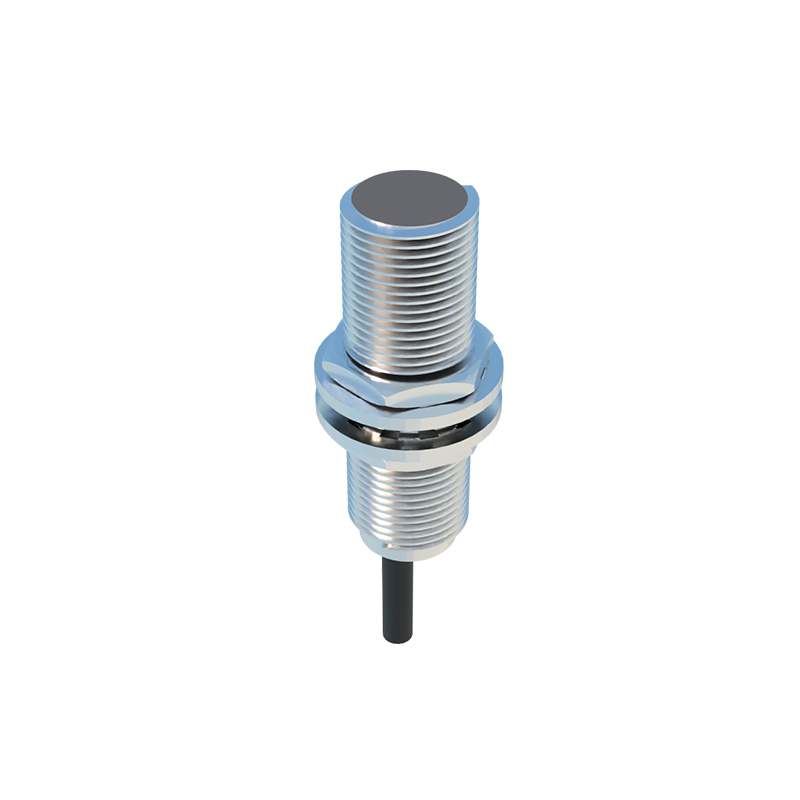
Key advantages of proximity sensors include their non-contact nature, which eliminates mechanical stress and allows for high-speed operation. They also contribute to safety by enabling detection without direct human intervention. When selecting a proximity sensor, factors such as detection range, material compatibility, environmental conditions, and output type (e.g., NPN, PNP, analog) must be considered. Proper installation and calibration are crucial to avoid false triggers or missed detections.
In summary, proximity sensors are indispensable in industrial automation, leveraging principles like electromagnetic induction, capacitance, ultrasonics, optics, and magnetism to detect objects accurately. Their diverse types cater to specific needs, from metal detection in factories to liquid level monitoring in tanks. As technology advances, these sensors continue to evolve, offering enhanced sensitivity, connectivity, and integration with IoT systems, driving innovation in smart manufacturing and beyond. For engineers, a solid grasp of these basics ensures optimal implementation and troubleshooting in real-world scenarios.