In the rapidly evolving landscape of industrial automation and quality control, laser sensors have emerged as a cornerstone technology for raw material inspection. Their unparalleled precision, speed, and non-contact nature make them indispensable for ensuring the integrity of materials before they enter the production line. This article delves into the core principles, key applications, and future trends of laser-based raw material inspection systems.
At its heart, a laser sensor for material inspection operates by emitting a focused beam of coherent light onto the target surface. The interaction of this light with the material—whether through reflection, scattering, or absorption—is meticulously measured by a high-sensitivity photodetector. Variations in the returned signal are analyzed to extract critical data about the material's properties. For raw material inspection, this typically involves assessing dimensions (thickness, width, diameter), surface topography (roughness, scratches, dents), and even compositional characteristics through advanced spectroscopic techniques. Unlike mechanical probes or visual human inspection, laser sensors provide micron-level accuracy at speeds exceeding thousands of measurements per second, without risking contamination or damage to sensitive materials.
The applications span virtually every manufacturing sector. In metal processing, laser triangulation sensors continuously monitor the thickness of steel coils or aluminum sheets, detecting deviations that could lead to product failure. In the plastics and polymer industry, diffuse reflection sensors verify the presence, color, and consistency of pelletized raw materials, ensuring correct feedstock enters the extruder. For high-value materials like semiconductor wafers or photovoltaic silicon, confocal chromatic sensors perform nanometer-scale inspections for surface defects and flatness. Furthermore, in food and pharmaceutical manufacturing, laser-based systems inspect raw powders and granules for foreign particle contamination, a critical safety checkpoint. The ability to integrate these sensors directly into conveyor lines or robotic arms allows for 100% inline inspection, replacing error-prone statistical sampling.
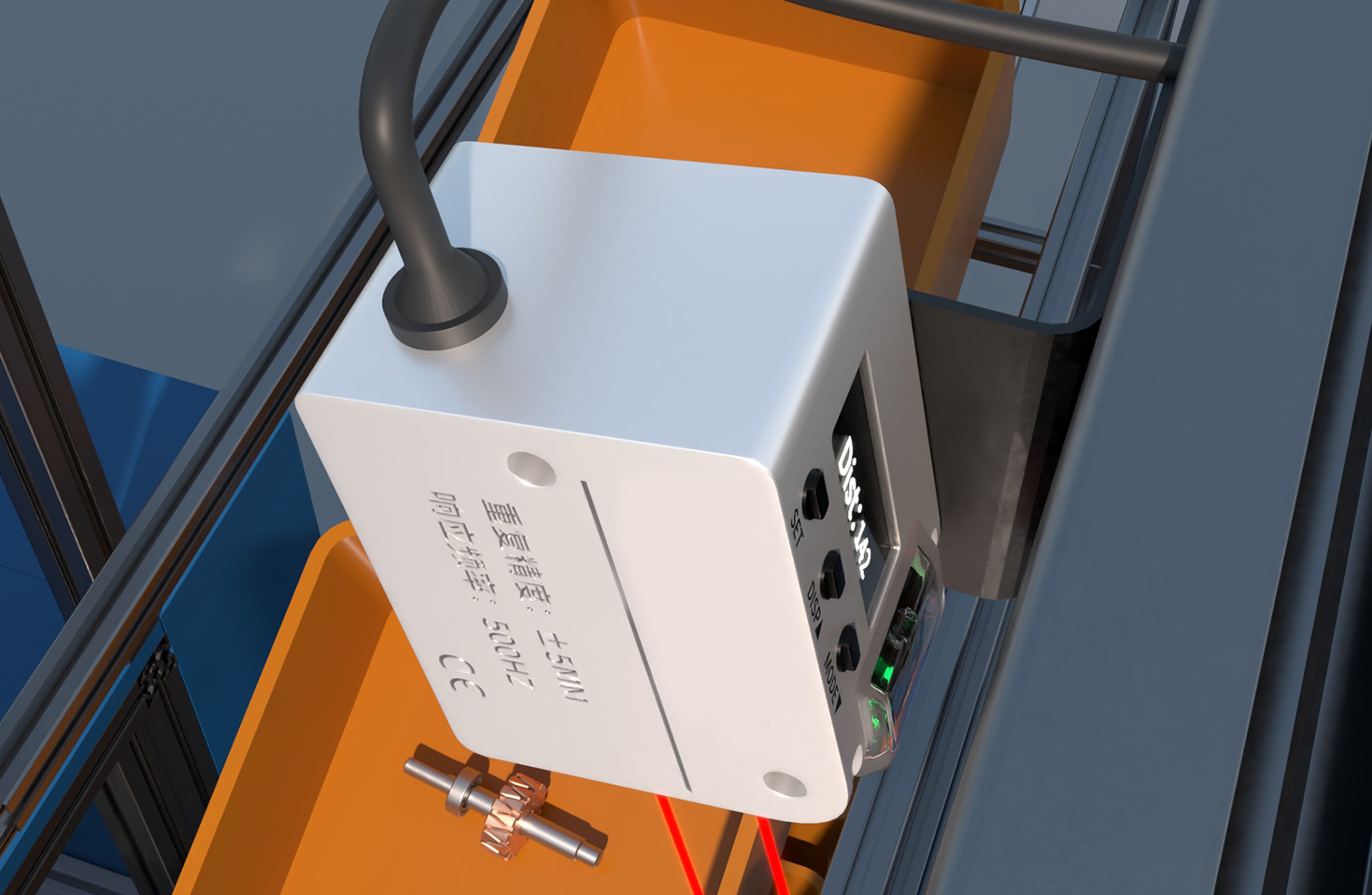
Several key technologies define modern laser inspection systems. Laser Triangulation is the workhorse for distance and profile measurement, ideal for detecting warpage or thickness variation. Confocal Microscopy offers extreme vertical resolution for detailed surface analysis. Laser-Induced Breakdown Spectroscopy (LIBS) can perform elemental analysis of metallic raw materials, identifying alloy composition in real-time. The integration of these sensors with sophisticated software and machine learning algorithms is a game-changer. Modern systems don't just collect data; they interpret it. AI-powered vision software can learn to distinguish between acceptable natural variations and critical defects, reducing false reject rates and adapting to new material batches autonomously.
Implementing a laser sensor inspection system requires careful consideration. The choice of sensor wavelength (e.g., red visible lasers vs. infrared) depends on the material's optical properties. Environmental factors like ambient light, dust, and vibration must be mitigated through proper housing and filtering. Calibration against certified reference standards is paramount to maintain traceability and accuracy. The return on investment, however, is compelling. By catching substandard raw materials at the earliest stage, manufacturers prevent costly downstream processing of defective products, reduce scrap, avoid machine downtime, and uphold stringent quality certifications.
Looking ahead, the convergence of laser sensing with the Industrial Internet of Things (IIoT) is set to redefine raw material management. Smart sensors will not only inspect but also communicate data to central Manufacturing Execution Systems (MES) and Enterprise Resource Planning (ERP) platforms. This creates a closed-loop feedback system where inspection data can automatically trigger adjustments in upstream procurement or processing parameters. Furthermore, the miniaturization and cost reduction of laser components are making high-precision inspection accessible to smaller operations. The future points toward fully autonomous material handling lines where self-optimizing laser sensor networks ensure that only perfect raw materials proceed, paving the way for zero-defect manufacturing.
In conclusion, laser sensor technology has transformed raw material inspection from a passive checkpoint into an active, intelligent, and data-rich pillar of modern manufacturing. Its ability to deliver objective, high-speed, and precise measurements makes it essential for maintaining quality, efficiency, and competitiveness in an increasingly demanding global market.