In the realm of industrial automation, selecting the optimal sensing technology is critical for ensuring system reliability, efficiency, and cost-effectiveness. Two of the most prevalent and versatile non-contact sensor types are capacitive proximity sensors and photoelectric sensors. While both serve the fundamental purpose of object detection without physical touch, their underlying principles, performance characteristics, and ideal applications differ significantly. This article provides a detailed technical comparison to guide engineers and system integrators in making an informed choice.
Fundamental Operating Principles
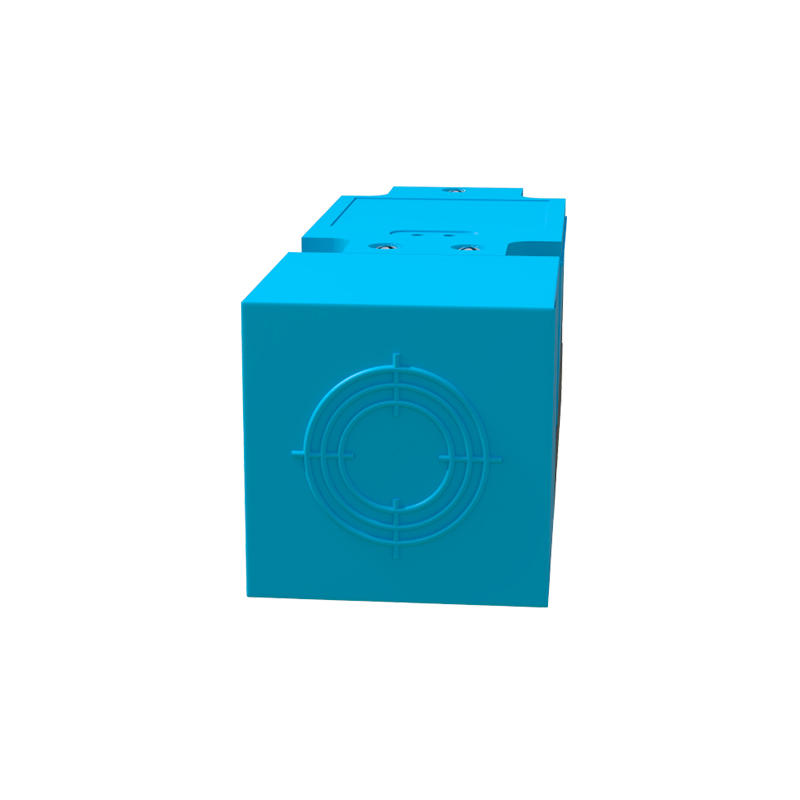
The core distinction lies in their detection methodology. A capacitive proximity sensor operates by generating an electrostatic field. The sensor's active face, along with a surrounding guard ring, forms one plate of a capacitor, with the target object acting as the other plate. When an object enters this electrostatic field, it alters the capacitance of the system. The sensor's internal oscillator circuit detects this change, triggering a switching output. Crucially, capacitive sensors can detect nearly any material—metals, plastics, glass, wood, liquids, and granular substances—as long as the material's dielectric constant differs from that of air.
In contrast, a photoelectric sensor functions by emitting a beam of light (visible red, infrared, or laser) and detecting changes in the received light signal. There are three primary operating modes: through-beam (separate emitter and receiver), retro-reflective (with a reflector), and diffuse (reflective), where the sensor emits light and detects the reflection from the target object itself. Detection is based on the presence, absence, or intensity of the reflected light beam.
Key Performance Parameters and Comparison
Sensing Range: Photoelectric sensors generally offer much longer sensing distances, from a few centimeters up to several tens of meters for through-beam types. Capacitive sensors have relatively short ranges, typically from a few millimeters to about 25 millimeters for standard models, with some specialized versions reaching up to 40 mm. The sensing range of a capacitive sensor is also influenced by the target material's size and dielectric properties.
Target Material and Color: This is a decisive factor. Capacitive sensors are largely material-agnostic, making them ideal for detecting non-metallic objects like plastic bottles, paper stacks, or liquid levels inside non-metallic containers. Photoelectric sensors, especially diffuse types, can be affected by the target's color, reflectivity, and transparency. A glossy white object is detected at a much longer range than a matte black one. Through-beam sensors are less susceptible to color but require a clear line of sight.
Environmental Interference: Capacitive sensors can be influenced by surrounding conductive materials, humidity, dust, and temperature fluctuations. They require careful installation to avoid false triggers from background objects. Photoelectric sensors can be hampered by ambient light (sunlight, welding arcs), fog, steam, dust, and dirt accumulation on the lens, which can scatter or block the light beam. Laser-based sensors offer better performance in some challenging conditions.
Application-Specific Strengths:
Capacitive Sensors Excel At: Level detection of liquids, powders, or granules through non-metallic tank walls; detecting filled vs. empty packages regardless of label color; sensing wood, glass, or plastic materials on conveyor belts.
Photoelectric Sensors Excel At: Long-range detection; precise positioning; detecting small objects; color marking registration; clear object detection (using through-beam); high-speed counting on assembly lines.
Selection Guidelines for Engineers
The choice between capacitive and photoelectric technology hinges on a thorough analysis of the application requirements. Start by asking these questions:
1. What is the target material? If it's non-metallic or variable, capacitive is often the first candidate. For consistent materials where long range is needed, consider photoelectric.
2. What is the required sensing distance? Short-range, through-container detection points to capacitive. For distances beyond 50 mm, photoelectric is typically necessary.
3. What are the environmental conditions? In the presence of heavy dust, steam, or splashing liquids (non-conductive), a properly housed photoelectric sensor might be robust. For dirty environments where lenses get coated, capacitive may be more reliable unless lens cleaning systems are used. Avoid capacitive sensors in applications with conductive dust or large humidity swings.
4. Is the target color or surface finish variable? If yes, a capacitive sensor or a through-beam photoelectric sensor provides more consistent performance than a diffuse photoelectric sensor.
In many complex automation systems, these sensors are not competitors but complements. A packaging line might use photoelectric sensors for counting and positioning cartons, while employing capacitive sensors to verify the presence of plastic bottles inside those cartons or to monitor adhesive levels in a reservoir.
Ultimately, there is no