In the realm of industrial automation, precision is paramount. Laser focus sensors have emerged as critical components for achieving high-accuracy measurements and control in various applications, from semiconductor manufacturing to automotive assembly. These sensors utilize laser technology to detect and maintain optimal focus on a target surface, enabling real-time adjustments that enhance productivity and quality.
A laser focus sensor operates by emitting a focused laser beam onto a surface. The reflected light is captured by a detector, which analyzes changes in the beam's properties, such as intensity or position, to determine the distance to the target. This non-contact measurement method eliminates physical wear and allows for rapid, repeatable readings even in harsh environments. Common types include confocal sensors, which use chromatic aberration to measure displacement, and triangulation sensors, which rely on geometric principles for distance calculation.
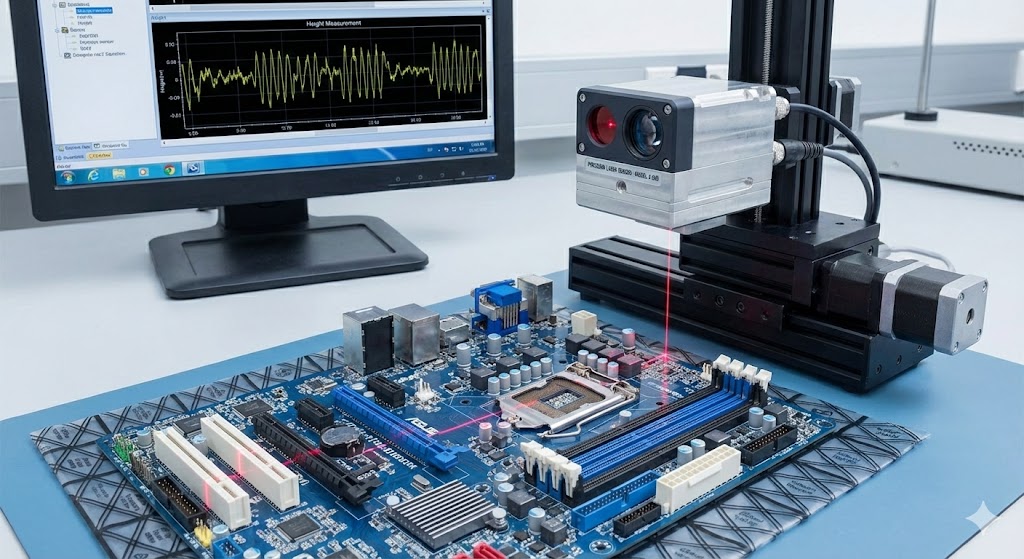
The advantages of laser focus sensors are manifold. They offer sub-micron resolution, making them ideal for tasks requiring extreme precision, such as wafer inspection or micro-machining. Their high-speed response facilitates dynamic processes like robotic guidance or conveyor belt monitoring. Additionally, these sensors are versatile, capable of handling diverse materials including metals, plastics, and transparent surfaces, though calibration may be needed for optimal performance.
In practice, integrating laser focus sensors into automated systems involves considerations like environmental factors (e.g., ambient light or vibrations), target surface characteristics, and communication protocols (e.g., Ethernet/IP or Profinet). Regular maintenance, such as lens cleaning and software updates, ensures longevity and accuracy. As Industry 4.0 advances, these sensors are increasingly paired with AI algorithms for predictive analytics, further boosting efficiency.
Despite their benefits, challenges exist, such as cost and complexity in setup. However, ongoing innovations in miniaturization and smart sensor networks are driving adoption. For engineers, selecting the right sensor involves evaluating parameters like measurement range, sampling rate, and compatibility with existing machinery. Ultimately, laser focus sensors represent a cornerstone of modern automation, empowering industries to achieve unprecedented levels of control and innovation.
Looking ahead, trends like the integration of IoT connectivity and enhanced data processing capabilities will expand their utility. By leveraging these technologies, businesses can optimize operations, reduce waste, and maintain competitive edges in a fast-evolving market.