In the realm of industrial automation and precision engineering, small spot laser sensors have emerged as a critical technology for achieving high-accuracy measurements. These sensors utilize focused laser beams with minimal spot sizes—often as small as a few micrometers—to detect, inspect, and monitor objects with exceptional detail. Their ability to deliver non-contact, high-resolution data makes them indispensable in applications ranging from semiconductor manufacturing to automotive assembly lines.
The core principle behind small spot laser sensors involves emitting a concentrated laser beam onto a target surface. The reflected light is then captured by a receiver, which analyzes changes in position, intensity, or phase to determine parameters like distance, thickness, or surface profile. Unlike traditional sensors, the reduced spot size minimizes interference from ambient light and surface irregularities, ensuring reliable performance even in challenging environments. This precision is particularly valuable in quality control processes, where detecting micro-defects or ensuring dimensional accuracy is paramount.
One of the key advantages of small spot laser sensors is their versatility. They can be integrated into robotic systems for real-time feedback during precision welding or cutting operations, or deployed in laboratory settings for research and development. In electronics manufacturing, for instance, these sensors enable the inspection of miniature components such as microchips and circuit boards, identifying flaws that might otherwise go unnoticed. Additionally, their fast response times and low maintenance requirements contribute to enhanced productivity and reduced downtime in industrial setups.
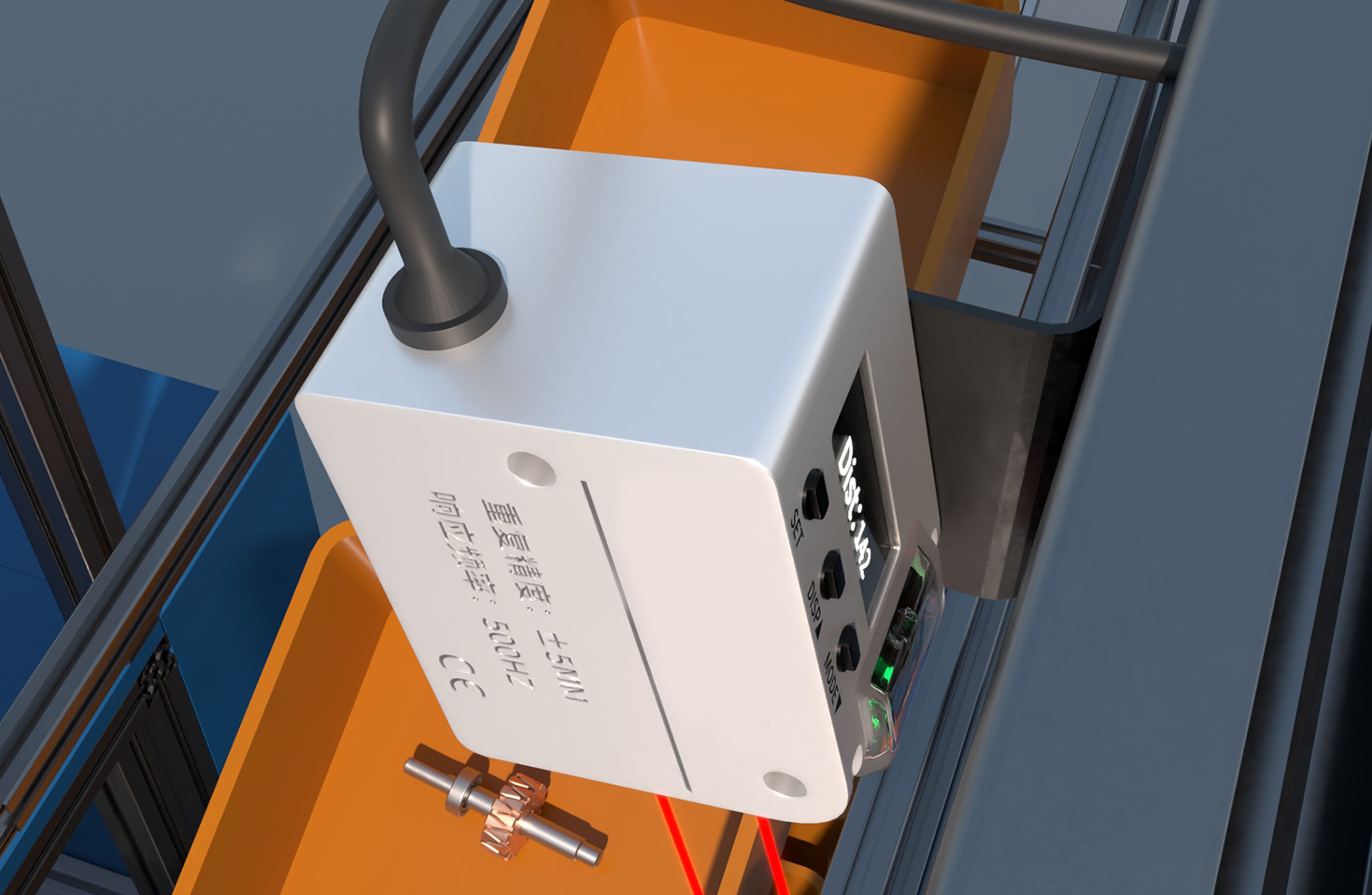
Despite their benefits, selecting the right small spot laser sensor requires careful consideration of factors like wavelength, spot diameter, and measurement range. Engineers must assess the specific needs of their application—whether it involves transparent materials, reflective surfaces, or high-speed motion—to optimize sensor performance. Advances in laser technology, including the development of blue-violet lasers for improved focus on organic materials, continue to expand the capabilities of these sensors, driving innovation across sectors.
In conclusion, small spot laser sensors represent a fusion of optical engineering and digital analytics, offering unparalleled precision in modern industrial landscapes. As industries increasingly prioritize automation and quality assurance, the demand for these sensors is set to grow, underscoring their role as enablers of efficiency and accuracy in the Fourth Industrial Revolution.
