In the realm of industrial automation and precision measurement, circular laser sensors have emerged as a pivotal technology, offering unparalleled accuracy and versatility. These sensors project a circular laser beam onto a target surface, enabling non-contact detection, measurement, and inspection across a wide array of applications. Unlike traditional point or line lasers, the circular profile provides a more uniform and stable reference, which is crucial for tasks involving curved surfaces, alignment, or presence detection of objects with complex geometries.
The fundamental operating principle of a circular laser sensor involves the emission of a laser diode-generated beam that passes through a specialized optical lens system. This system diffracts the initial point source into a precise, collimated circular pattern. When this circular beam strikes a target, the reflected light is captured by a receiver element within the sensor—typically a position-sensitive device (PSD) or a CMOS/CCD array. By analyzing the characteristics of the reflected beam, such as its position, intensity, or triangulation angle, the sensor's internal processor can calculate critical parameters including distance, height, thickness, or simply confirm the object's presence or absence.
Key advantages of utilizing circular laser sensors are manifold. First and foremost is their exceptional stability and noise resistance. The circular beam's larger surface area interaction with the target minimizes errors caused by surface texture variations, minor vibrations, or slight changes in incident angle, which often plague point-based sensors. This makes them ideal for harsh industrial environments found in manufacturing plants. Secondly, they excel in edge detection and centering applications. For instance, in semiconductor wafer handling or PCB alignment, the circular beam can accurately locate the edges or center of a component regardless of its rotational orientation, significantly speeding up assembly processes. Furthermore, their ability to measure transparent or glossy objects, like glass or polished metal, is enhanced as the diffuse reflection from the circular pattern provides a more reliable signal for the receiver.

Typical applications span numerous industries. In automotive manufacturing, circular laser sensors are deployed for precise gap and flush measurement between body panels, ensuring high-quality fit and finish. In electronics, they verify component coplanarity and solder paste height on circuit boards. Packaging lines leverage them for label presence verification and fill-level control. Robotics integration is another growing area, where these sensors provide accurate guidance for pick-and-place operations, especially with randomly oriented parts.
Selecting the appropriate circular laser sensor requires careful consideration of several specifications. Key parameters include measuring range, which can vary from a few millimeters to several meters; spot diameter (the size of the projected circle); resolution, often in the micrometer range; and response time, critical for high-speed production lines. Environmental ratings like IP67 for dust and water ingress protection are essential for durability. Additionally, output interfaces (analog, digital, or fieldbus protocols like EtherCAT or PROFINET) must be compatible with the existing control system.
Installation and calibration are straightforward but vital for optimal performance. Ensuring the sensor is mounted securely to minimize mechanical vibration, aligning the beam perpendicular to the target surface within the specified tolerance, and configuring the teach-in or threshold settings via software are standard procedures. Regular maintenance involves keeping the lens clean from dust and oil mist, which can attenuate the laser signal.
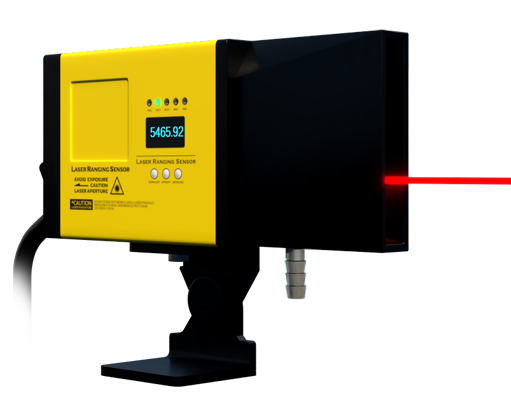
Looking ahead, advancements in circular laser sensor technology are focusing on miniaturization, increased measurement speed, and enhanced data processing through integrated AI algorithms for smarter, adaptive sensing. The integration of IO-Link for advanced parameterization and diagnostics is also becoming a standard feature, facilitating Industry 4.0 connectivity.
In conclusion, circular laser sensors represent a sophisticated and reliable solution for modern industrial metrology and automation challenges. Their unique beam geometry delivers robust performance where other sensor types may falter, making them an indispensable tool for engineers seeking to improve quality control, efficiency, and automation flexibility. Understanding their operating principles, benefits, and application criteria is key to successfully leveraging their capabilities in demanding production environments.
